
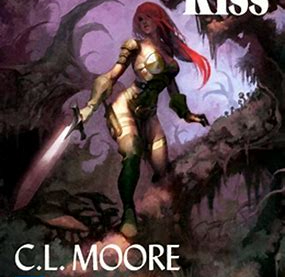
 JIREL OF JOIRY – From 1934 to 1939, the female author C.L. Moore wrote six stories featuring Jirel of Joiry, a sword-wielding woman warrior from late Medieval France. Moore’s thirteen tales of Northwest Smith, the 1930s version of Han Solo, were reviewed in 2014 here at Balladeer’s Blog, including the 1937 crossover story with Jirel in which they faced a time-traveling sorceror from her era.
With this blog post I’m at last beginning my promised examination of the Jirel of Joiry pulp stories from the iconic publication Weird Tales. She was the forerunner of so many recent heroines from Xena to Cara Dune.
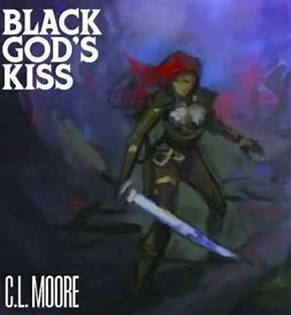 BLACK GOD’S KISS (1934) – This debut story opens with Castle Joiry having for once suffered the fate that Jirel had forced upon so many other strongholds: its armies defeated and their commander, Jirel herself, taken prisoner.
Still fully armored, she has been brought before Guillaume the Conqueror, the first man to have ever beaten Jirel militarily. The cocky Guillaume, having taken the castle, is seated upon Jirel’s throne as he inspects the freshly seized enemy commander being held by two of his men who can scarcely keep the warrior restrained.
Soon he has another of his soldiers remove the helmet from the commander and is shocked to see that inside the armor it is a beautiful woman who nearly defeated him that day.
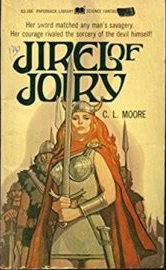 NOTE: Since so many people are still so into the Game of Thrones universe picture a fully armored Jason Momoa as Guillaume and for Jirel picture a fiery combination of Arya, Daenerys and Brienne with Sansa’s long red hair.
Back to the story, Guillaume infuriates Jirel by talking to her as the prisoner she is and she breaks free of the two men holding her and nearly escapes before Guillaume himself catches up with her and recaptures her. He forces a kiss upon Jirel, who, the minute their mouths are disengaged, bites into his exposed neck, just missing his jugular vein.
Things escalate and Guillaume smacks our heroine unconscious. She awakens that night in the dungeons far below Castle Joiry. She easily escapes from her cell and overcomes the guard Guillaume assigned to keep watch over her. Continue reading
 Meet Michelle and Natalie, the two pop culture reviewers whose YT Channel is called Force of Light Entertainment. The ladies offer reviews and commentary on current day big movies and television shows, in contrast with Balladeer’s Blog’s examination of productions from the (often distant) past.
  Michelle and Natalie try to stay positive when they can, and avoid the more sarcastic approach that I employ. When they do have to jump into cultural commentary depending on the item being reviewed, they push back against SJW idiocy and censorship. Below is a sample of the two sisters’ approach as they express their displeasure with an episode of The Book of Boba Fett.
 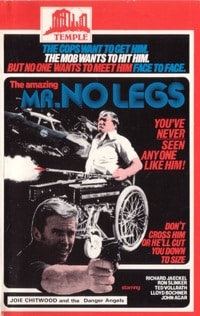 MR NO LEGS (1978) – Ted Vollrath, a Korean War veteran who lost his legs due to injuries he suffered during the conflict, became a multiple black belt in martial arts disciplines and established Martial Arts for the Handicapable Incorporated in 1971. In addition to appearing in a documentary titled Let Me Live In Your World he starred as a scene-stealing badass in Mr No Legs, which was also released under titles like Killers Die Hard, Pushers Die Hard, Dope Runners Die Hard and the much less descriptive Gun Fighter.
 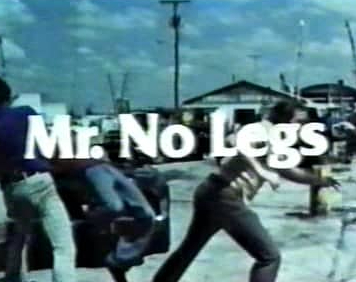 Lou himself is deadly in or out of his chair, as he is highly skilled with knives and handguns, but his most dangerous trait is the way he can use his muscular, toned body to kick the butts of all comers in unarmed combat. Lou’s status as the enforcer and hit man for a Tampa drug lord has earned him big money and a buxom blonde lady who sees to his various needs.
 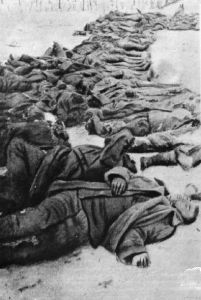 THE ARCTIC DEATH (1927) – Written by Wilford Allen, On A Far World, covered below, was a prequel to this same tale. The Arctic Death is set in the 1930s, which was “the near future” when the story was first published.
  CAPTAIN AMERICA & THE FALCON Vol 1 #160 (April 1973)
 For several years here at Balladeer’s Blog I have been trying to track down, watch and review all of the film versions of Hunterwali (Whip-wielding Woman), Bollywood Cinema’s butt-kicking masked female heroine. Often glibly dismissed as a female Zorro, there is much more cultural context to the Hunterwali figure – contextual significance that goes beyond the particular time period of each film version.
 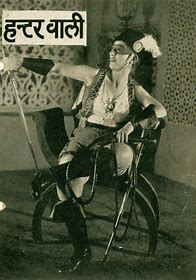 Thus far I have been able to watch the 1935 original, which starred the actress billed as “Fearless Nadia” in India, and the 1988 Hunterwali. I have had no luck tracking down the 1959, 1972, 1977 and 2017 movie versions. Nor have I been able to buy the 1943 film, Hunterwali Ki Beti (Hunterwali’s Daughter), the very first sequel movie in Indian entertainment history.
  The basics of the Hunterwali story involve Princess Madhuri adopting a masked, whip-wielding and stunt-riding identity to combat the many injustices inflicted on the kingdom by her father’s evil Vazier Ranamal. That villain even imprisons the king and lusts after Madhuri, little realizing she is really the swashbuckling “protector of the poor and punisher of evildoers” called Hunterwali.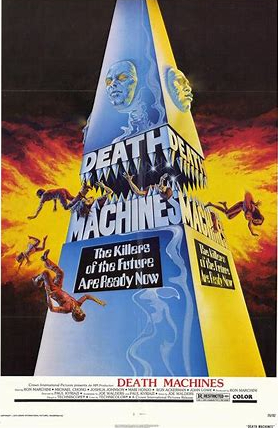
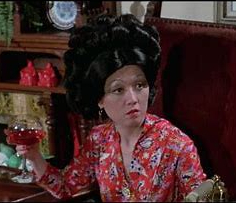 Our story begins with the villainous Madame Lee (Mari Honjo), the Asian field boss of a criminal empire, observing a demonstration of her outfit’s new martial arts assassins in action. Ron Marchini IS White Death Machine, Michael Chong brings to life Asian Death Machine and Joshua Johnson wows as Black Death Machine. That’s exactly how our title trio are listed in the credits, by the way.
  PALADINS OF CHARLEMAGNE – The fictional setting of the legends surrounding the real-life Charlemagne, plus the introduction of several of his Paladins (knights). Click
 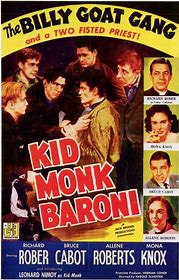 KID MONK BARONI (1952) – It’s not Rocky, it’s Spocky! Leonard Nimoy made his film debut in this half-assed, cliche-filled and trope-ridden mess of a movie.
 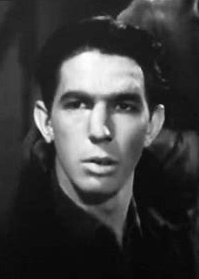 In lieu of prosthetic ears, Kid Monk Baroni finds Leonard sporting a prosthetic nose for a large part of the film, thus depicting the “ugliness” which drives his hostile urges. Paul Baroni has become a leader of sorts for his pack of juvenile delinquents called the Billy Goat Gang, an inferior imitation of Leo Gorcey and Huntz Hall’s Bowery Boys/ Dead End Kids/ Little Tough Guys and all the other names they used over the years.
 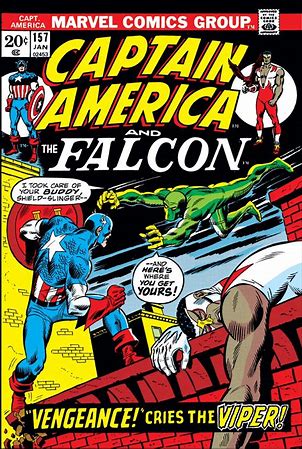 CAPTAIN AMERICA & THE FALCON Vol 1 #157 (January 1973)
  Balladeer's Blog