For Balladeer’s Blog’s Number One Harry Flashman Novel click HERE . For background info on George MacDonald Fraser’s infamous anti-hero Harry Paget Flashman you can also click that link.
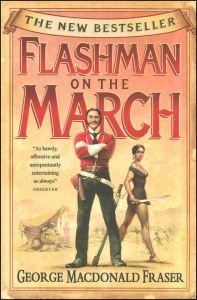 5. FLASHMAN ON THE MARCH (2005)
Time Period: The 1867-1868 Abyssinian military campaign and rescue mission.
This volume of The Flashman Papers is set right after Harry’s unsuccessful attempt to spirit away Mexico’s overthrown Emperor Maximilian before he could be executed. (Well it wasn’t Flashman’s fault. As history tells us, Maximilian DID refuse to escape with the conspirators who busted in to save his sorry butt.)
Synopsis: After a passionate farewell kiss from (the real-life) Princess Agnes Salm-Salm, Harry Flashman further raises the ire of his Austrian escorts by seducing a young, blonde and buxom Hapsburg aristocrat on the trans-Atlantic voyage with Maximilian’s coffin.
In Trieste, with the Austrians planning to unleash their wrath on Flashman as soon as the ceremony for Maximilian is over, our main character bolts for the British consulate. HMG is happy to have Sir Harry on hand and entrusts him to escort the notorious 100,000 Maria Theresa Thalers being sent to finance General Robert Napier’s upcoming Abyssinian Expedition.
 That expedition is being launched to free British captives being held and tortured by the (historically) unhinged Emperor Theodore II of Abyssinia (Called Ethiopia today).
Before Colonel Flashman knows it he’s caught up in a clash with Muslim slavers on the Red Sea, then breezing right along to the Eritrean port of Zula, embarkation point for the British campaign into Abyssinia.
The author George MacDonald Fraser’s descriptive talents were in top form in Flashman on the March. As fans well know, Fraser creates scenes in the reader’s mind that surpass the biggest-budgeted cinematic blockbusters.
This particular tale lets him fully unleash his genius for seeming to take his audience to faraway planets while never leaving the Earth. Abyssinia/ Ethiopia feels menacingly alien and its hostile terrain might as well be on an orbiting asteroid as we get dragged into deadly danger with the reluctant Flashman.
Harry and his Royal Marine escorts eventually catch up with General Napier far inland, and even though our protagonist officially turns over the shipment of Thalers he is still at Napier’s mercy in terms of papers and transit orders home to England.
With the British forces – complete with 44 war elephants from India – moving more slowly than anticipated, Napier decides to send Flashman on ahead of the main army.
Harry’s orders: a) to covertly keep tabs on the location of the hostages in case the Emperor decides to take them even further inland and b) to feel out Theodore’s many enemies in the war-torn country and try to recruit ad hoc allies to prevent the Emperor’s army from escaping.
 Flashman’s guide, translator and fellow warrior will be the beautiful Ethiopian woman Uliba-Wark, half-sister to the country’s Queen. Uliba-Wark has a small domain of her own and is up to her neck in Abyssinia’s countless political and sexual intrigues & rivalries.
A running battle on horseback which leaves Harry and the warlike beauty as the sole survivors enroute to her castle is just a hint of the wild bed and battle action that lays ahead. Continue reading →

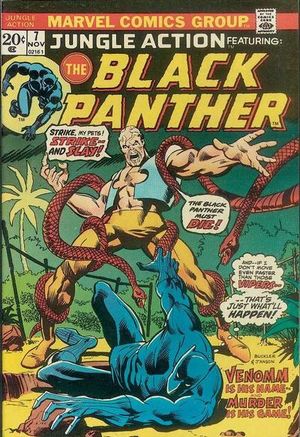 MARVEL’S BLACK PANTHER FILM HAS PROMPTED PLENTY OF READERS TO ASK ME TO REVIEW THIS QUINTESSENTIAL BLACK PANTHER STORY FROM THE 1970s. FOR PART ONE CLICK HERE
  Marvel’s Black Panther movie has prompted a lot of Balladeer’s Blog’s readers to ask for more and more items on the figure. My favorite was one from just today which said “I don’t like actually reading comic books but I like the way you describe them and review the stuff so could you do Panther’s Rage?”
 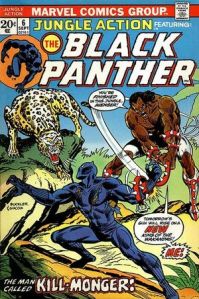 JUNGLE ACTION Volume 2 Number 6 (September 1973)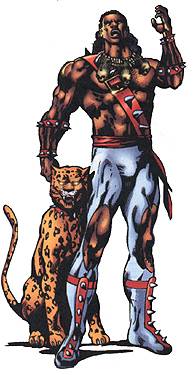
 AVENGERS Volume 1, Number 126 (August 1974) All the Sights and Sounds of Death
 Meanwhile, the Vision’s romantic partner the Scarlet Witch, is still torn with her own fears that the Vision may leave her for Mantis. (Two women fighting over him? The Vision really IS fully functional.) Wanda ponders her recent arguments with the Vision and how he always makes the arguments out to be HER fault.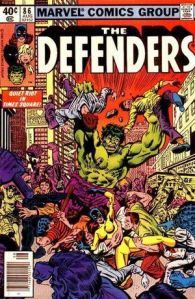
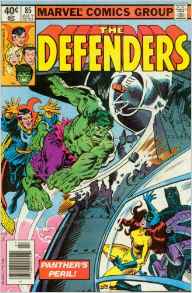 DEFENDERS Vol 1: Number 85 (July 1980) – Like A Proud Black Panther)
 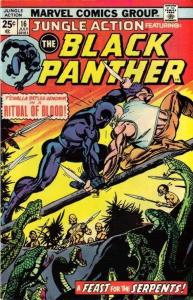 With Marvel’s Black Panther in theaters right now Balladeer’s Blog will take a look at an angle of Prince T’Challa’s run that is a bit overlooked. Panther’s Rage has been covered extensively as have other aspects of this Avenger’s career.
  WOW! Reaction to my Top Five Harry Flashman Novels blog post continues to amaze me! I’m always glad to share my odd enthusiasms with others so it’s been great to bring The Flashman Papers to the attention of new readers. Here in one convenient post are the links to my individual reviews of the Top Five and to my brief look at Flashman’s encounter with young Abraham Lincoln in Flash for Freedom.
 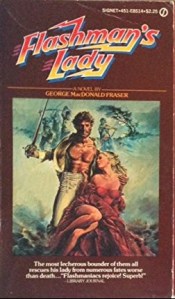 5. FLASHMAN ON THE MARCH (2005) – Setting: Abyssinian Military Expedition of 1867-1868 CLICK
  AND 1. FLASHMAN AT THE CHARGE (1973) – Setting: The Crimean War, 1853-1856 CLICK
 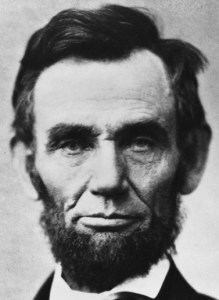 Balladeer’s Blog’s recent look at my Top Five Harry Flashman Novels was a hit. Combine that with the upcoming Presidents Day Holiday on Monday and let’s take a look at one of the other Flashman novels for future president Abe Lincoln’s interactions with George MacDonald Fraser’s infamous antihero Harry Flashman.
  The pair first meet in the fall of 1848 in Washington, DC, when Harry – a Cavalry Captain in Queen Victoria’s army – is trying, Bret Maverick-style, to pass himself off as a Royal Navy Lieutenant named Beauchamp Comber. (Don’t ask.) Abe senses something off about the scurvy Brit and uses seeming politeness mixed with alarming insinuations to set Flashman on edge, terrified that he’ll be exposed.
 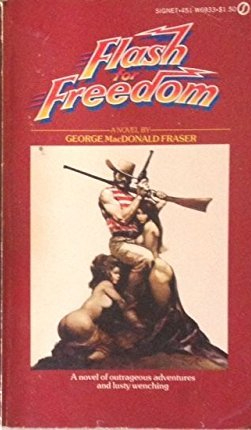 The next day a bedridden Harry is recovering from wounds received during this adventure. He’s staying at the home of an acquaintance of Lincoln, and Abe has been visiting the ailing Englishman, sitting in a bedside chair. They’ve had a lengthy conversation during which Lincoln has made it clear that he now knows who Harry really is and Flashman asks why Abe continues to cover for him.
 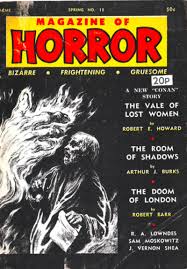 THE DOOM OF LONDON (1892) – Written by Robert Barr. In the “far future” of the mid-Twentieth Century the narrator of this tale looks back at the catastrophe that hit London in the 1890s.
