 Balladeer’s Blog marks the shortest day of the year with the shortest-lived comic book company since Pelican Publishing!
It’s Atlas-Seaboard, to distinguish this publisher from Marvel Comics, which went by Atlas Comics in the 1950s. There IS a Marvel connection, however, in that Martin Goodman, Stan Lee’s old colleague, launched Atlas Comics through Seaboard Periodicals for one brief shining moment several months in 1975.
Calling themselves “The NEW House of Ideas” clearly threw down the gauntlet at Marvel Comics’ feet. As it turned out, however, even Alan Thicke was a bigger danger to Johnny Carson than Atlas was to Marvel.
 PHOENIX
Secret Identity: Ed Tyler, Astronaut
Origin: Astronaut Ed Tyler was part of a three-man crew on the orbiting space station Threshold I. A leak in the main portion of the station forces the trio of astronauts to abandon their mission early and they evacuate in a shuttlecraft.
Complications cause the vessel to crash-land in the Arctic ice with Ed Tyler as the sole survivor. Tyler found himself in the hands of an alien race called the Deiei, who have been observing humanity from their underground Arctic base for untold millennia. The Deiei guided humanity’s evolution to make us more in their image.
The haughty aliens had recently decided Earth people are a failed experiment. They planned to preserve Ed Tyler for study to see what might have gone wrong but intended to wipe out all other human life on the planet and start from scratch. Tyler escaped custody, donned one of the high-tech battle suits of the Deiei and flew off, determined to thwart the Deiei’s genocidal plans
 First Appearance: Phoenix #1 (January, 1975). His final appearance came in October of that same year.
Powers: The Deiei space suit worn by Phoenix enabled him to fly at thousands of miles per hour, to shoot atomic energy blasts from his gloves and to withstand high levels of energy and large projectiles virtually unharmed. The suit also granted him a modicum of greater than human strength.
The media named this hero Phoenix when they saw him emerge from the smoldering ruins of part of Reykjavik, where he drove off the first assault by Deiei spaceships.
Comment: After fighting the Deiei for awhile Phoenix encountered another alien race called the Protectors of the Universe. Magus, the leader of the race, disagreed with the Deiei’s desire to wipe out humanity and granted Phoenix an opportunity to prove the people of Earth deserving of a second chance.
Phoenix’s adventures combined elements of the Silver and Bronze Age Green Lantern with Adam Warlock’s “philosophy for pre-teens” approach during his Counter-Earth period. Personally I found Ed Tyler’s gloomy “Humanity is so awful maybe we don’t deserve to be saved” musings to be ridiculous. Compared to the genocidal and callous Deiei, the human race seems like the definite lesser of two evils.
All that aside, Phoenix had a certain charm. In fact he was one of the few Atlas characters popular enough to be given a second chance with 2010’s attempted re-launch of the title.
 DESTRUCTOR
Secret Identity: Jay Hunter, teenager
Origin: When aspiring criminal Jay Hunter ticked off Max Raven, the crimelord he answered to, that gangster put out a hit on him. The attempt on Jay’s life took place at the lab of his scientist father Simon, who was working on a super-soldier formula.
Both men were mortally wounded, but Jay’s father – knowing there was enough formula to save one, but not both of them – gave it to his son to save his life. Jay pulled through, discovered he now had amazing super-powers and took to wearing a costume to fight crime. He called himself Destructor and was determined to atone for his criminal past. Continue reading →

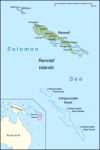 NUMBER ONE – Two gods of Bellona and Rennell Islands – NGUATUPU’A AND TEPOUTU’UINGANGI – As part of my look at gods and goddesses from various Polynesian island groups.
 NUMBER THREE – A look at how CHE GUEVARA AND GUY FAWKES came to symbolize the opposite of what they were in real life. CLICK HERE
  THE LUNARIAN PROFESSOR AND HIS REMARKABLE REVELATIONS CONCERNING THE EARTH, THE MOON AND MARS TOGETHER WITH AN ACCOUNT OF THE CRUISE OF THE SALLY ANN (1909) – Written by James B Alexander back in the glory days of titles so long they might not fit in a 140 character limit.
  NUMBER ONE – BEATRICE THE POISON WOMAN – A Halloween Season look at the beautiful but deadly hybrid woman from Nathaniel Hawthorne’s horror story Rappaccini’s Daughter. CLICK
  NUMBER THREE – FRANKENSTEIN’S ARMY (2013) – A review of this look at a horror movie about a descendant of the original Dr Frankenstein. This Doctor F is reanimating custom-weaponized corpses for the Nazis during World War Two. CLICK
  NUMBER FIVE – THE SOUL OF KOL NIKON (1913) – My Halloween Season review of this neglected novel by female author Eleanor Farjeon. The story deals with a Changeling using his supernatural command of music to try to steal a soul for himself from a human victim. CLICK
  NUMBER SEVEN – THE BOURNE IDENTITY – My review of ROBERT LUDLUM’S NUMBER TWO NOVEL, about amnesiac intelligence agent Jason Bourne. CLICK
  NUMBER ONE – With superheroes practically taking over pop culture it should come as no surprise that my look at Marvel Comics’ character Mantis was a huge hit.
 NUMBER THREE – David Lynch’s excellent Twin Peaks returned for 18 more episodes that continued the story from the original 1990-1991 series, the 1992 film Fire Walk With Me and 2014’s The Missing Pieces.
  NUMBER FOUR – The American Left has come to love censorship as much as the religious right always did.
  NUMBER FIVE – Balladeer’s Blog was examining various espionage novels by Robert Ludlum, the man behind the Jason Bourne books.
  THE PURPLE DEATH (1895) – Written by William Livingston Alden. Presented in the first person this story is narrated by a British gentleman staying in Italy. He becomes friendly with his neighbor, a German M.D. and bacteriologist named Dr Schmidt.
  NUMBER ONE – My two-part look at NEW DEMOCRAT SLOGANS was a comedy hit. This “Party of CEO’s” has come to deserve its reputation for having driven away all of us except pompous snobs and hilariously pretentious asses.
  NUMBER TWO – One of Balladeer’s Blog’s most popular Ancient Science Fiction posts EVER was this look at a very obscure 1896 work and its fascinating female lead.
  NUMBER THREE – Legendary Camille Paglia was in rare form this year, speaking on behalf of all of us who left the Democrats in disgust in recent years.
  NUMBER FOUR – For Frontierado Season this year one of my blog posts dealt with the story-telling possibilities inherent in a neglected aspect of Mormon history.
  NUMBER FIVE – Another western figure got a lot of attention in July, a gunslinging lady who braved Old California on a stage coach route.
  NUMBER ONE – Hatred is in the DNA of the Democrats. One of the worst ways that it manifests itself is the way Democrats are so often the cause of the atrocities they then blame on everyone else. Slavery, the Trail of Tears, Japanese Internment, the Ku Klux Klan, the Spoils System, Tammany Hall, Jim Crow, you name it.
  NUMBER TWO – From my Ancient/ Vintage Science Fiction category came this review of an unjustly neglected tale. The Nth Man is a gigantic, Kaiju-sized man with green shell-like skin who does battle with military and political powerhouses in America of the “future” 1930s.
  NUMBER THREE – The pampered white children of privilege who pretend to be “the resistance” (LMAO) against President Donald Trump are a joke. They are the oppressors while trying to pretend they are the oppressed.
 NUMBER FOUR – Alien: Covenant had been out for awhile by this point and Balladeer’s Blog reviewed it as the comedy that it is.
 NUMBER ONE – Hillary Clinton and her deluded supporters kept manufacturing excuses about her humiliating LOSS to President Donald Trump. (Red counties on map- TRUMP, blue ones – Hillary) The funniest ones involve the way Hillary and her supporters had no clue about how the Electoral College works. No, Hillary-drones, winning California and New York by large margins does NOT make you president – those numbers are meaningless statistics.
  NUMBER TWO – Balladeer’s Blog’s reviews of bad movies – the more obscure the better – always attract a lot of attention.
 NUMBER FOUR – Balladeer’s Blog often hypes the need for Third Parties in the U.S. to start whittling down the power of those two rival gangs of white collar criminals called Democrats (DemCorp) and Republicans (RepubCorp).
  NUMBER FIVE – Ancient Science Fiction reviews have become a staple here at Balladeer’s Blog.
  THE LAND OF THE CENTRAL SUN (1903) – Written by Park Winthrop. The Wintons – Jack and Louise – plus the Livingstons – Bert and Lily – are among the passengers on the ship Golden City when it gets blown off course. The ship winds up near Antarctica and gets trapped in ice.
  Balladeer's Blog