
Balladeer’s Blog continues its examination of the many facets of Fool Killer lore. FOR PART ONE, INCLUDING THE HISTORICAL CONTEXT IN THE 1850s, CLICK HERE
 PART FIFTY-FIVE – Here is a look at some of the Fool Killer’s targets in the April of 1912 edition of James Larkin Pearson’s version of the character:
*** The Steel Trust – Andrew Carnegie, J.P. Morgan, John Rockefeller and other “Big Ikes of the Steel Trust”, as Pearson and his Fool Killer called them. The bloated rich pigs were in the news again because – just like today’s corporate rich pigs at Google, Facebook, Twitter and others they were being called out on their prejudiced behavior and their contempt for the notion that Congress or the Stanley Committee or anyone else could hold them accountable.
They had recently boasted that they were above nations because without their steel the U.S. and some other countries could not wage war or engage in engineering & construction projects or build cargo ships, railroads, etc. Whistleblowers at the steel companies had recently made public statements about the ways the Steel Trust collaborated to control steel prices, EXCLUDE COMPETITION and undertake other acts in violation of Anti-Trust laws at what they called “Gary Dinners.” Testimony from 55 figures had already been heard.
Another way they were just as disgusting as today’s Big Tech/ Technofascists was the way that untold numbers of SUBPOENAED DOCUMENTS HAD BEEN DESTROYED BY THE CORPORATIONS INVOLVED (like privileged white one-percenter Hillary Clinton flagrantly destroyed so much of the evidence against her). Those documents allegedly contained proof that Steel Trust figures had not only violated the law but had committed perjury in their courtroom testimony. Corporate fascists like Jack Dorsey, Mark Zuckerberg and others seem to slither the same way no matter the time period.
 *** Judges and other high officials who betrayed their public trusts. He favored the recall process for judges as well as others.
*** Tobacco companies plus tobacco users like smokers and snuff-chewers. Continue reading
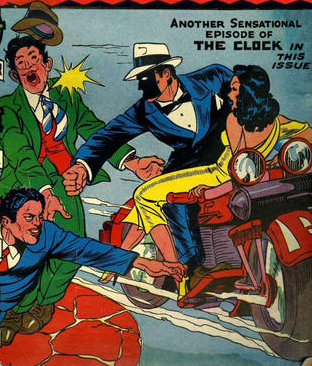 Before Batman, before Captain America and even before Superman himself, came the Clock, written and drawn by George E Brenner. The Clock was the first masked crimefighter in comic books, debuting in 1936, while the much more popular Batman didn’t come along until 1939. I’m not pointing that out to diss Batman, but to point out what a shame it is that the Clock seems to have been forgotten by most of the world. The figure is pretty much the middle character between Pulp heroes like the Shadow and the Moon Man and comic book superheroes. The Clock’s influence on Will Eisner’s iconic character the Spirit is obvious.
 THE CLOCK
 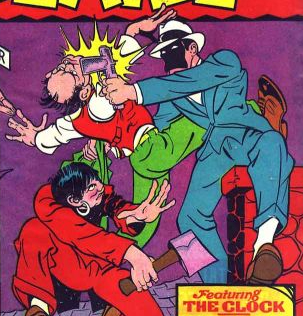 Powers: The Clock was the prototype for the countless non-powered costumed crimefighters to come. He was in peak physical condition and was a master of unarmed combat. He possessed the agility of an Olympic gymnast and was a marksman with the handgun he carried into action with him. In addition he was a master detective and investigator whose knowledge of the law helped him compile evidence against his foes.
 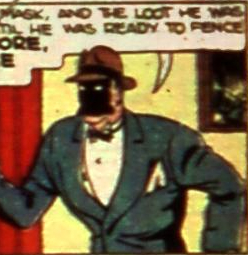 1. FUNNY PAGES Vol 1 #6 (November 1936) – #9 (March 1937)
  ARE THE PLANETS INHABITED? (1913) – Written by Edward Walter Maunder, this book began with ridicule of the outdated belief that the sun and moon might be inhabited, but it doesn’t exactly embody scientific accuracy itself. Therefore I’m classifying it as science fiction even though in 1913 it was considered to be a series of observations adhering to rigid scientific principles.
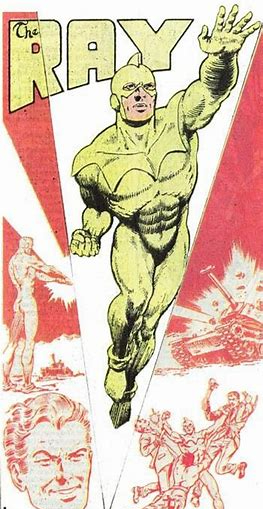 THE RAY
 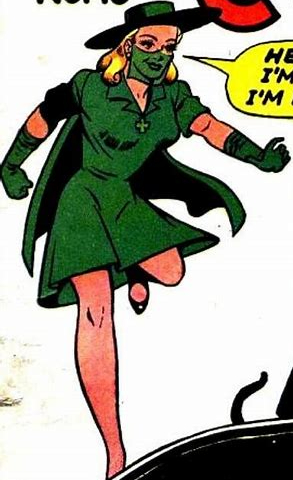 LADY LUCK
  Thank you to those Balladeer’s Blog readers who reminded me that I hadn’t provided a post with the links to ALL my reviews of the episodes of The Rivals of Sherlock Holmes. That was a 1971-1973 British television series which adapted Victorian Age and Edwardian Age stories about detectives other than Sherlock Holmes.
 A MESSAGE FROM THE DEEP SEA – R Austin Freeman’s police surgeon detective Doctor John Evelyn Thorndyke (created in 1907) uses his unique talents to investigate the murder of a London prostitute. Click
 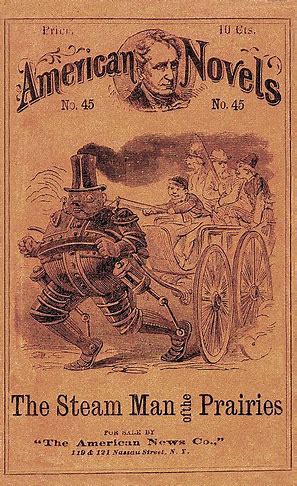 THE STEAM MAN OF THE PRAIRIES (1868) – Written by Edward Sylvester Ellis. Before the Frank Reade stories came this work that is often hailed as the first Dime Novel with a science fiction theme.
  GARRISON TALES FROM TONQUIN (Tonkin): AN AMERICAN’S STORIES OF THE FRENCH FOREIGN LEGION IN VIETNAM IN THE 1890s (1895) – Written by James O’Neill. Seven years ago here at Balladeer’s Blog I examined Washington Irving’s 1809 work
  In a similar spirit, I am now examining Garrison Tales From Tonquin, published in 1895 and written by American James O’Neill, who had served in the French Foreign Legion during the 1880s and early 1890s. Just as Washington Irving was ahead of his time with his sentiments in The Men of the Moon, James O’Neill was ahead of his time in regard to his observations on the French occupation of Vietnam during and after the Sino-French War. Readers in 1895 who were expecting Kipling would have found O’Neill to be virtually his polar opposite.
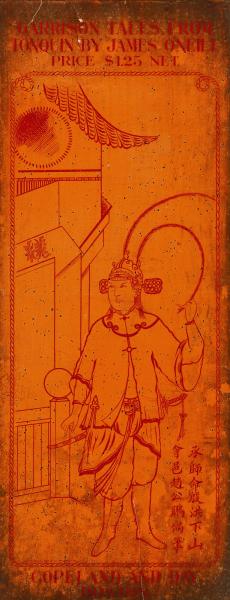 I found it staggering to read 1890s accounts written by an American fighting man in Vietnam reflecting on the ugliness and ultimate futility of the military situation. So much of O’Neill’s fictionalized accounts of his real-life experiences in Vietnam read like something from an author in the late 1960s or later using such a tableau as an allegory for America’s involvement in Indochina.
  Pop culture at the moment remains superhero-crazed, and Balladeer’s Blog’s readers always want more articles about them. Here is a look at the early adventures of Tigra the Werewoman from the 1970s.
 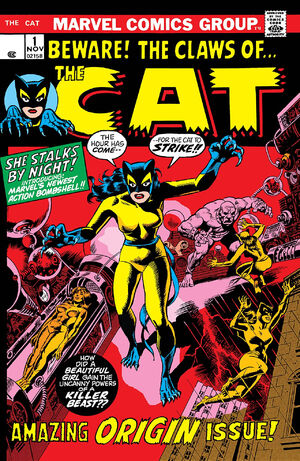 THE CAT Vol 1 #1 (November 1972)
 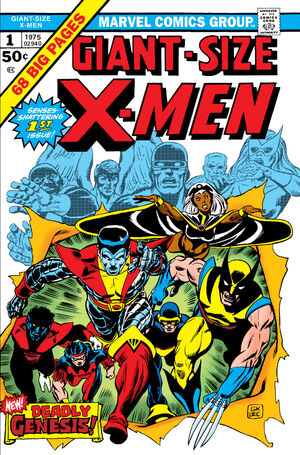 GIANT-SIZE X-MEN Vol 1 #1 (May 1975)
  THE NEW HUMANS (1909) – Written by B Vallance. No other name has come to light for the author of this thought-provoking work. Explorer Montgomery Merrick is roaming around the wilds of 1909 Uganda when he falls down a mountainside and into a concealed valley.
  Balladeer's Blog