Here’s Part Five of Spider-Man 1970s Classics, in which readers finally learn what lies behind the whole Dr Octopus/ Aunt May/ Canada storyline. For Part One click HERE.
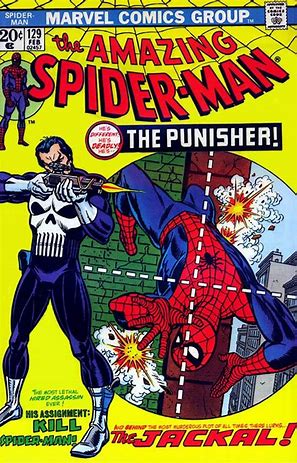 SPIDER-MAN Vol 1 #129 (February 1974)
Title: The Punisher Strikes Twice
Villains: The Punisher and the Jackal
NOTE: I skipped over the less than classic Spider-Man #s 127 and 128, which featured a rushed, poorly written story about our hero fighting a scientist who accidentally mutated himself into a copy of Spidey’s frequent foe the Vulture.
In issue 127 some subplots moved along, so here’s a recap – Spider-Man and his friend the Human Torch (Johnny Storm) of the Fantastic Four continued working on the Spider-Mobile that our hero will get paid for since Corona Motors’ new pollution free engine will be running it.
Meanwhile, Peter Parker and his roommate Harry Osborn had an ugly argument about their strained relationship since Harry’s father died. Peter does not yet know that Harry is the one who removed Norman Osborn’s Green Goblin costume from his dead body before the police arrived. Thanks to the documents that Norman had on his person, Harry now knows that Peter is really Spider-Man and – in his drug-addicted mind – thinks Peter intentionally killed his father.
Lastly, Professor Miles Warren, Peter Parker’s bio-chemistry instructor and academic advisor at Empire State University, had a terse talk with Peter about how he has let his grief over Gwen Stacy’s death seriously jeopardize his grades. Now, on with issue 129.
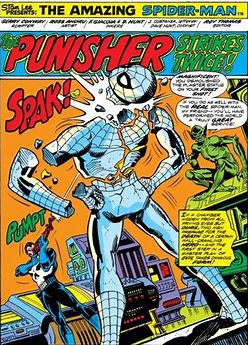 Synopsis: In a laboratory hideout are two costumed men, the Jackal and the Punisher, BOTH making their first ever appearances. The Punisher, the now-legendary vigilante who got multiple movies long before the Marvel Cinematic Universe was launched, is blowing apart statues of Spider-Man with high-tech, specially designed rifles and machine-guns paid for by the Jackal.
Though the Punisher usually works alone, the Jackal has talked him into an alliance against Spider-Man, whom the Jackal wants dead for as yet unknown reasons. The Punisher wants Spider-Man dead because this was when our hero was wanted in regard to two murders – Captain George Stacy and Norman Osborn.
Elsewhere that night, Spider-Man defeats four armed robbers hijacking a truck, while having Peter Parker’s camera set to automatically snap photos of the action. The next morning, as Peter, he shows up at the Daily Bugle with the pics. Continue reading →

 THE BLACK REAPER (1899) – By Bernard Capes. Balladeer’s Blog’s month-long celebration of Halloween continues with this neglected horror tale. The story takes place in 1665 in a secluded British farming town called Anathoth.
  The citizens of Anathoth are described in the narrative as the kind of religious people who merely pay lip service to their beliefs but don’t live by them. They even treated their previous Vicar like a joke.
 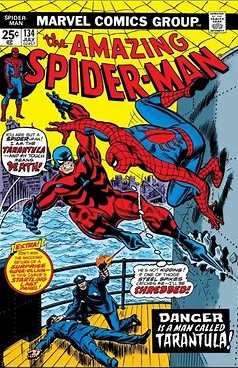 SPIDER-MAN Vol 1 #134 (July 1974)
 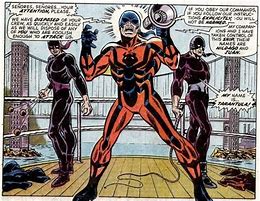 As the ship sails along it is hijacked and held for $1,000,000.00 ransom (equivalent to $5,581,387.00 today). The hijackers are the brand new Hispanic villain Tarantula and his two costumed sidekicks. While the villain and his aides rob the passengers of all their valuables, Peter grabs the first chance he gets to become Spider-Man and saves a sailor knocked overboard in a scuffle with one of Tarantula’s men.
 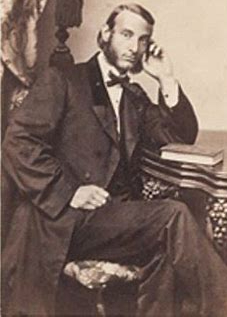 YEGOR’S PORTRAIT (1897) – Written by George Hepworth. A well to do Russian named Yegor was killed in a horse riding accident. A portrait of the man haunts those who remember him. By night the Yegor of the portrait emerges from the work of art.
 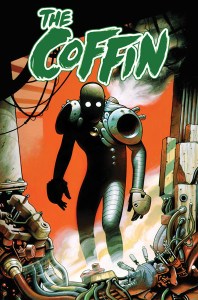 THE COFFIN (2000) – Written by Phil Hester and drawn by Mike Huddleston, The Coffin was originally a four-part serial before being collected into graphic novel format. I’ll provide details below but right up front let me point out that the horrific but intriguing premise is that the Coffin is a dead scientist whose soul is trapped within a polymer techno-suit of his own creation.
 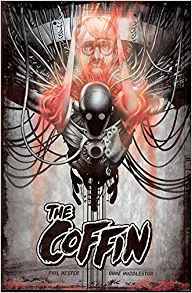 And so Heller Technologies recruited Dr Ahmad to devise strong, lightweight polymers for medical purposes. To that end Ashar has developed polymers that can be used to form an artificial membrane that is perfectly impermeable and incredibly durable.
 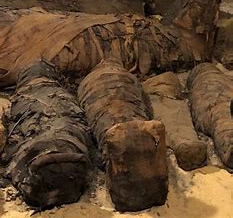 THE UNSEEN MAN’S STORY (1893) – A needlessly neglected mummy tale. At age twenty-eight, a Frenchman named Carigliano arrives in Egypt on assignment from the French government. He has studied Egyptology and is thrilled with his placement.
  GIANT-SIZE SUPERHEROES Vol 1 #1 (June 1974)
 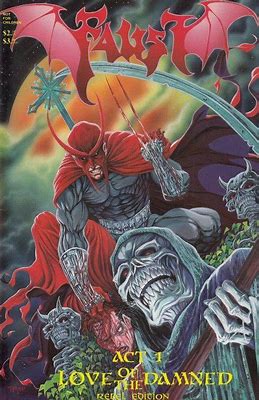 FAUST: LOVE OF THE DAMNED (1987) – Written by David Quinn with artwork by Tim Vigil. Halloween Month continues here at Balladeer’s Blog with this review of the 1987-2012 “adult” comic book series Faust. This series included very graphic and very unusual sex and violence while offering a twisted update on the story of Faust selling his soul to Mephistopheles. The year 2000 Brian Yuzna (’nuff said) movie version of Faust: Love of the Damned is pretty bad but does capture the blood-soaked, anarchic WTF air of the series.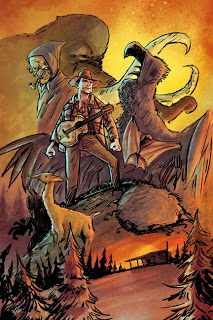
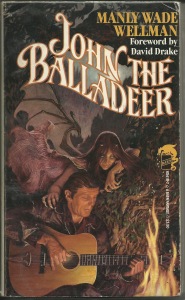 The Old Gods Waken deals with Silver John performing with other musicians at a music festival, then getting drawn into a property line dispute between the Forshay family and two sinister British men calling themselves Brummitt and Hooper Voth. As usual in our hero’s travels there are dark supernatural forces at work behind this boundary dispute – forces ultimately dealing with Pre-Columbian entities and transplanted Druidism.
 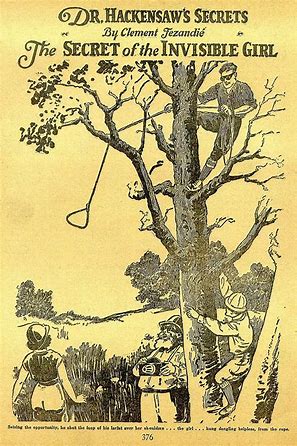 THE SECRET OF THE SUPER-TELESCOPE (August 1923) – Doctor Hackensaw’s new invention, a super-telescope, provides the most detailed looks at Earth’s moon ever seen. A secret civilization is detected and photographed. NOTE: This is the start of the first serialized Hackensaw storyline.
