
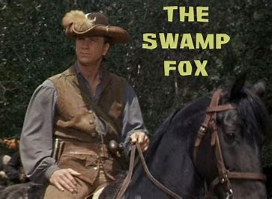
 THE SWAMP FOX (1959-1961) – With the 4th of July fast approaching, it’s past time for a seasonal post. The Swamp Fox is a piece of Forgotten Television that ran sporadically on Walt Disney’s programs. Eight episodes were produced over two years with Leslie Nielsen in the lead role and each one filled a 1-hour time slot.
For people unfamiliar with this hero of the Revolutionary War, he was a Colonel (later a General) and his real name was Francis Marion. He was a guerilla leader fighting against the British army during their occupation of South Carolina during the war.
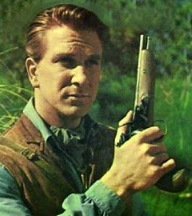 Marion and his men knew the South Carolina swamplands like the proverbial backs of their hands and could strike the British then disappear deep into the swamps, foiling any pursuit. Obviously, as a television production The Swamp Fox featured a very romanticized version of Marion and his escapades.
In the starring role Leslie Nielsen is good but not great and is sometimes so solemn that the supporting cast members overshadow him. Given his later comedy career a viewer can’t help but expect Nielsen to say things like “I am serious. And don’t call me Francis.” Continue reading
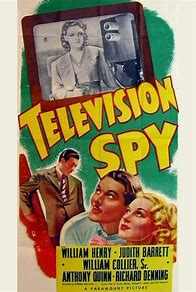 TELEVISION SPY (1939) – I’ve been reminiscing recently, what with Balladeer’s Blog’s 14th Anniversary just having passed a few days ago. I was reflecting on my long-ago review of the hilariously bad 1935 movie Murder by Television, which starred Bela Lugosi in a dual role.
  FEVER DREAM – From State Farm Arena in Georgia came this game between the INDIANA FEVER (7-10) and their hosts the ATLANTA DREAM (6-8).
  BATTLE IN SIN CITY – The LAS VEGAS ACES (8-6) welcomed the CONNECTICUT SUN (13-2) to Michelob Ultra Arena.
 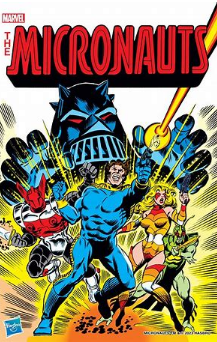 This weekend’s escapist, light-hearted superhero post from Balladeer’s Blog will look at some of the stories Marvel Comics created around the licensed I.P. of Micronauts toys.
 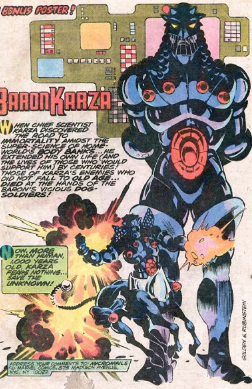 BARON KARZA – The evil, black-armored Baron Karza was a very impressive villain, despite being one of the most blatant Darth Vader ripoffs this side of Japan’s Swords of the Space Ark movies.
 SPACE GLIDER ARCTURUS RANN – The leader of the Micronauts. Rann was the very first Micronaut (the Microverse’s version of Astronauts), who was placed in suspended animation and sent out in a spaceship called The Endeavor on a 1,000-year mission of exploration throughout the Microverse.
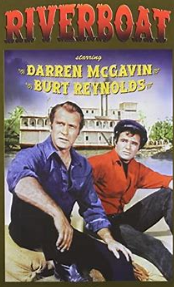 FORGOTTEN TELEVISION – Burt Reynolds and Darren McGavin’s western series
 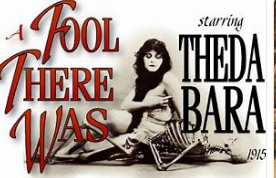 SILENT MOVIES – Since last year I reviewed:
 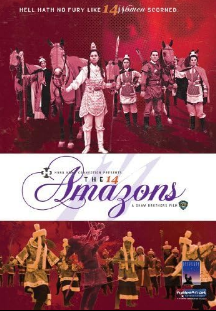 QUALITY MOVIES –
  PART FIVE – Horn recounted an incredible event he attended in Angola, which was not yet the name of the country, just a populated region. He and his subordinate Trade Agents were guests at a conjo – a performance of traveling entertainers called the Akowas.
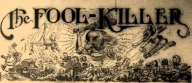 JANUARY 1910 – James Larkin Pearson, poet and newspaper man, carried on the Fool Killer tradition from 1910 to 1917, then again from 1919 into the 1920s. Pearson’s fellow North Carolinian Charles Napoleon Bonaparte Evans had written the Fool Killer Letters of the 19th Century so it’s appropriate that another Tar Heel continue the lore for so many years of the 20th Century.
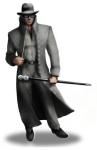 Pearson’s Fool-Killer was the mascot of the entire publication, which was merely 4-6 pages anyway, not simply the supposed author of letters regarding his body count of “fools.” Think of this Fool Killer (I prefer no hyphen) as the written word equivalent of Puck (1876-1918), the political cartoon mascot of the humor magazine of the same name.
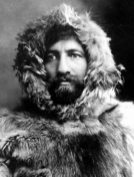 *** Frederick Cook, who, the previous December, had seen his claim to have reached the North Pole ruled invalid and possibly fraudulent by the University of Copenhagen. (The Fool Killer was unable to locate Cook, however.)
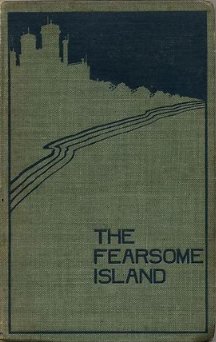 THE FEARSOME ISLAND (1896) – Written by British author Albert Kinross. An unusual work with a multi-layered narrative. The entire novel was penned by Kinross, but it is one of the countless works of fiction presented as if it is a rediscovered manuscript relating the “true” adventures of Silas Fordred from the 1500s. Kinross adds another layer by explaining the sci-fi devices that Fordred could not comprehend and put down to sorcery and the supernatural.
 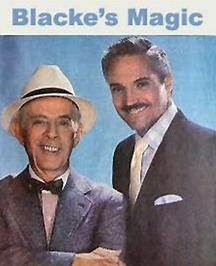 BLACKE’S MAGIC (1986) – HAPPY FATHER’S DAY, GENTLEMEN! Last Father’s Day I reviewed the neglected television series
 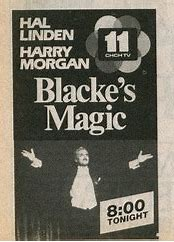 Hal Linden played Alexander Blacke, a big-name, big-money stage magician. While investigating the seemingly impossible murder of an old friend, Alex gets help from his former conman father Leonard, portrayed by Harry Morgan.
