
This weekend’s escapist, light-hearted superhero post from Balladeer’s Blog looks at some of Great Britain’s homegrown superheroes from the 1960s. For their 1940s heroes click HERE.
 GADGETMAN
Secret Identity: Burt Travis
Debuted: 1968
Origin: Burt Travis was the scientific genius who ran Travis Corporation. He used some of his inventions and the costumed identity of Gadgetman to fight criminals, aliens and other menaces.
Powers: Burt Travis had a hidden teleportation device in his office. When he wanted to become Gadgetman he would teleport to his secret headquarters and go into action. This hero could fly via jet-shoes, shoot assorted ray-guns called Gadget Guns and release a substance from his costume that made him slick and impossible to hold onto.
Gadgetman also piloted a flying Gadgetcar and Gadgetcycle. Burt Travis’ lab apprentice Gary Stewart was really Gimmick-Kid, with a costume and gadgetry similar to Gadgetman.
 CAT-GIRL
Secret Identity: Cathy Carter
Debuted: 1969
Origin: Cathy Carter was the daughter of a widower private investigator. In their home’s attic she found an old cat costume that was a gift from an African head of state her father had helped. Putting on the costume, she gained various powers and fought crime as Cat-Girl.
Powers: Cat-Girl has greater than human strength, speed and incredible agility. She can see in the dark and gains magnified senses of smell and hearing. Her claws can cut through metal and other objects. In costume she can control the prehensile tail. Continue reading
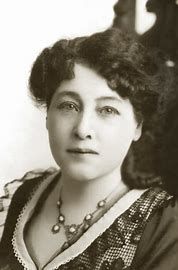 Alice Guy-Blache (1873-1968) was a French film pioneer and was also the first woman to direct movies. Alice worked for the Gaumont Film Company and from 1896 to 1906 was Gaumont’s Head of Production.
 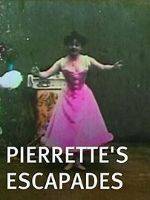 PIERRETTE’S ESCAPADES (1900) – A woman changes from a pink dress to a green dancing outfit. She proceeds to dance alone and soon finds the stock clown character Pierrot dancing with her. The clown tries kissing her but is rebuffed. Next, the stock character Harlequin dances with her, impresses her and the two share a kiss as the 2-minute production comes to a close. Some frames were hand-tinted.
 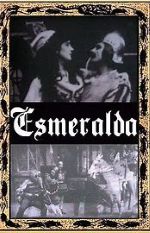 ESMERALDA (1905) – The oldest known movie version of The Hunchback of Notre Dame. Alice had been shepherding Gaumont’s movies away from mere visual spectacle and on to narrative filmmaking.
 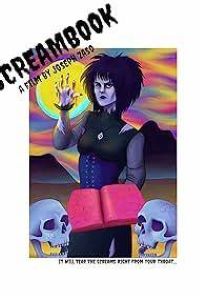 SCREAMBOOK (1984) – Ever see a feature length horror film written, produced and directed by a 13-year-old? And with nearly all the roles – of all ages – played by fellow teenagers? Obviously, I’ll be grading this flick on a curve in this review.
 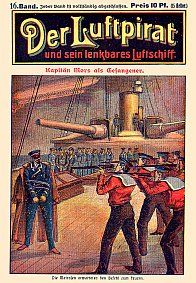 CAPTAIN MORS IMPRISONED – Far above the ocean, Kapitan Mors commands his Luftschiff (Air Ship) on its latest voyage along with its part European and part Indian crew. A carrier pigeon brings our masked hero a distress call from Miss Else Martens. She is in the clutches of a tinpot dictator who wants to force her into a marriage.
  BRACKEN’S WORLD (1969-1970) – This one-hour drama has the dubious distinction of being the series that replaced Star Trek on NBC’s Fall Schedule for the 1969 into 1970 season. The program was set at fictional Century Studios in Hollywood and presented dramas about life in the film industry. Dorothy Kingsley created and produced the show and wrote several episodes.
 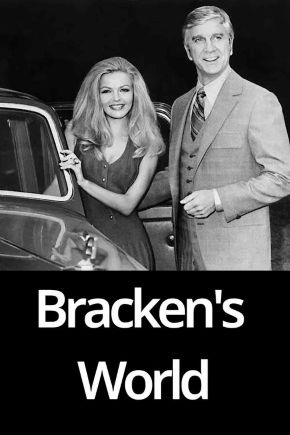 The episodes were sometimes self-contained with assorted guest stars at the center of each week’s backstabbing and maneuvering, but most revolved around a regular cast portraying figures who worked at or were under contract to Century Studios.
  101. FADE IN – Brandoesque Tom Hudson tries to make his mark as an actor, Paulette Douglas is reluctant to do a nude scene in her first film, but her ambitious show-business mother (Jeanne Cooper) insists she do it. Producer Kevin Grant’s marriage is in trouble over his use of the casting couch. Tony Curtis, Omar Sharif and Raquel Welch make brief appearances as themselves to sell the supposed “star power” of Century Studios.
 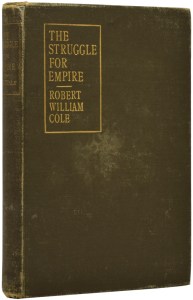 THE STRUGGLE FOR EMPIRE: A STORY OF THE YEAR 2236 (1900) – Written by Robert W Cole. I left out the first half of the title for the headline, since The Struggle For Empire sounds like a mundane history book. In reality this novel was a very, very early example of the Space Opera sub-genre.
  Initially the Earth colonized and inhabited the planets and certain moons of our own solar system all the way out to Neptune. (Pluto was not discovered until 1930.) In a quaint quasi-Steam-Punk way, all of those planets and moons have Earth-like atmospheres and conditions.
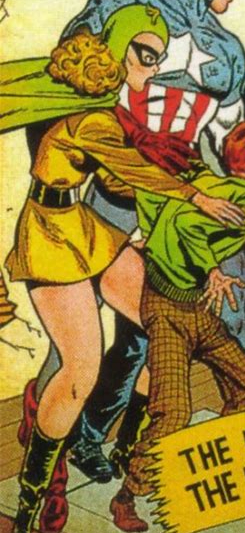 GOLDEN GIRL
  THE DEATHMASTER (1972) – In between his pair of movies as the vampire named Count Yorga the one and only Robert Quarry starred as a vampiric Charles Manson wannabe in this film. The Deathmaster starts out with a great bit that wouldn’t look out of place in a Jean Rollin horror flick from France: the huge, hulking Barbado (Le Sesne Hilton) plays eerie flute music, seemingly luring ashore a sea-tossed coffin. This casket holds our “Deathmaster” – a vampire called Khorda.
