
 Here at Balladeer’s Blog I’ve been reviewing ancient Greek comedies for years and a fair amount of people have recently asked me why I didn’t take the traditional view of Aristophanes’ comedy The Birds. That traditional view claims that The Birds was written at least partially as a commentary on the failed military expedition to Sicily.
FOR MY EXAMINATION OF THE BIRDS CLICK HERE
ANSWER: I omitted any reference to the Sicilian Expedition from my blog post on The Birds for a variety of reasons. For starters, it’s been covered to death by others who INSIST that that is the main subject of the comedy, so there’s no lack of alternate sources who cover that particular angle.
Next, I disagree with the notion that The Birds had much – if anything – to do with the disasters suffered by the Athenian forces in Sicily. It all comes back to my overall view that too many people force interpretations into Aristophanes’ comedies just because he’s the only ancient Greek comedian whose plays have survived in something resembling complete form.
Let’s revisit my usual spiel about the way most study of Aristophanes’ comedies takes place in a virtual vacuum of “All Aristophanes and nothing BUT Aristophanes.” Much of that is understandable since the other comedians’ works came down to us only in fragmentary form.
As I’ve made clear in my examinations of comedies by Eupolis, Cratinus and others it really opens your mind about the entirety of Attic Old Comedy to read the many, many academic works analyzing the fragments of the other comedians’ works. Too few people do this, I guess because most people aren’t as boring as I am. Continue reading
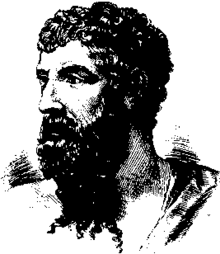


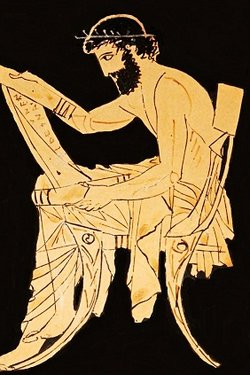
 Anteia was written by the comic poet Philyllius. This comic poet’s career seems to have spanned approximately from the 410s BCE to 390 BCE. One of his comedies won 1st prize at a Lenaea festival in the 390s and he won 1st prize at an unknown Dionysia. His fellow comedian Strattis credited him with being the first Attic Old Comic to use real torches on stage.
 A hetaera could move from man to man or keep one man for extended periods. What they were was openly known but the hetaerae occupied the top rung in the open “sex for pay” business in ancient Greece. Political figures could be publicly known as a hetaera’s steady man and it was not a career ender, but the man would be in for a lot of ribbing in the comedies of the time, usually as the butt of jokes pointing out how such an “ugly” man could ONLY get such a beautiful sex partner by paying her.
 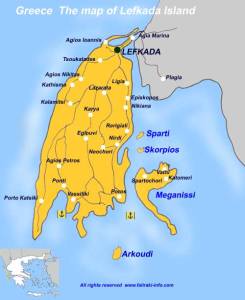 Regular readers of Balladeer’s Blog are familiar with my obsession with ancient Greek comedies. A related story has hit the news – on the Ionian island of Lefkada a previously unknown ancient amphitheater was discovered recently.
  Balladeer's Blog