Balladeer’s Blog resumes its blog posts about neglected mythological epics from around the world. This particular epic comes from the Bambara people of the Kingdom of Segu in what is now Mali.
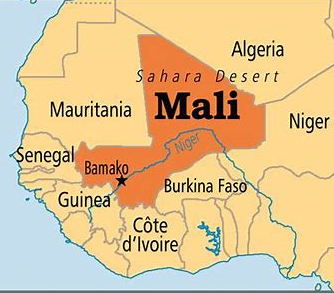 THE BAKARIDJAN KONE EPIC – Djeli, the poet-historians of the Bambara people for over 300 years, would often recite, chant and sing this epic myth while playing their stringed instruments called ngoni.
A. The future father of Bakaridjan Kone is a noble-born farmer in Disoro Nko. He grows tired of his agrarian lifestyle and his wives. (“Segu City’s where he’d rather be/ He gets allergic smelling hay” Had to be said.) Hearing that Da Monzon, the great ruler of the Kingdom of Segu, knows how to create gold, the disenchanted farmer goes to Segu City and becomes part of the court of Da Monzon, only to learn the gold story is not true.
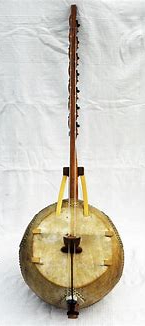
A ngoni
B. Kumba, one of the errant farmer’s wives, gives birth to a boy. His deadbeat dad refuses to be present for the naming ceremony but hints around to Da Monzon that maybe he should provide him with a gift to celebrate the birth. Da Monzon is disgusted with the man for abandoning his wives and not being present for said naming ceremony.
Instead, the king sends cowries to the wives so they can perform a proper ceremony, at which he wants the baby to be named Bakaridjan Kone. As the provider of the boy’s name, Da Monzon has made himself the child’s adopted father.
C. Years go by, and, royal politics being what they are no matter the culture or time period, Da Monzon begins to worry that he may get killed and/or overthrown before any of his sons are old enough to take over as king. His morike (oracle or diviner) tells him that no full-grown man poses a threat, but there is a boy-child who would one day be able to seize the throne. The morike advises Da Monzon to find a boy who is tough enough to not cry out when his foot is pierced by the king’s spear. THAT is the boy who might overthrow the king. Continue reading →


 PART 57 – Some of the Fool Killer’s targets in the July 1912 edition of James Larkin Pearson’s version of The Fool-Killer. As I always point out, Pearson was difficult to categorize, which makes things interesting because he combines what we think of as left-wing and right-wing attitudes.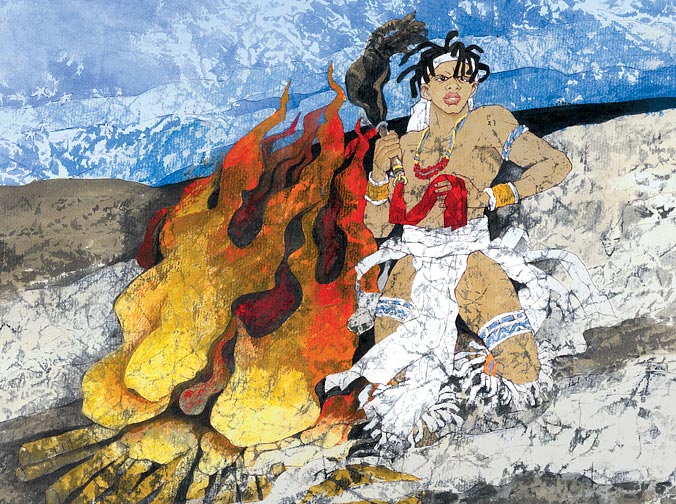
 In the versions where they are two separate entities Mwindo is a villainous figure while Kabutwa-kenda is the main hero of the epic. Regular readers of Balladeer’s Blog will be reminded of the Navajo twin gods Nayanazgeni and Thobadzistsini. Nayanazgeni was usually the hero of the epic about the defeat of the evil gods called the Anaye but in the Apache version of the myth his brother Thobadzistsini is the hero and Nayanazgeni is reduced to being a comic relief coward.
 PART 56 – Some of the Fool Killer’s targets in the May of 1912 edition of James Larkin Pearson’s version:
  PART FIFTY-FIVE – Here is a look at some of the Fool Killer’s targets in the April of 1912 edition of James Larkin Pearson’s version of the character:
  *** Judges and other high officials who betrayed their public trusts. He favored the recall process for judges as well as others.
 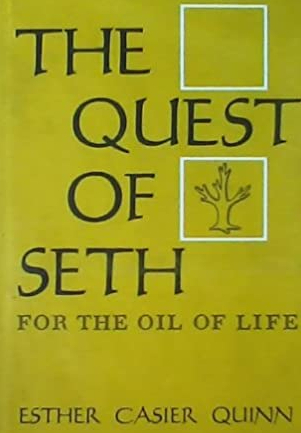 THE QUEST OF SETH FOR THE OIL OF LIFE (1962) – Written by Esther Casier Quinn, this is one of the best and most concise works of comparative mythology that I have ever read. I meant to review this book way back when I started Balladeer’s Blog in 2010 but for various reasons it kept falling by the wayside. The Quest of Seth for the Oil of Life is also known as The Quest of Seth for the Oil of Mercy, The Legend of the Rood and many other titles.
  Balladeer’s Blog continues its examination of the many facets of Fool Killer lore. FOR PART ONE, INCLUDING THE HISTORICAL CONTEXT IN THE 1850s, CLICK
 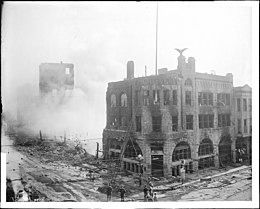 *** J.B. McNamara and J.J. McNamara, who had pleaded guilty in December 1911 to the bombing of the Los Angeles Times building on October 1st of 1910. Clarence Darrow, the famed defense attorney, represented the men but was blamed for mishandling the situation.
  PART FIFTY-TWO – Some of the targets from the December of 1911 edition of James Larkin Pearson’s version of The Fool-Killer:
