
These are the legends about Charlemagne and his Paladins, not the actual history, so there will be dragons, monsters and magic.
FOR MY FIRST CHAPTER ON CHARLEMAGNE’S PALADINS CLICK HERE.
 BRADAMANTE VS ATLANTES – We left off in the previous installment with Bradamante, the female Paladin in white armor, waiting at an inn in Bordeaux for her foretold encounter with the clever dwarf Brunello. Presently the day had come when Brunello arrived, but before she could approach him, both of them were swept up in a crowd of bystanders in a panic, pointing to the sky as the enchanter astride the winged horse once again flew overhead.
Bradamante took advantage of this development to pretend to casually inquire of Brunello about the astounding sight. The clever dwarf, whom Bradamante had been warned was an accomplice of the flying enchanter, informed her that it was Atlantes and that he had abducted several men and women recently and imprisoned them in his mountaintop castle.
 Brunello pretended not to know what happened to the abductees, but the female Paladin had been told by the priestess Melissa that they were used as companions for her missing beloved, Ruggiero. Atlantes had trained and raised Ruggiero since the latter’s childhood and feared the prophecies that the warrior would one day be led away from Islam by his love for Bradamante.
Playing along as if she was not suspicious of the clever dwarf, the White Paladin raged about how she longed to find the mountaintop refuge of Atlantes and free his prisoners. Brunello had by now realized that this woman warrior was the famous Bradamante herself, and planned to lure her into the clutches of Atlantes as he had done with so many others. Continue reading
 BRADAMANTE IN THE WIZARD’S TOMB – We left off last time around with Mandricardo searching for the Paladin Roland so he could try to kill him and steal from him the sword Durindana, thus completing the armor of Hector. The female Paladin in white armor, Bradamante, was searching for Ruggiero the Moor, from whom she had gotten separated a few installments back. Ruggiero was likewise searching for her.
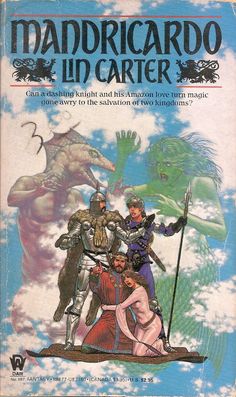 MANDRICARDO AND THE ARMOR OF HECTOR – Last time around in the Tales of Charlemagne and His Paladins we left off with Ruggiero searching the Forest of Arden for Bradamante, the female Paladin in white armor, with whom he had fallen in love. They had become separated while fighting some of the Saracen soldiers invading Charlemagne’s realm at the time.
  PART 66 – Some of the Fool Killer’s targets on both sides of the aisle in the July of 1913 edition of James Larkin Pearson’s version of the folk figure:
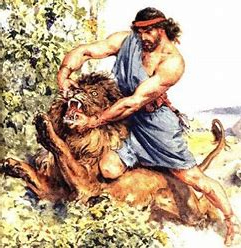
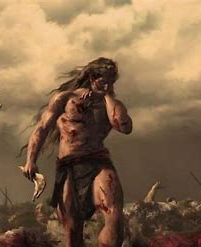 SAMSON IN THE LEGENDS OF THE JEWS – Samson was born the son of Manoah, a man of the Dan tribe and his wife Zelalponit aka Hazelalponit of the tribe of Judah.
  SAMSON IN ISLAM – Right at the start, I’ll make it clear that there is no specific reference to Samson in the Koran. Period. In some of the other scholarly writings by Muslim authorities of the distant past they included Samson aka Shamsun by speculating that he was among the many unnamed prophets of their faith.
  NOTE: Yes, that still puts Samson’s existence before Muhammad was even born, but the academic and religious debates about this are outside the material I am covering in this post.
 SAMSON AS A NON-BIBLICAL SUN GOD – Before getting into the Biblical and Talmudic Samson tales, let’s take a look at the tradition of Samson being an ancient sun deity. In this context his “seven locks/ braids of hair” were seven solar rays emanating from his head like in ancient artwork of other solar figures.
  64. The May of 1913 edition of James Larkin Pearson’s Fool-Killer was lacking in urgency and satirical bite, but I found it to have a certain slice of life feel to it that captured its era yet also underlined certain tableaus that are seemingly eternal.
 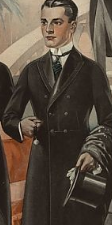 63. Some of the Fool Killer’s targets in the April of 1913 edition of James Larkin Pearson’s Fool-Killer:
  Those were the days when not even the elected officials owned by wealthy families like the Morgans accumulated anywhere near as much money as those who owned them. Think of today’s abusive and repulsive families like the Bidens, Cheneys, Pelosis, Bushes, Clintons, Romneys and so many others from both political parties who have COMBINED obscene wealth with political influence to be sold. They plunder the public treasury while making shady money on the side and breaking laws that the rest of us are expected to abide by.
  *** Forever chaotic Mexico. The Revolution of 1910 led to the final downfall of decades-long dictator Porfirio Diaz in 1911. Diaz’s reform replacement, Francisco Madero, was overthrown and arrested by Victoriano Huerta, who had just had Madero killed in 1913. The Fool-Killer bitingly observed “They sure don’t waste any time in Mexico deliberating over what to do with their ex-presidents.”
  A. Ngai, the creator god, divider of the universe, divider of the land from the sea and owner of the dazzling light, descended to the Earth shortly after making it. Mists covered the entire world because of how freshly made it was.
