
Balladeer’s Blog continues its examination of the 1967 science fiction/ existential drama The Prisoner. For Part One, in which I examined the themes and concepts at play in the series click HERE
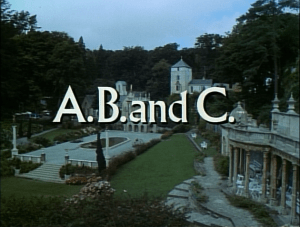 Episode Title: A. B. AND C. … In the ongoing debate about the exact numbering of the 17 episodes of The Prisoner I place this as the 10th episode.
As this episode begins we are still in the period of days with the same Number Two (Colin Gordon) as last time serving his time as a rotating executive of the Village.
The Story: A very nervous Number Two is in one of the Village’s concealed laboratories with Number 14, a blonde female scientist. (If you’ve seen the Simpsons episode parodying The Prisoner she’s the blonde lady to whom the bald Village Supervisor says “Tell me again why you thought a big balloon would stop people from escaping” and she replies “Shut up! THAT’S why!”)
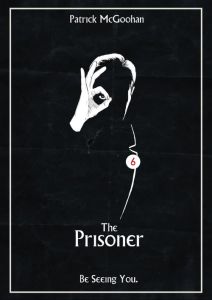 This Number Two is on very thin ice with the Board after the way he failed to stop the Prisoner and the traitorous Number Twelve from sabotaging two of the most crucial devices advancing the Villagekeepers’ conspiracy. Frequently chugging milk for his ulcer, he anxiously hopes to recover some favor and credibility by at last maneuvering Number Six into admitting why he resigned from British Intelligence.
(For newbies to The Prisoner I’ll point out that if the Villagekeepers succeed at making Number Six admit why he resigned it will symbolize his surrender to them and recognition of their authority over him, like agreeing that “2+2=5” in Orwell’s 1984 symbolized surrender to The Powers That Be.)
 Dialogue makes it clear that Number Two is forcing Number Fourteen to proceed more quickly than she would like onto a human subject for her combined drug & electronic method of monitoring dreams of sleeping primates. As always on The Prisoner these reminders that humans are basically animals, too, serve like Rousseau’s “Noble Savage” metaphor for humanity. Continue reading
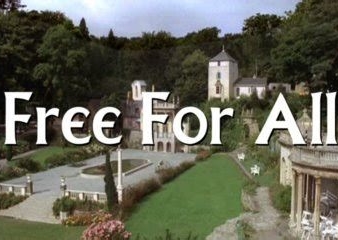 Episode Title: FREE FOR ALL
 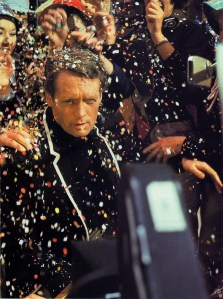 Needless to say our protagonist figures this election nonsense is just another experimental Head Game of the Villagekeepers. His suspicion increases when he sees that the Villagekeepers had already printed up campaign posters for him and distributed them to all the other Villagers. Despite our main character’s misgivings he gets swept along in this new cerebral duel with his captors.
  Episode Title: MANY HAPPY RETURNS … In the ongoing debate about the exact numbering of the 17 episodes of The Prisoner I place this as the 7th episode.
 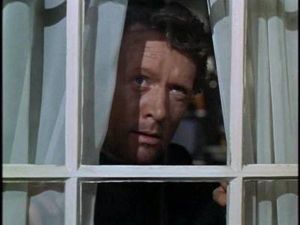 Number Six gets dressed and ventures outside but finds the entire prison-city deserted. The automatic doors don’t work either, because all the power is out, but the doors can be pushed open since they are not locking like they usually do.
  Episode Title: LIVING IN HARMONY … In the ongoing debate about the exact numbering of the 17 episodes of The Prisoner I place this as the 6th episode.
 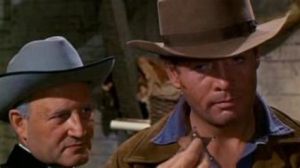 First-time viewers of this episode are as disoriented as McGoohan’s character. The program starts with this “western” revision of the usual opening sequence in which he is shown resigning from British Intelligence and getting abducted to the prison city called the Village.
  Episode Title: CHECKMATE … In the ongoing debate about the exact numbering of the 17 episodes of The Prisoner I place this as the 4th in the series.
 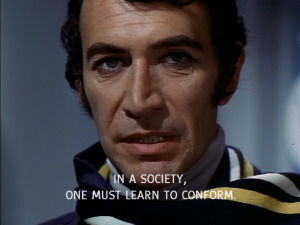 The episode begins with the Prisoner witnessing yet another sudden unleashing of “Rover” the bioelectrical synthetic creation which the Villagekeepers use to subdue outbreaks of disobedient behavior among the Villagers. As usual everyone freezes in their tracks, knowing Rover will attack anyone perceived as resisting.
  Walking Stick Man invites McGoohan’s character to a game of chess he is heading to. The Prisoner goes along and finds that the game is played with human chess pieces in one of the least subtle of the program’s metaphors.
  Episode Title: THE CHIMES OF BIG BEN. In the ongoing debate about the exact numbering of the 17 episodes of The Prisoner I place this as the 3rd in the series. Any comments that I have regarding the Alternate Chimes of Big Ben will be made in this same post.
  Leo McKern’s character’s verbal fencing with Patrick McGoohan is as much fun to watch as Columbo’s cat and mouse games with the murderers on his show. (And yes, I know McGoohan was no stranger to Columbo, both the 1970s series and the later revival.)
 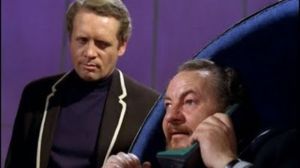 Leo makes it clear that the Village represents the model for the Earth of the future as pursued by highly-placed elements from both sides of the Cold War. He paints a picture of inevitability for the Prisoner in hopes that he can make McGoohan cave in while retaining his sense of personal honor. If a Global “Village” is inevitable there’s no shame in surrendering to it.
 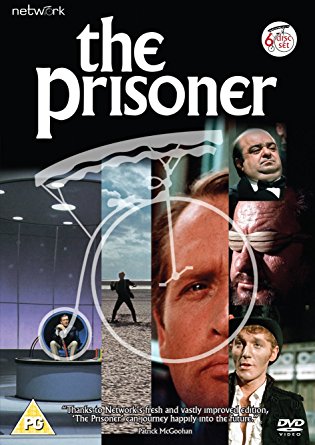 Regular readers of Balladeer’s Blog are very familiar with my high regard for Patrick McGoohan’s 1967 science-fiction/ existential drama The Prisoner. Over the many times I’ve referred to this 17-episode program I’ve heard back from a few readers here and there saying they have heard of the show but never saw any episodes and don’t understand its appeal.
 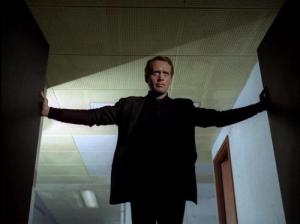 The premise of The Prisoner reflects Patrick McGoohan’s disillusionment and disgust with the way pop fiction romanticized Intelligence Agents, who are actually just government thugs, not heroes. From interviews McGoohan did over the years he seemed to feel a certain sense of personal guilt over his own contribution to that romanticized image, especially from his successful run as Intelligence Operative John Drake on Danger Man and Secret Agent. (His acclaim from those programs was such that Patrick was supposedly approached to play James Bond in Dr No. He declined.)
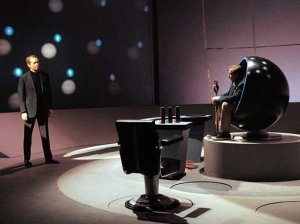 Either way, John Drake or not John Drake, the point is that McGoohan portrays a Secret Agent who resigns from the Intelligence Services in disgust. Soon after, he is gassed into unconsciousness and abducted.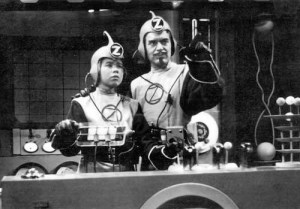
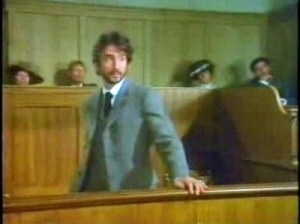 5. MASTERMIND (also known as Q.E.D.) (1981) – A young, bearded Sam Waterston starred in this incredibly charming series set in 1912 England. Waterston portrayed the title genius, American Ivy League scholar Dr Quentin E Deveril, whose initials were, of course, a cutesy play on the Latin expression “quod erat demonstrandum” (“what was to be demonstrated”), the famous Q.E.D. from academic exercises.
  Balladeer's Blog