
 IDAHO TRANSFER (1973) – This film, directed by Peter Fonda and starring mostly unknowns, deals with time travel and post-apocalypse themes. It was retitled Deranged for its DVD release. I have no idea why.
Not so long ago Idaho Transfer was regarded among us fans of bad movies as a So-Bad-It’s Good example of the way so many 1970s sci-fi films were presented as if they were being deep and innovative when in truth they were just reworking ideas from old Twilight Zone and Outer Limits episodes but dragging them out to unbearable length.
Here in 2021 Idaho Transfer has fallen so far off the schlock charts that it’s unknown to many viewers. However, it is STILL one of the best So-Bad-It’s-Good examples of pretentious yet shallow 1970s sci-fi films. While this story might have made a decent episode of a half-hour anthology series it is excruciatingly stretched out to 86 minutes.
THE PREMISE: In the movie’s present-day (1973) a group of scientists in Idaho have been using their federal grant money to try developing a teleportation/ matter transfer device for the government. Along the way, however, they realized that they had accidentally invented a machine that transports people and objects through time instead of space. Continue reading
 DOCTOR HACKENSAW’S SECRETS – Written by Clement Fezandie. Doctor Hackensaw and his adventures were similar to Paul B’Old’s short stories about Professor Jerome Mudgewood, but with less emphasis on humor. Both figures dealt with the often destructive consequences of their own inventions or discoveries. Ferzandie’s Hackensaw tales were published in the magazine Science and Invention.
  RED STAR (1908) – Written by Alexander Malinowski under the name Alexander Bogdanov. This pro-communist science fiction novel came three years after the failed uprising of 1905 and sixteen years BEFORE Aelita: Queen of Mars, a silent sci-fi film which depicted a similar communist paradise on Mars.
  They reveal that Lenni’s brilliant paper described the concepts of nuclear fission and anti-gravity that the Martians use in their spaceships. Recognizing his superior mind they sought him out in order to take him on board their interplanetary vessel and transport him to Mars. Once there they will let him observe their culture like they secretly observed Earth culture during their stay.
  A JOURNEY IN THE TWENTY-NINTH CENTURY (1824) – Written by Faddei Bulgarin, who had served in the Polish Legion of Napoleon’s Grand Army in his youth before going on to work for the Czars of Russia. In this fascinating tale an unnamed narrator gets swept overboard in the Gulf of Finland in 1824. The cold water and another element somehow put him in suspended animation and when he comes to he is all the way over in Siberia, where his body was recovered in the waters of Cape Shelagski centuries after he was lost at sea.
 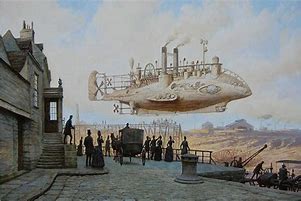 THE YEAR 4338, LETTERS FROM PETERSBURG (1835) – Written by Vladimir Fedorovich Odoevski. Set in the year 4338 A.D. this novel is told through correspondence from Hyppolitus Tsungiev, a Chinese college student in Saint Petersburg to Chinese friends in Peking. In that far future year Saint Petersburg has grown to be a megalopolis so large that it extends all the way to Moscow.
 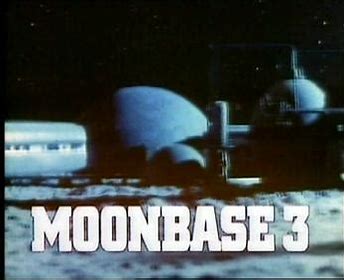 MOONBASE 3 (1973) – This BBC attempt at realistic, “no aliens or monsters” science fiction is a mixed bag, but I think it deserves a much bigger audience. Among the elements in the show’s favor is the fact that only 6 fifty-minute episodes were made, so it makes viewers a little more willing to forgive the program’s faults.
  Created by Barry Letts and Terrance Dicks of Doctor Who fame, Moonbase 3 is sort of like Doomwatch crossed with The Sandbaggers. However, Moonbase 3 keeps its science even closer to reality than Doomwatch did, so it can be a bit dry. Well, okay, VERY dry, but that’s a nice antidote to non-stop explosions, ray-guns blasting and other Space Opera cliches.
 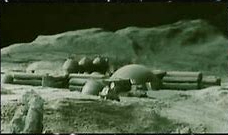 As for the show’s similarities to The Sandbaggers, there is bureaucratic in-fighting aplenty, unexpected deaths and an emphasis on dialogue over action. And, like both of those other programs, Moonbase 3‘s characters have to deal with perpetually tight budgets limiting the success of their missions.
  MARVEL SUPER-HEROES #18 (January 1969)
  The Badoon killed every Alpha Centauran because they considered them and their control of the living metal Yaka to be a threat. Similarly, the lizard-like aliens committed genocide on Pluto, Jupiter and Mercury as well, because they felt threatened by large numbers of foemen possessed of the enhanced abilities of those genetically engineered humans.
  THE WRECK OF A WORLD (1889) – Written by W. Grove. (No other name available) This novel is the sequel to Grove’s A Mexican Mystery, an ahead-of-its-time work about a train engine devised to have artificial intelligence. The machine – called only The Engine in that story – rebelled and took to preying on human beings in horrific fashion. For Balladeer’s Blog’s review of that novel click
 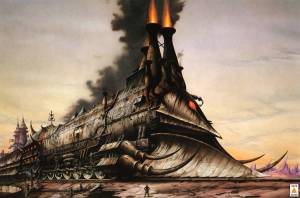 Our story begins in what was to Grove “the far future” of 1949. After a fairly superficial depiction of the world’s political and scientific situation in this imaginary future the meat of the tale begins. All in all the author did not present 1940s technology as being much more advanced than what was available in the 1880s. Grove might have done better to set his tale in 1899 or just into the 1900s to detract from his lack of vision on this particular element.
  MARVEL PREVIEW Vol 1 #4 (January 1976)
  A FANTASTICAL EXCURSION INTO THE PLANETS (1839) – By an unknown author. An advanced alien life form makes contact with the novel’s anonymous narrator and takes him on a guided tour of other planets in our solar system. Among other things he encounters angelic creatures on Mercury, warlike males and females on Mars, enormous humanoids on Jupiter and a pack of Lovecraftian horrors on Saturn. For my full review click
  Balladeer's Blog