

BALLADEER’S BLOG
A reader requested that I review the Marvel Comics sci-fi dystopia/ alien invasion series Killraven, the Warrior of the Worlds. I already did from 2019-2020, but in honor of New Year’s Eve here is a look back at one part of that review, which was posted on New Year’s Eve of 2019 into 2020, the exact date that the story itself was set on.
FOR PART ONE OF BALLADEER’S BLOG’S EXAMINATION OF THIS OLD, OLD MARVEL COMICS STORYLINE CLICK HERE The revisions I would make are scattered throughout the synopsis below.
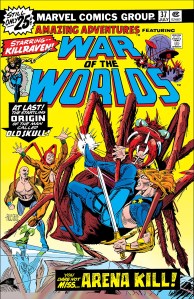 AMAZING ADVENTURES Vol 2 #37 (July 1976)
Title: Arena Kill
Synopsis: NEW YEAR’S EVE, 2019 into 2020, which is why I held off the extra day or two to post this review, since I wanted it to actually appear on the REAL December 31st, 2019.
Northern Florida, in the Okefenokee National Wildlife Refuge along the Suwanee River. Killraven and his Freemen continue their guerilla uprising against Earth’s alien conquerors. They have encountered another of the pitifully few bands of humans who also defy the aliens.
We jump right into the middle of some action, as Killraven is pitting his sword against the two battle axes wielded by Brother Axe, the leader of this rebel colony. Brother Axe’s dozens of followers and Killraven’s own Freemen stand in a large circle around the combatants, watching the battle.
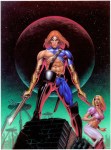 The cause of the conflict soon becomes clear – Brother Axe is skeptical that Killraven really is THE Killraven, the world-famous scourge of Earth’s alien conquerors. He suspects KR and his band may be fakers trying to bamboozle him or – even worse – undercover human quislings trying to pinpoint the location of Brother Axe’s rebel band so they can betray the band to their alien masters. Continue reading
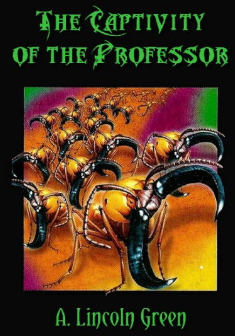 THE CAPTIVITY OF THE PROFESSOR (1901) – Written by A. Lincoln Green, a presumed pen name, this story was first published in Blackwood’s Edinburgh Magazine in the February 1901 isssue.
 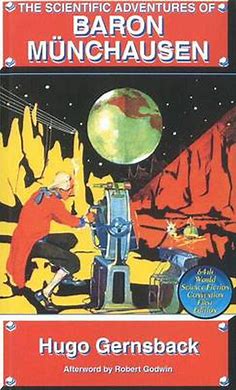 THE SCIENTIFIC ADVENTURES OF BARON MUENCHHAUSEN (1915-1917) – Written by the iconic Hugo Gernsback in the years before he launched his own publication, these sci-fi tales presented the 1700s Baron being alive and having wild adventures. (The cover spelling does not match the one Gernsback used.)
 WAVELENGTH (1983) – This is an unjustly neglected science fiction film that stars Robert Carradine, Cherie Currie and Keenan Wynn in a very unconventional love triangle: both Carradine and Currie are fighting over Wynn. (I’m kidding!)
 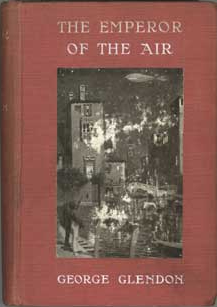 THE EMPEROR OF THE AIR (1910) – Written by George Glendon, this is a story about two visionaries – the German-American tycoon Hans Kreutzer and the Italian inventor Anatole Lonari.
 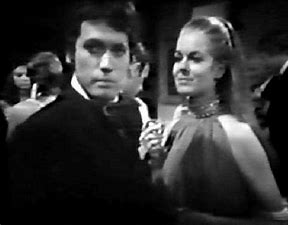 COUNTERSTRIKE is a tragically forgotten British sci fi television series from 1969. Jon Finch (left) portrayed Simon King, an alien agent who worked for the Intergalactic Council. This council had sent him to Earth to protect it from a group of renegade aliens from a dying planet who wanted to conquer the Earth and make it their new home.
  THE WARSTOCK: A TALE OF TOMORROW (1898) – Written by the British William Oliver Greener under the pen name Wirt Gerrare. Despite this book’s Great Britain origins, the two lead characters are American inventors from Plainfield, New Jersey – Robert Sterry and Willie Redhead.
  While hitting the social circuit in London, our heroes meet Madeline Winship, who connects them with backers who are part of an exclusive Royal Society-inspired group of scientific minds. The group are called the Isocrats, and they devote themselves to science and similar intellectual pursuits, like elevating dancing to what we might call performance art.
  BELLONA’S HUSBAND (1887) – This book was written by West Point graduate (Class of 1867) William James Roe under the pen name Hudor Genone.
  Garrett constructs a disc-shaped spaceship that uses hydrogenium as its anti-gravity agent. Holt and Professor Garrett are joined by Trip, a shady friend of Garrett’s, who travels with them on a flight to the planet Mars.
  MARS REVEALED (1880) – Written by Henry A. Gaston, this is another work that combines science fiction with religious and spiritual concepts.
 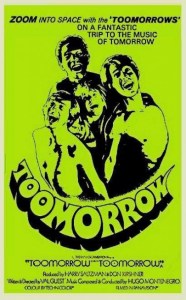 TOOMORROW (1970) – What is one part Monkees episode, one part Frankie & Annette Beach Movie, one part Help!, one part Donny & Marie in Goin’ Coconuts, one part KISS Meets The Phantom of the Park and one part Beyond the Valley of the Dolls? The answer is Toomorrow, the infamous Don Kirshner/ Val Guest cult movie with a then-unknown Olivia Newton-John in a starring role.
  We’re told that Vic’s Tonalizer is what gives Toomorrow its special “sound.” How special is that sound? So special that its unique vibrations can revive the stagnant culture of an alien race that’s facing decay and collapse. It seems the aliens’ own musical output has grown stale because they have long since progressed beyond the troublesome “emotions” and “heart” that Toomorrow’s members pour into their songs.
