
FOR PART ONE OF BALLADEER’S BLOG’S EXAMINATION OF THIS OLD, OLD MARVEL STORYLINE CLICK HERE The revisions I would make are scattered throughout the synopsis below.
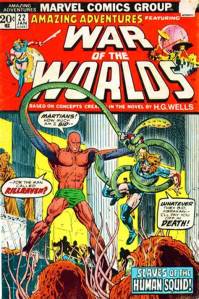 AMAZING ADVENTURES Vol 2 #22 (January 1974)
Title: WASHINGTON NIGHTMARE
Revised Title: Since this is Don McGregor writing, let’s go with something absurdly melodramatic like Reflections in a Night-Dark Mirror.
NOTE: This story introduces the popular female rebel called Mint Julep.
Synopsis: This issue begins an unknown number of days or weeks after the conclusion of the previous chapter. Killraven and his Freemen – M’Shulla, Old Skull, Hawk, Carmilla Frost and Grok – are traveling along the Potomac in a boat they commandeered from human quislings sometime after the end of our previous story.
REVISION: In my revision Killraven’s band of Freemen consist of M’Shulla, Old Skull, Hawk, Carmilla Frost and Deathlok – replacing Grok but still a creation of Carmilla’s – and Arrow, a female member. Like KR, M’Shulla, Hawk and Old Skull, Arrow is a former gladiator from the arena circuit run by Earth’s alien conquerors.
Just like Dagger – the female Freeman killed off last issue – Arrow was one of the bland, faceless Freemen introduced in the first two parts of Killraven’s comic book run. Arrow and Dagger were just dropped from the narrative with no explanation so I made them both female to add some variety to the Freemen. Just as Dagger was killed last time around, so Arrow will be killed this time, but at least in my revision their characters will have had some impact on the story AND emphasized the danger of Killraven’s rebellion.
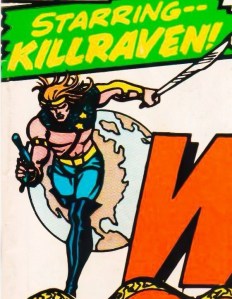 Back to the story: Rising up from the Potomac to attack the boat is a monstrous subaquatic lifeform – one of the many creatures brought to Earth by the Martians. Our heroes battle the tentacled creature, eventually killing it, but their boat is trashed upon the rocks and is now useless.
REVISION: In my revision the underwater creature kills Arrow during the fight, before our heroes succeed in killing it, furious over the death of their comrade.
Back to the story: Sabre, a Hispanic quisling servant of the Martians (no relation to Don McGregor’s later, more famous character Sabre), attacks the Freemen with his own band of followers. While the battle rages, dialogue makes it clear that Sabre and his men are among the many groups of quislings who round up other human beings for the Martians, who feed on human flesh.
Sabre relishes facing targets who can actually fight back, instead of the usually easily-subdued humans he captures for his Martian masters. After Grok in particular manages to wipe out a large number of Sabre’s men he and his remaining troops retreat with Hawk and Old Skull as their captives. Continue reading
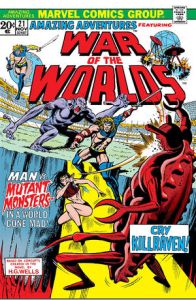 AMAZING ADVENTURES Vol 2 # 21 (November 1973)
 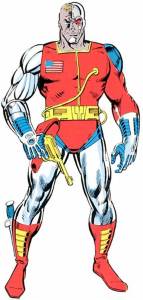 I’m combining Deathlok’s story with Killraven’s in a sort of Ultimate Killraven way, since Marvel in recent years had KR, Deathlok and other figures from their canceled post-apocalypse titles get thrown together as a team due to time anomalies, etc ANYWAY.
  Instead of watching Killraven struggle against guards I would have Warlord Ryker and Carmilla Frost watching and taking notes as other Keepers subject the rebel leader to various tests – many of them painful, of course – to determine the nature and origin of his paranormal abilities called simply The Power in the first two issues. (This was 4 years BEFORE Star Wars, so The Power is NOT a ripoff of The Force.)
 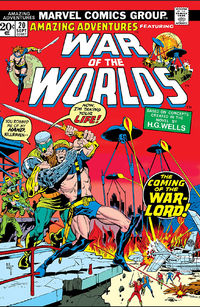 AMAZING ADVENTURES Vol 2 #20 (September 1973)
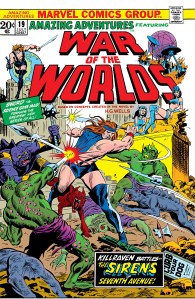 AMAZING ADVENTURES Vol 2 #19 (July 1973)
 In the realm of pop culture it continues to be Marvel Comics’ world! Over the past few years Balladeer’s Blog has been reviewing some old, old, OLD Marvel stories from decades ago. From the research I’ve done, I feel the late 1960s through mid-1970s were Marvel’s creative height, with only the Uncanny X-Men title retaining consistent art and story-telling quality beyond that time period.
 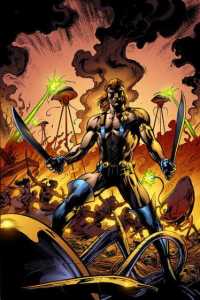 WAR OF THE WORLDS/ WARRIOR OF THE WORLDS/ KILLRAVEN: In the early 1970s Marvel was experimenting with hybrid titles combining the old and the new by fusing licensed properties with unique Marvel twists.
 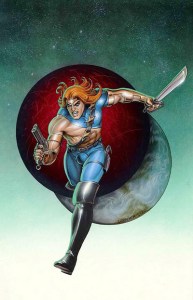 Killraven’s use of a sword AND futuristic firearms in action set against a post-apocalyptic backdrop also brought a little John Carter of Mars appeal into the series. By 1976 the promising saga was canceled due to poor sales but gained a cult following in the decades since then.
 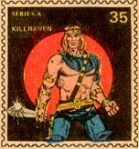 And yes, I know that both Killraven and Star Wars drew on the same vast inheritance of sci-fi tropes but the close proximity of K.R. (1973-1976) to Luke Skywalker (1977 onward) makes the comparisons inevitable.
 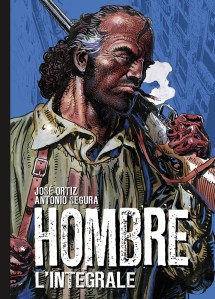 AT THE END OF THE RIVER – More Weirdness at the End of the World, this time with an adventure featuring Spain’s answer to Mad Max: Hombre himself. This character was created by Antonio Segura and Jose Ortiz in 1981 in the Spanish publication Cimoc. Hombre went on to appear in notably “adult” comic books and magazines around the world, including reprints in Heavy Metal here in America.
 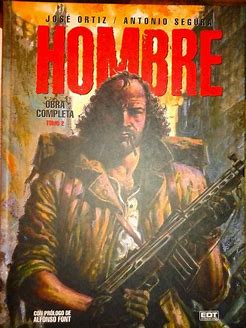 The title character Hombre roams our post-apocalypse planet armed to the teeth and ready to kill or be killed on a daily basis. His first-person narration echoes the best aspects of hard-boiled Film Noir detective stories while the action and mis en scene combine the best elements of Spaghetti Westerns, Post-Apocalypse movies and Martial Arts flicks. Think Six-String Samurai but without the rock and roll samurai.
 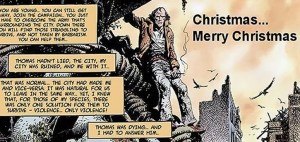 Segura mostly avoided easy narratives and my least favorite storyline involved Atila, the badass woman warrior. The character was great, but the tale seemed very UN-Segura-like to me. I probably would have liked her in her own spin-off story but having two such nigh-indestructible figures in one tale put things too far into the realm of upbeat fictional tropes to me. I’m virtually alone on that, by the way, since most fans LOVE the Atila story.
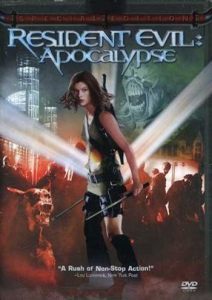
  Here at Balladeer’s Blog I’ve always had a soft spot for the Resident Evil movies. I’m not implying that they’re good by any means, but as guilty pleasures I consider them pretty watchable in a Spaghetti Western sense. You don’t expect logic or well-maintained continuity in the original Django or Sartana series any more than you do from the Stranger or Hallelujah flicks or any of the other lower-level pulp series of Italo-Westerns.
  Seventies chop-socky films are another example. You might watch them but you sure as hell can’t defend them from criticism.
  Balladeer's Blog