
 Labor Day weekend is the appropriate time to post this look at neglected working class folk hero Joe Magarac. This figure was the Steel Mill equivalent of Paul Bunyan and John Henry.
Though mostly associated with Polish-American steel workers in Pittsburgh, PA the general figure of a literal “man of steel” helping and protecting his coworkers can be found from the East Coast through the American Midwest. Sometimes the figure is Croatian or some other ethnicity instead of Polish.
Written versions of Joe Magarac and/or similar steel worker tall tales seem to have started around 1930 or 1931. Oral legends about such figures – but not specifically Joe Magarac – have been dated as early as the 1890s.
Vintage advertisements from tattered old newspapers indicate that such Man of Steel imagery may have been used for the steel industry prior to World War One. This “Which came first, the chicken or the egg” dilemma for Joe Magarac and other Steel Men puts one in mind of the quandary surrounding Billiken lore.
 As a lame play on words since this is Labor Day season I’ll present Joe Magarac’s origin and then depict his tales as “Labors” like in The Labors of Hercules.
BIRTH – Joe Magarac supposedly sprang into existence from a mound of iron ore and – depending on the version – that mound was either in Pittsburgh or the Old Country. Magarac emerged from the melting mound fully grown and spoke broken English like so many of the other Polish steel workers. He was called into being by the urgent need to catch up on production since the current shift had fallen dangerously behind.
Joe was 7 or 8 feet tall, his flesh was like solid steel, his torso was as wide as a smoke-stack and his arms were as thick as railroad ties. His surname Magarac meant “mule” in the workhorse sense, referring to his stamina. Joe’s appetite was such that he carried his lunch in a washtub instead of a standard lunch box.
Magarac’s favorite leisure time activity was polka-dancing and halushkis were his favorite food.
THE LABORS OF JOE MAGARAC: Continue reading
 For April Fool’s Day here’s a look at one of the original Fool Killer Letters from Charles Napoleon Bonaparte Evans’ newspaper the Milton Chronicle. This one expresses his disgust with the Civil War tearing the nation apart and his intention to hibernate until it’s over.
  PART THREE: The third surviving Fool Killer Letter. (See Part One for an explanation)
  JUNE 28th, 1861 – From “Down about Norfolk, VA.” (The Fool Killer wandered North Carolina and Virginia – which back then still included what is now West Virginia – and the dark-humored Fool Killer Letters were syndicated in several newspapers in addition to his North Carolina “birth place” the Milton Chronicle.)
 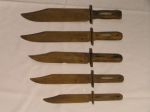 In this letter the Fool Killer adds a collection of Bowie knives to his arsenal alongside his ever-present club/ walking stick/ cudgel. Future incarnations of the Fool Killer in folk tales, short stories, novels and plays will assign him various axes, guns and even a scythe.
  AUGUST 1919 RETURN – From January of 1910 to July of 1917, James Larkin Pearson’s monthly Fool-Killer had been published, with his revival of the violent folk figure doing his ages-old job of bashing political and societal fools. In April 1917 America entered World War One and by July Pearson felt that a unified front for wartime was appropriate.
 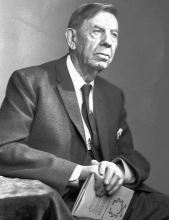 In August of 1919, nine months after the end of the war, Pearson changed the name back to The Fool-Killer and resumed the hard-hitting political satire. That month’s targeted fools included:
  JANUARY 1910 – James Larkin Pearson, poet and newspaper man, carried on the Fool Killer tradition from 1910 to 1917, then again from 1919 into the 1920s. Pearson’s fellow North Carolinian Charles Napoleon Bonaparte Evans had written the Fool Killer Letters of the 19th Century so it’s appropriate that another Tar Heel continue the lore for so many years of the 20th Century.
 Pearson’s Fool-Killer was the mascot of the entire publication, which was merely 4-6 pages anyway, not simply the supposed author of letters regarding his body count of “fools.” Think of this Fool Killer (I prefer no hyphen) as the written word equivalent of Puck (1876-1918), the political cartoon mascot of the humor magazine of the same name.
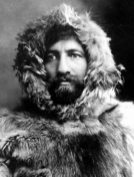 *** Frederick Cook, who, the previous December, had seen his claim to have reached the North Pole ruled invalid and possibly fraudulent by the University of Copenhagen. (The Fool Killer was unable to locate Cook, however.)
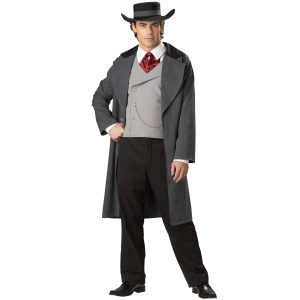 PART TWENTY: In a surprising development Balladeer’s Blog was contacted by THE actual Fool Killer. Using Jimmy Neutron-level science I determined that this correspondent was indeed the actual supernatural figure who had been at large in America since the 1830s.
  Coming to you as I wander in search of fools to kill, as usual a murder of crows following in my wake to feast upon the ample corpses I leave behind me in my travels.
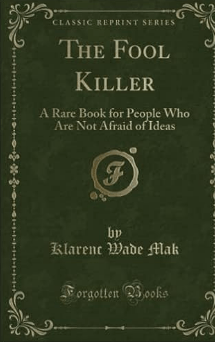 THE FOOL KILLER (1918) – The 1918 one-shot publication called The Fool Killer collected written works by Dr Klarenc Wade Mak, poet, author and socialist political candidate for mayoral office in Kansas City, MO around 1918. Mak had also written Ekkoes (sic) from the Hart (sic) and Mental Dinamite (sic).
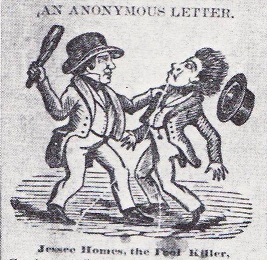 During the 1850s Fool Killer tales were fused with political satire and commentary as Charles Napoleon Bonaparte Evans launched
  ARIZONA’S RED GHOST – From 1883 to 1893 Arizona was the home to multiple sightings of a monstrous four-legged creature with red fur ridden by a skeletal man or ghost. Unlike most legends that center around ghosts or cryptids, this one ends with physical remains and a rational explanation grounded in history.
  When the two husbands returned, they saw the woman’s remains and followed the tracks until they petered out, finding red fur in bushes and tree branches along the path of whatever had killed the unfortunate wife. The Mohave County Miner newspaper stated that the coroner’s report found that the death had happened by “some manner unknown”.
  BRADAMANTE IN THE WIZARD’S TOMB – We left off last time around with Mandricardo searching for the Paladin Roland so he could try to kill him and steal from him the sword Durindana, thus completing the armor of Hector. The female Paladin in white armor, Bradamante, was searching for Ruggiero the Moor, from whom she had gotten separated a few installments back. Ruggiero was likewise searching for her.
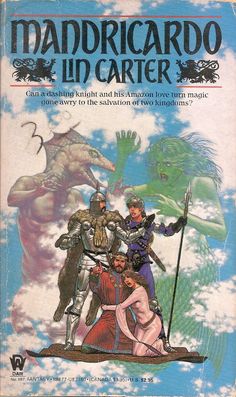 MANDRICARDO AND THE ARMOR OF HECTOR – Last time around in the Tales of Charlemagne and His Paladins we left off with Ruggiero searching the Forest of Arden for Bradamante, the female Paladin in white armor, with whom he had fallen in love. They had become separated while fighting some of the Saracen soldiers invading Charlemagne’s realm at the time.
