
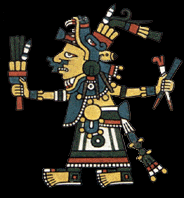
 CHALCHIHUITLICUE – The Aztec goddess of lakes, streams, rivers and the ocean. She was also the patron goddess of birth, with the newly-born being soon after immersed in her waters to “cleanse” them. The diseased would often pray to Chalchihuitlicue for a cure before bathing in a body of water asking the goddess to wash away their illness. She was also considered the goddess of whirlpools, which the tectonics under Mesoamerica made fairly frequent back then. At Lake Texcoco in Pantitlan there was Continue reading
Tag Archives: mythology
AZTEC GODDESS: CHALCHIHUITLICUE
Filed under Mythology
THE TOP DEITIES IN SAMOAN MYTHOLOGY
 Samoan mythology as a subset of Polynesian mythology will be the subject of this blog post. I have previously covered various deities of the Hawaiian islands and in the future I will address the gods of the other Polynesian island groups.
*** FOR THE GODS OF OTHER POLYNESIAN ISLAND GROUPS –
BELLONA ISLAND AND RENNELL ISLAND – CLICK HERE
GEGE – A deity who specialized in ridding the Samoan island of Upolu of demons. Operating out of his base at Falealili he roamed the island, met demons in contests of magic and transformed them into stone. Countless unusual rock formations on Upolu are said to be the petrified bodies of the demons overcome by Gege.
PAPA – In other Polynesian island groups Papa is the Earth goddess. In the Samoan pantheon she is Continue reading
Filed under Mythology
THE TOP EIGHT NEGLECTED MONSTER-SLAYERS IN WORLD MYTHOLOGY
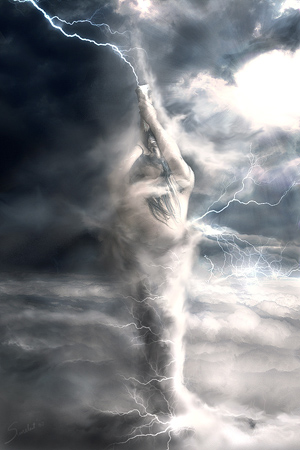
Heng
When it comes to gods and/or demigods who slay monsters Hercules, Thor and Gilgamesh get the bulk of the attention. Vishnu and Shiva’s roles slaying monsters in Hindu myths are well-known, too. Balladeer’s Blog as usual will show some love for those figures who get neglected simply because their pantheons are not as familiar to most of the world.
8. HENG
Pantheon: Iroquois
Chief Weapon: Spears made of lightning.
Rogues Gallery: This storm god destroyed an enormous porcupine with tree-sized quills, a giant bird with feathers made of wampum, a worm large enough to engulf an entire village, cannibalistic wizards plus a gigantic horned serpent and its army of equally large serpents.
For more Iroquois deities: https://glitternight.com/2013/01/28/the-top-fifteen-deities-in-iroquois-mythology/
Filed under Mythology
THE TOP FIFTEEN DEITIES FROM PEGANA MYTHOLOGY
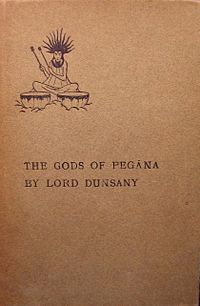
Gods of Pegana
Lord Dunsany’s 1905 book The Gods of Pegana and its 1906 followup, Time and the Gods, are forgotten masterpieces of comparative mythology which introduced the author’s pantheon of fictional deities. Though neglected today Dunsany’s work inspired authors from H.P. Lovecraft to J.R.R. Tolkein to C.S. Lewis. (But oddly, NOT e.e. cummings, A.A. Milne or H.R. Puff’n’Stuff.)
Like many of my fellow mythology geeks I spent a lot of time during childhood inventing my own pantheons of gods and breaking down their powers, cultural relevance and relations to their fellow divinities. We can all appreciate the fun Lord Dunsany had with the concept and the ingenious way in which he fused elements of Hindu, Christian, Jewish, Muslim and Chinese mythology with his own ideas.
Dunsany didn’t just dwell on surface details of the gods he created, he used their tales to reflect the philosophy, customs and taboos of the fictional land of Pegana, just like real-world belief sytems represent those aspects of the cultures that spawn them.
An additional benefit of Dunsany’s work is that it provides us with a consistent vision since it was all composed in the same time period. Real-world ancient myths often evolved or were “retconned” over the ages due to political or social reasons we have no Continue reading
Filed under Mythology
THE TOP TEN DEITIES IN TUPARI MYTHOLOGY
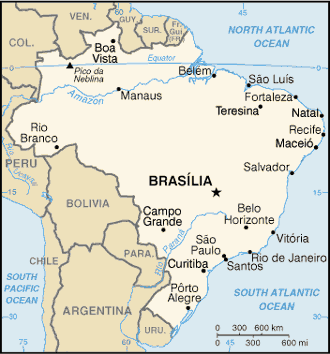 Balladeer’s Blog presents its latest look at a neglected pantheon of gods and goddesses. The Tupari people live near the Rio Branco in Brazil and though they are far from numerous I find their mythology to be as riveting and full of rich details as the belief systems of any other group.
The deities of the Tupari deserve to stand alongside the gods of the Greeks, Egyptians, Aztecs and others. A striking element of the Tupari belief system is the way in which the word “pod” is used the way “kami” is used in Shinto myths. Pod, like kami, can be used when referring to actual deities but also to lesser supernatural beings, so there is often debate over the exact status of an individual entity in the Tupari’s metaphysical heirarchy.
10. MULHER – The primordial Earth goddess from whom all the other deities descended. In the beginning when there was no life on Earth and no gods in the heavens Mulher existed alone. Her original form was that of an enormous black rock with a very smooth surface, much like Zoroastrian mythology describes the Earth before the evil god Ahriman ruined its pristine perfection. Mulher split open one day like an egg and her first child, the god Valedjad was born amid a stream of blood flowing from Mulher. Again she split open and her second son Vab emerged from within her in a similar blood stream. When earthquakes occur today it is Mulher splitting open again, but no more children are born – rather her blood – lava – flows like the blood from menstruating women.
9. PATSIARE – The god who separated the Earth and the sky. He then created the poles that support the sky above the Earth the way similar poles support the domed roofs of the Tupari’s houses. In Tupari cosmology the world is shaped like a Continue reading
Filed under Mythology
HERE COMES THE SUN: SUN GODS FROM AROUND THE WORLD
Balladeer’s Blog’s mythology posts are among the most popular parts of this site. As a change of pace from my examinations of multiple deities from a single mythological pantheon this time I’ll do a light-hearted look at solar deities – both male and female – from around the world. Given the familiarity of the Greco- Roman sun god I’ll omit him and deal with less well-known deities.
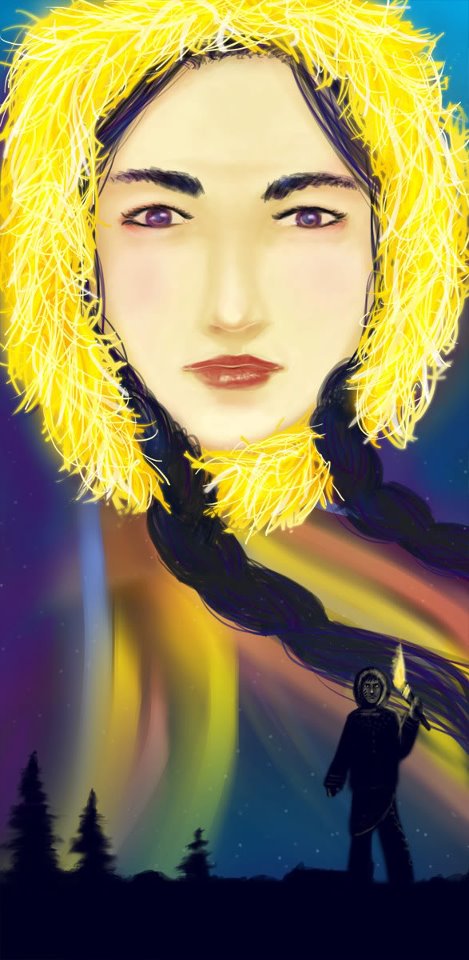 11. SEQINEK
Pantheon: Inuit
Lore: Also called Malina, Seqinek’s home was in Udlormiut, the land that was on the other side of the sky. In Inuit cosmology the sky was the roof of the enormous ice- house (igloo) that enclosed the world and Udlormiut lay on the other side. By day Seqinek would leave her home and run across the sky, with the sun itself being the flame from the torch she carried as she ran. The goddess was forever fleeing her brother, the moon god Tatqim, whose partially burnt- out torch was the moon.
For more Inuit deities – https://glitternight.com/inuit-myth/
10. SURYA
Pantheon: Hindu
Lore: The sun was Surya’s chariot racing across Continue reading
Filed under Mythology
IROQUOIS EPIC MYTH: HODADEION
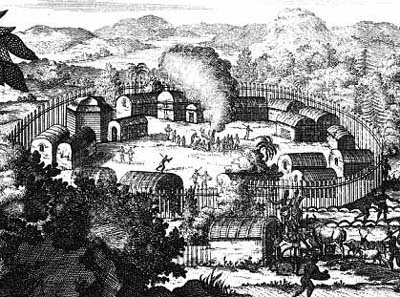 In the tradition of Balladeer’s Blog’s previous looks at neglected epic myths from the Navajo, Vietnamese and Chinese pantheons I will examine the saga of the Iroquois god of magic Hodadeion. This will be done in the same style as my examinations of the Navajo war god’s battle with the Anaye, the war between the Vietnamese jungle and monsoon gods and the Chinese Divine Archer Yi’s adventures.
1. Hodadeion was the son of the creator god Tharonhiawakon and a mortal woman, the same mortal woman who bore him Hodadeion’s siblings. Those siblings were Otgoe, the wampum god who loved chestnuts and Yeyenthwus, the future goddess of chestnut trees.
Tharonhiawakon was gone for years at a time attending to other matters in the world and while Otgoe was a toddler and Hodadeion and Yeyenthwus in their teens an entire village full of cannibalistic humans led by a powerful but evil medicine man was preying on Continue reading
Filed under Mythology
MYTHOLOGY: INTERCULTURAL INFLUENCE
 A reader asked me a question about Egyptian mythology being influenced by other cultures. Since I get occassional e-mails asking me similar questions I figured I would post my answer in the spirit of an FAQ.
My Answer: This sort of inter-cultural influence is pretty standard in mythology. No belief system springs from a vacuum. It springs from previous belief systems in the region and also from appropriating elements of belief systems of other cultures they come into contact with. The process is Continue reading
Filed under Mythology
MYTHOLOGY – THE BUNYORO GODDESS MULWINDA
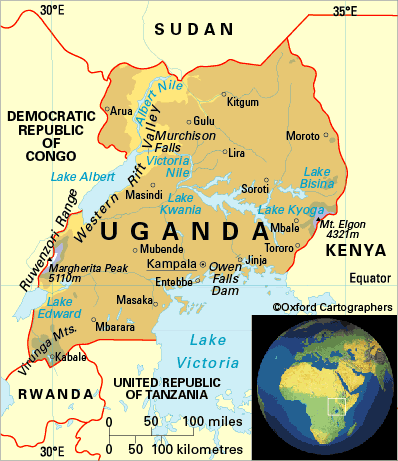 MULWINDA – The goddess who protected the royal clan. Each of the 46 clans of Bunyoro had its own protective deity. They each also had their own totem-name which could be an animal, e.g. Kiroko (hippopotamus) or a plant, e.g. Bulo (millet), a utensil, e.g. Kaibo (basket), or a part of the body, e.g. Amara (stomach). No one was Continue reading
Filed under Mythology
THE TOP NINE DEITIES IN MUSCOGEE CREEK MYTHOLOGY
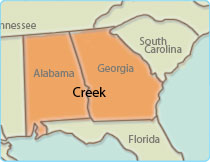 Balladeer’s Blog presents its latest examination of a neglected pantheon of deities. In the Americas alone I have previously written about gods and goddesses of the Navajo, Inuit, Hawaiians, Choctaw, Iroquois and Aztecs.
Those familiar with the Creek people are aware of how many different sub-classifications there are, so I will remind readers that this article deals only with the deities of the Muscogee Creek. In the future I will eventually do examinations of the gods of the Tuckabatchee, Yuchi, Tuskegee and others generally regarded as Creek.
 9. NEREHVURESSE – The Muscogee Creek moon goddess. She was the wife of the sun god and, as with the moon goddess of the Choctaw people, it was said that she spent moonless nights having sexual relations with her husband. The differing phases of the moon were explained as Nerehvuresse covering her face in varying degrees of embarrassment over Continue reading
Filed under Mythology

