
 With the passing of the iconic Chuck Norris I’m taking a look at my favorite films of his. I was never the biggest Norris fan, so this list is purely from the perspective of a casual fan.
I’m such a casual fan, in fact, that I wasn’t going to do an R.I.P. post about him but I decided to do one based on the vicious attacks on the late Norris by deranged Democrats who always tell the rest of us to “separate the art from the artist” when their celebrities are criticized in any way.
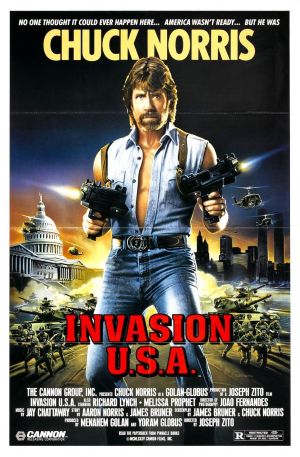 INVASION USA (1985) – Psychotronic cinema in its purest form, Invasion USA was so firmly in the realm of fantasy that it’s ridiculous that some critics tore into it so deeply. The same type of critics probably loved the pretentious One Battle After Another, which was basically Invasion USA in reverse.
Norris starred as former intelligence agent Matt Hunter, who gets called back into action when a communist army from Cuba invades Florida under the leadership of Hunter’s old archenemy – Soviet Union agent Rostov, played by cult actor Richard Lynch.
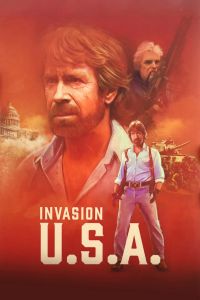 Matt is among the people fighting back against the communist invaders in escapist, over the top action scenes. Anti-Castro Cubans fight the invaders in alliance with our main character. Red Dawn was too juvenile in my opinion, so I much prefer this Norris flick.
There are lots of Christmas decorations on display since the film is set during Yuletide. Invasion USA was therefore part of my “Very Butt-Kicking Christmas Marathon” years ago alongside Die Hard, Lethal Weapon and Die Hard 2. Continue reading
 THE VISION OF ADOMNAN – Dated to the late 600s A.D., This was a tale of the vision that Saint Adomnan supposedly had during his lifetime (c 679-704 A.D.). Several centuries before Dante’s Divine Comedy (Inferno, Purgatorio, and Paradiso), The Vision of Adomnan depicted the future saint being conducted through Heaven, Purgatory, and Hell so that he could share this “vision” with others.
  NATIONAL CHAMPIONSHIP GAME – This title tilt was fought between the 3 seeds – the LANCASTER BIBLE COLLEGE CHARGERS – and the 4th seeded COLUMBIA INTERNATIONAL UNIVERSITY RAMS. By Halftime the Chargers were on top 37-27. After the break, LBC kept the Rams at arm’s length as they won their first ever National Championship 82-75. Camden Hurst tossed in 27 points to lead the Chargers.
  ELITE EIGHT: FIRST BERTH – The AVE MARIA UNIVERSITY GYRENES faced the LOUISIANA STATE AT SHREVEPORT PILOTS (Riverboat Pilots). The Gyrenes put LSU-Shreveport on Upset Alert at the Half with their 46-38 advantage. The Pilots cut into the AMU lead from there, but still lost to them by a Century Club score of 102-98. The Gyrenes were led by Michael Klekas with a Double Double of 26 points and 11 rebounds. His teammates Jack Watkins and Alex Sherwood got Double Doubles of their own with 21 points & 11 rebounds, and 14 points & 10 rebounds, respectively.
 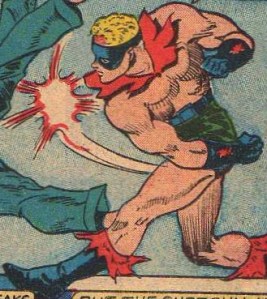 FIRE-EATER
 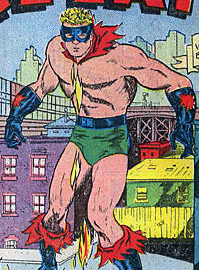 Powers: Fire-Eater, as his name would imply, could “eat” and suck in large flames as well as blow fire-blasts from his mouth. He was also impervious to fire and was skilled at unarmed combat.
 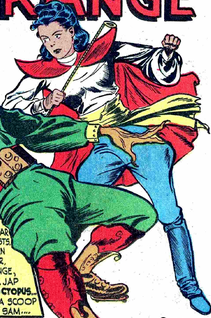 MADAME STRANGE
  Powers: Madame Strange was strong enough to rip iron bars out of a jail cell’s window, was bullet-proof and could run at greater than human speed. She was also an expert at unarmed combat and was skilled with a riding crop AND at knife-throwing. In addition this superheroine had her own personal plane from which she could drop bombs.
 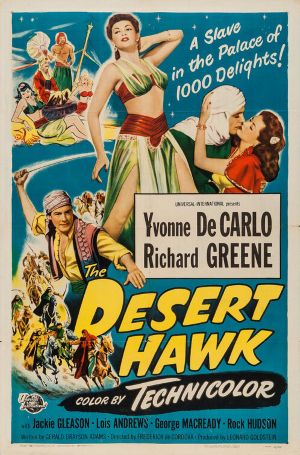 THE DESERT HAWK (1950) – This fun but hilariously inauthentic Arabian actioner starred Yvonne De Carlo as Scheherazade, whose father is forcing her into a marriage to the evil Prince Murad. Word of the lavish wedding reaches Omar the Blacksmith (Richard Greene) who is secretly the roguish bandit leader called the Desert Hawk.
 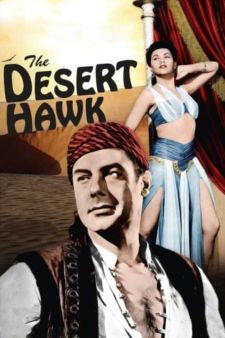 The real Murad is furious about the theft, so he has his men slaughter some innocents and blame it on Omar and his band in order to justify an all-out war against the Desert Hawk. Scheherazade realizes how vile the real Murad is and escapes him disguised as a slave girl.
 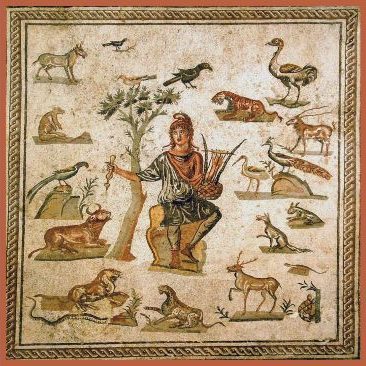 It’s been years since I’ve written about the Orphic variations of mainstream Greco-Roman mythology. For anyone who is not familiar with the Orphic Hymns, Zagreus, etc. these fascinating offshoots of the myths we all grew up with feature a variety of differences.This version of the tale of Jason and the Argonauts won’t always match the more popular rendition.
  THE ORPHIC ARGONAUTICA – To avoid being too boring I will omit all the arguments about the exact time period in which this variation on the epic was first written. At any rate, as the “Orphic” part of these writings would indicate, this look at the Quest for the Golden Fleece is told from the point of view of Orpheus the musician, poet and keeper of the Mysteries.
  Our famous lyre-player Orpheus is approached in his cave at Thrace by the hero Jason. The hero tells Orpheus how he has gathered a crew that will take to sea in the Argo, the first vessel built specifically for ocean voyages. NOTE: Yes, the Orphic Argonautica depicts the Argo as the first ship ever built for a long-range journey. Various allegorical meanings are read into this, but I’ll spare you the details.
  THE INVISIBLE MAN (1975-1976) – Before Harve Bennett and Steven Bochco would launch The Gemini Man they tried a very similar premise with The Invisible Man. David McCallum, with his best Cousin Oliver hairdo (below right), starred as Dr. Daniel Westin, a scientist working for KLAE Corporation on matter transformation.
 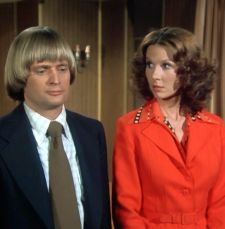 PILOT MOVIE: THE INVISIBLE MAN (May 6th, 1975) – My above description also serves as a synopsis, with the resulting series set up by KLAE Corporation only allowing Dr. Westin to use their laboratory facilities to work on his invisibility cure if he and his wife work for them as spies. Henry Darrow played Dr. Nick Maggio in this 90-minute telefilm.
  THE BRICK MOON (1872) – Written by Edward Everett Hale, best known for The Man without a Country. This novella started out as a serialized story published in 1869 in the October, November and December issues of Atlantic Monthly. A follow-up installment, titled Life in the Brick Moon, was published in the February 1870 issue.
 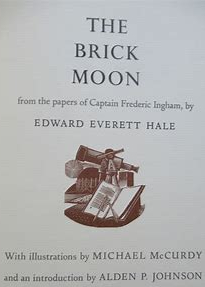 The story begins in the 1840s when Frederic Ingham, the tale’s narrator, and his college friends Orcutt and Halliburton plan a dream project which winds up taking decades to fulfill – a manmade artificial satellite, the first recorded in science fiction stories.
 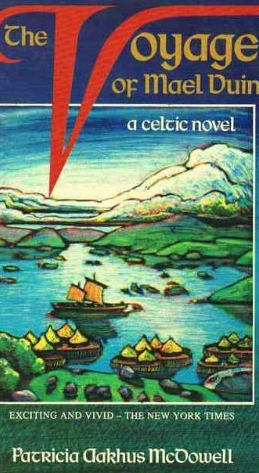 THE VOYAGE OF MAEL DUIN (Immram curaig Mail Duin) – Dated to around the late 900s A.D. or earlier, this story deals with the epic quest of Mael Duin (aka Maildun and Maeldune) and the crew of his ship as he seeks revenge on his father’s killers. This lengthy epic deserves to be as well-known as the Odyssey or the Quest for the Golden Fleece.
 Mael Duin matured, and proved better than his presumed siblings at athletic, martial and academic competitions. Losing their temper over this, one of our hero’s foster brothers ridiculed Mael Duin for not even knowing who his real father and mother were.
  Balladeer's Blog