
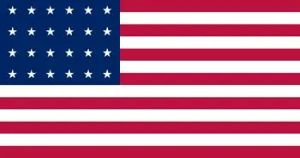
 America’s 250th birthday is coming up in July, so over the next few months Balladeer’s Blog will take a look at the anniversary years 1826, 1876, 1926 and 1976.
1826
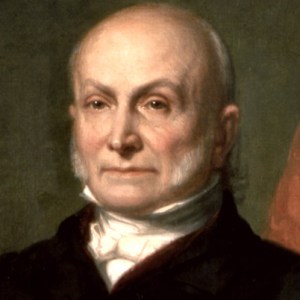 U.S. President: John Quincy Adams Vice President: John C. Calhoun Speaker of the House: John W. Taylor Chief Justice: John Marshall
Number of Senators: 48 Number of House Representatives: 213 Number of Supreme Court Justices: 6
JANUARY
1st – Louis Moreau Gottschalk, famous American composer and pianist, is born.
5th – Maryland makes it law for the state to finance primary education for all, and also grants Jews the right to vote.
18th – In New Orleans, LA the Louisiana State Gazette aka Gazette d’etat begins daily publication.
24th – The Treaty of Washington between the U.S. and the Creek Nation is signed.
26th – Future First Lady Julia Dent Grant is born.
FEBRUARY
4th – James Fenimore Cooper’s novel The Last of the Mohicans, the 2nd book of what is now known as The Leatherstocking Tales, is published.
5th – Future President Millard Fillmore married Abigail Powers.
13th – The American Temperance Society is founded in Boston.
25th – The U.S. Supreme Court ruled against John Carter Littlepage in the land law case of Littlepage v Fowler.
MARCH
4th – In Quincy, MA America’s first railroad – the Granite Railway – is chartered. Trains will begin running October 7th.
Also the 4th – Birthday of railroad engineer Theodore Judah.
10th – The U.S. Supreme Court ruled against Seaman Kelly over mutiny on the commercial vessel the Lancaster in the case of U.S. v Kelly.
16th – The U.S. Supreme Court ruled in favor of the Bank of the United States in the case of Ettinger v Bank of the United States. The issues involved lower court jury instructions and bank malfeasance since Solomon Ettinger used stocks as security for a loan from the Bank of U.S. despite those stocks already serving as collateral on loans abroad.
Also the 16th – The U.S. Supreme Court ruled against Juan Gualberto de Ortega in the case of United States v Ortega. Mr. Ortega had been found guilty in Circuit Court of assaulting Spain’s charge d’affaires Hilario de Rivas y Salmon.
*** The Supreme Court adjourned for the session by March 25th.
APRIL
1st – Samuel Morey is issued a U.S. Patent for an internal-combustion engine.
10th – Thomas Jefferson Randolph, grandson of Thomas Jefferson, passed away.
MAY
1st – Samuel Dexter, former Secretary of War and Secretary of the Treasury under President John Adams, died.
3rd – In New Haven, CT Presbyterian Minister and Reformer Lyman Beecher delivered his famed Sermon to the Connecticut Legislature.
May 27th – The 15th session of the Ohio Annual Conference of Methodism began in Worthington.
JUNE
19th – In New York City, the cornerstone was laid for the New York Theater for the Bowery. Mayor Philip Hone oversaw the ceremony.
20th – A very positive review was published in the Connecticut Herald for Anne Royall’s A Book of Travels in the United States.
JULY
4th – Former U.S. Presidents John Adams and Thomas Jefferson both happen to die on this date, the 50th anniversary of America’s Declaration of Independence, which both men had signed and which Jefferson had largely written.
10th – Jefferson Barracks was established in Missouri, making it the first permanent United States military post west of the Mississippi River.
15th – Simon Bolivar’s Pan-American Conference held in Panama ended with the U.S. delegates not having arrived in time to participate. Congressional resistance to the conference and reluctance to pay travel expenses for the delegates were to blame.
AUGUST
28th – A landslide in the White Mountains hit Crawford Notch, NH, wiping out the Willey House and killing an unknown total number of people.
SEPTEMBER
3rd – The U.S. warship Vincennes leaves New York City to begin its journey to become the first U.S. naval vessel to circumnavigate the globe. William Finch captained the ship.
11th – William Morgan was arrested in Batavia, NY for debt in his attempt to publish the secrets of Freemasonry. He would soon disappear and be presumed murdered by Masons, triggering the founding of America’s short-lived Anti-Mason Party.
OCTOBER
3rd – Delaware reelects Louis McLane to the U.S. House of Representatives. He was at the time the Chairman of the Ways and Means Committee.
5th – William Morgan declared dead.
7th – The first train runs for the Granite Railway.
16th – In Indiana Territory a treaty was signed between the territory and the Potawatami People.
23rd – Indiana Territory signed a treaty with the Miami Tribe.
NOVEMBER
Date unknown – Josiah Holbrook and 39 others kick off the New England Lyceum Movement for adult education by establishing a lyceum in Millbury, MA.
6th – Tuscaloosa becomes the state capital of Alabama, a distinction it will hold until 1846.
8th – In New York’s gubernatorial election, incumbent Governor DeWitt Clinton won reelection. He defeated William B. Rochester.
11th – William Hull, hero of the War of 1812 and a prominent politician, died.
DECEMBER
22nd – Some of the 260 Cadets at the U.S. Military Academy in West Point, NY smuggled alcohol into the academy from nearby taverns. A guard was bribed to look the other way. (Alcohol had been banned by current West Point Superintendent Colonel Sylvanus Thayer. Cadets resented this because alcohol in eggnog was a tradition over Christmas.)
24th and 25th – The Eggnog Riot aka Grog Mutiny aka Cadet Mutiny raged. From Christmas Eve into early Christmas morning at least 70 West Point Cadets overdid the drunken celebrating, causing damage and even assaulting officers who tried to intervene.


What about America’s 2nd War of Independence 1812? As an American/Israeli that war compares to the June 1967 Six Day War — Israel’s 2nd war of Independence.
Yes, I need to do more coverage of that war, but it just didn’t fit in this blog post I guess.
Tehillem not divorced from NaCH prophetic mussar, anymore than Gemara not divorced from its Primary Mishnaic sources of common law Sanhedrin courtroom judicial rulings: שפטים ושטרים.
I did not know that.
Joyful Independence Day 🙂 President Trump plays a strong hand of Poker Diplomacy – each and every “extension” – a bluff of war. The blend of poker and strategy ensures that players: both Democrap opposition \/ Iranian Mullahs – must consider both their cards vs. President Trumps’ potential moves. Especially, based upon the previous ’24 landslide \/ war. A lot of “wealth” sits on the table. Both DemoCRAPS & Mullahs forced to sweat another ‘surprise attack’ – due to the refusal of both sets of criminal elements who insist they must keep their foreign alien ‘open borders’ invasions\/nuclear arms capabilities.
Excellent summary of the situation!
Pingback: AMERICA 250: 1826 MONTH BY MONTH – El Noticiero de Alvarez Galloso
Logged, thank you sir!
❤❤❤
Thank you!
Wonderful as always. Personally speaking, I found the year 1826 with John Quincy Adams as president to be the most interesting. It brought to mind great historical movies about the president that I have seen and loved. For instance, it reminded me of the movie “Amistad”.
Thanks! Yes, that was a well-done movie!
Presidents of America. Well shared 💐
Thank you!
🙏🏼
😀 😀
🙄😱😱😱🙄🙄🙄🫣🤩
LOL. You win again!
Wow 😮 I am a winner 🏆😁.🤷🏼🏋🏼
That’s right!
Regarding the deaths of Adams and Jefferson, I read that the two had been in conflict for some time (but had resolved that conflict just prior to their deaths). Therefore, Adams (while he was on his deathbed) was asking about the welfare of Jefferson (who it turned out had died earlier that day).
You are absolutely right about all of that!