
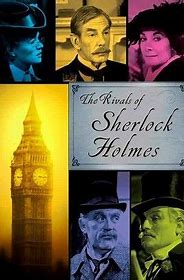
 For Balladeer’s Blog’s review of the very first episode of this 1971-1973 series about London by Gaslight detectives from both the Victorian and Edwardian Ages you can simply click HERE
*** This review will cover the two Professor Van Dusen stories that were dramatized in Season Two of The Rivals of Sherlock Holmes.
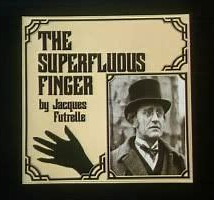 Episode: THE SUPERFLUOUS FINGER (March 11th, 1973)
Detective: Professor Augustus S.F.X. Van Dusen, created by Jacques Futrelle. The very first Professor Van Dusen story was published in 1905.
Comment: Though the professor, also called “The Thinking Machine,” was an American character created by an American author, this British series saved money by depicting him as a British detective solving crimes in England.
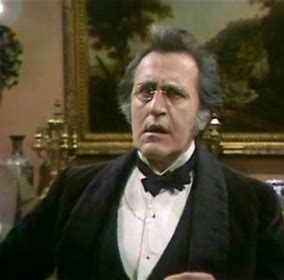 Review: Professor Van Dusen (Douglas Wilmer) is engaged by his acquaintance, Doctor Prescott (Laurence Payne), to solve a mystery. A perfectly healthy woman (Veronica Strong) wanted the physician to amputate one of her fingers but refused to say why.
When the doctor refused, she immediately inflicted an injury on herself forcing the amputation of that finger by the MD. Prescott wants the professor to find out what was behind this strange incident.
The woman refuses to offer any explanation or to give her real name, so Van Dusen has her followed by his reporter friend, Roderick Varley (Mark Eden), a replacement for the original story’s Hutchinson Hatch. (In those original Van Dusen stories Hatch worked for the fictional newspaper called the Daily New Yorker. In this series the reporter character is employed by a London newspaper.) Continue reading
 OBJECT Z (1965) – Directed by Daphne Shadwell and written by Christopher McMaster, this was one of the many six-episode science fiction serials from British television of the 1950s and 1960s. The Quatermass serials are among the best remembered of those programs but there were also items like The Trollenberg Terror, a serial later adapted into the B-Movie The Crawling Eye.
 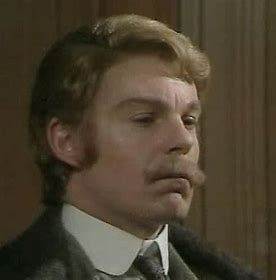 Episode: THE SECRET OF THE FOXHUNTER (February 3rd, 1973)
 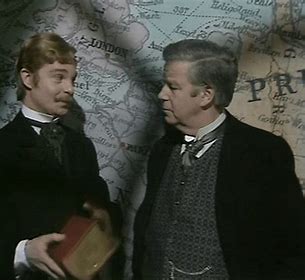 Something I found interesting about the Duckworth Drew spy stories was the way that, despite their national chauvinism in which it is just assumed that Great Britain is “the good guy,” the rival powers of Germany, Russia and France are not depicted as devils incarnate. Certainly they’re never presented in truly sympathetic ways but since these stories were written before the World Wars and the Cold War, they’re comparatively restrained in dealing with Drew’s opposition.
  Episode: THE MISSING Q.Cs. (April 9th, 1973)
 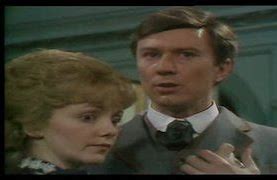 Charles has been dating Sir Revel’s daughter Milly (Celia Bannerman), a practicing nurse who keeps pressuring her beau to ask her father for her hand in marriage. Between his law career, his Cricket games and his sleuthing he just can’t seem to find the right moment for it, which causes periodic tensions between the two lovebirds.
  Episode: THE SECRET OF THE MAGNIFIQUE (February 19th, 1973)
 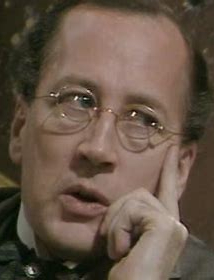 Synopsis: The enigmatic but well to do Mr J.T. Laxworthy (Bernard Hepton) recruits two men fresh out of prison – the handsome and smooth conman Sydney Wing (Christopher Neame) and the brawny safe-cracker & thief called Anderson (Neil McCarthy).
 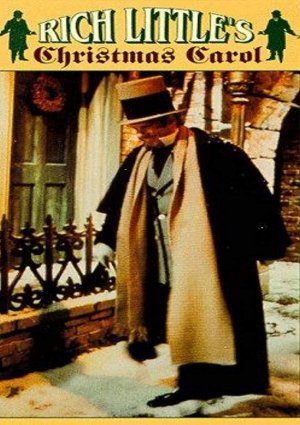 RICH LITTLE’S CHRISTMAS CAROL (1979) – Balladeer’s Blog’s ELEVENTH annual Christmas Carol-A-Thon continues! If you’re into celebrity trivia from the 1970s and earlier Rich Little’s Christmas Carol will have you laughing from start to finish over all the sly jokes and riffs that abound in this Canadian- made special. For those unfamiliar with Little he was the Frank Caliendo of the 60s, 70s and 80s, a first- class celebrity impressionist. The Canadian comic’s first venture into using the voices and personas of iconic celebrities as characters in the Charles Dickens classic began in the 1960s. Part of Rich’s stand-up act was a several minute sendup of A Christmas Carol with John Wayne, Jack Benny and other figures playing roles in the famous story.
 INSPECTOR LIPINZKI: RIVALS OF SHERLOCK HOLMES (1973) – The best episode of Season Two involved this detective investigating the spectacular theft of a huge diamond. Click
  THE FIRST TWENTY CAPTAIN AMERICA STORIES OF THE 1940s – The Golden Age adventures of the red white and blue superhero. Click
 VICTIMS OF THE DEMOCRAT RIOTERS SPEAK OUT – The victims of color who suffered through the Democrat riots this year were ignored by the Democrats’ media outlets. Click
  Episode: THE MYSTERY OF THE AMBER BEADS (April 23rd, 1973)
 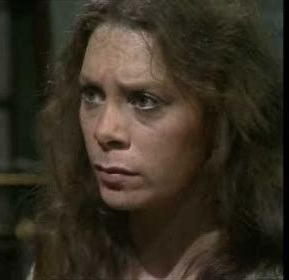 The enterprising young Gypsy woman picked up the pawn business quickly, combining her already wily anti-establishment Romany ways with her uncle’s eye for value and hard-nosed negotiating skills. Naturally, at a pawnshop, Hagar often dealt with criminals, gamblers and wastrels. While managing the shop for her uncle, Miss Stanley also found herself solving assorted murders, thefts and other crimes.
 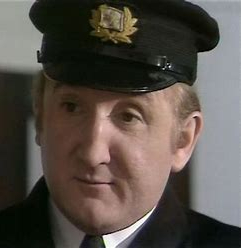 Episode: THE LOOTING OF THE SPECIE ROOM (April 16th, 1973)
 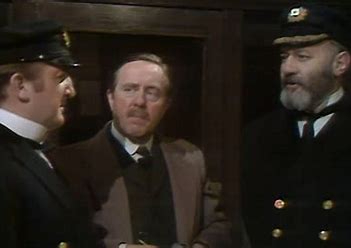 Synopsis: The RMS Oceanic is hoping to pull off a double-coup – hauling a record-setting TWO HUNDRED FIFTY-THOUSAND dollars in gold bullion (or $9,137,670 today) from New York City to Southampton AND setting a new speed record for a trans-Atlantic voyage. Lord Altington, the owner of the shipping line, is aboard to oversee this venture and keep the pressure on the crewmembers.
 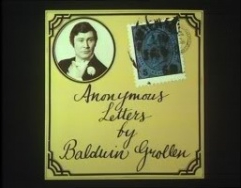 Episode: ANONYMOUS LETTERS (March 19th, 1973)
 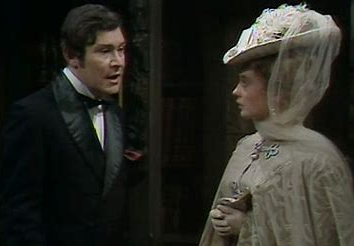 Trostler doesn’t expect any pay and usually goes without any public credit, because if he has resolved the case properly no one will ever know he or his clients played any role in certain events.
  Balladeer's Blog