
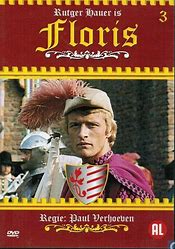
 FLORIS (1969 and 1975) – Actor Rutger Hauer and director Paul Verhoeven first worked together for this adventure series set during the very early 1500s. The program aired on Netherlands television in 1969, then was remade – again with Hauer in the swashbuckling title role – in 1975 for German television and ran for even more episodes than the original series.
Rutger starred as the fictional Floris van Rozemondt, the knightly lord of his eponymous castle. Ever the adventurer, Floris had spent ten years as a mercenary, a privateer and a sea trader, acquiring quite a fortune from the latter two pursuits.
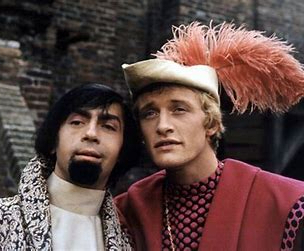 Around the year 1502, word finally caught up with our wandering hero that his father and two older brothers had died. Floris returned home, accompanied by his adventuring sidekick Sindala (Jos Bergman), an Indian Fakir. (Floris and the Fakir was originally going to be the title of the series.)
Upon his arrival, Floris discovered that Castle Rozemondt had been unjustly taken from him and occupied by Maarten van Rossum (Hans Culeman) – a subordinate of the Duke of Guelders. The Guelders Wars, centering on efforts to bring the Netherlands together as one nation, had broken out during Floris’ absence and van Rossum was on the opposing side of Floris’ family.
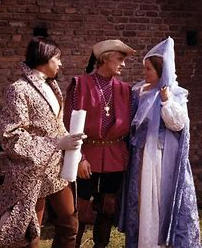 Floris and Sindala fought their way out of the hands of the enemy and wound up allied with Wolter van Oldenstein and his men at Castle Oldenstein. I often wonder if the 1991 film Robin Hood, Prince of Thieves took partial inspiration from the premise of Floris, with a returning nobleman fighting oppression alongside a nonwhite comrade from his overseas adventures. Continue reading
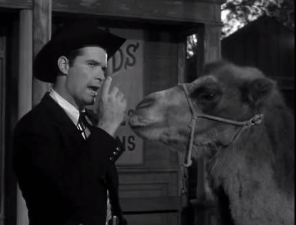 RELIC OF FORT TEJON (November 3rd, 1957) – Here’s something a little different from the usual for Balladeer’s Blog’s Forgotten Television category. The 1950s James Garner series Maverick was an all-time classic, but this particular episode is often overlooked.
 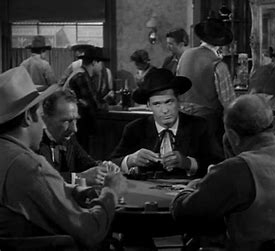 Previously, I’ve examined the
  LORRAINE HANSBURY: TO BE YOUNG, GIFTED AND BLACK (January 20th) – A 90-minute biography of African-American playwright Lorraine Hansbury, whose works include A Raisin in the Sun. Her husband Robert Nemiroff wrote this drama which includes performances of scenes from her plays. Ruby Dee, Roy Scheider, Blythe Danner, Barbara Barrie and Claudia McNeil were among the cast members.
 AN IDEAL HUSBAND (January 14th) – Adaptation of the play by Oscar Wilde. THE Jeremy Brett starred as the good guy, Viscount Arthur Goring, who takes action when the brother of his lady love Mabel Chiltern (Susan Hampshire) is being blackmailed by a conniving socialite (Margaret Leighton). Originally aired in England in 1969. 90 minutes.
 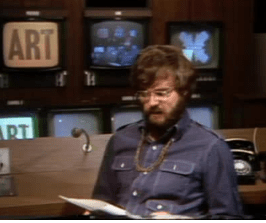 THOUGHTS OF THE ARTIST ON LEAVING THE SIXTIES (January 1st) – Assorted figures performed, did selected readings and offered perspectives on moving into a new decade. Among those appearing: Christopher Walken, Jessica Tandy, Fred Rogers, George Carlin and Dick Gregory. An entire version of Edward Albee’s short play The Sandbox was enacted, as well. Approximately 60 minutes for the bulk of the show and 30 minutes for The Sandbox.
 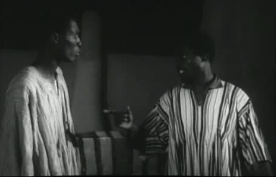 HAMILE (January 15th) – A Ghanaian adaptation of Hamlet written by that nation’s Joe C. De Graft and performed by actors from the National Theatre of Ghana. De Graft sets the action in Tongo, changes the names Hamlet and Laertes to Hamile and Laitu, plus he adapts swordplay into traditional Ghanaian wrestling in this 2-hour production.
 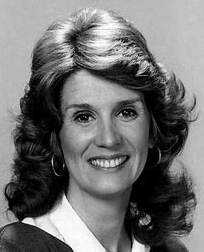 THE TIN WHISTLE (January 10th) – Barbara Bosson starred in this 80-minute adaptation of Richard S. Burdick’s play about 12-year-old Martin Palmer, who channels his newly discovered powers of witchcraft through his tin whistle. Martin targets two teachers who have tried to discipline him. A 10-minute short film, Eugene Atget, which looks at the man’s Belle Epoque photos, padded the runtime to 90 minutes.
  SILENT SONG (January 24th) – Filmed version of Hugh Leonard and Frank O’Connor’s play with only partial dialogue and the rest in mime. In a trappist monastery, the monks honor their vows of silence but indulge in vices like drinking and betting on horse races. The 75-minute effort starred Tony Selby, Milo O’Shea and Jack MacGowran.
  AUTO STOP (January 5th) – Henry (David Hemmings) is told by Federika, the older woman he is pursuing, that he needs to gain more experience in the world before she’ll entertain the thought of a romance with him. Henry takes her seriously and roams around Europe, loving and leaving women his own age, encountering a Neo-Nazi and attending a La Dolce Vita party in Rome. N.E.T. Playhouse paired this 75-minute film with the 8-minute cartoon short Tamer of Wild Horses from Yugoslavia’s Zagred Animation.
 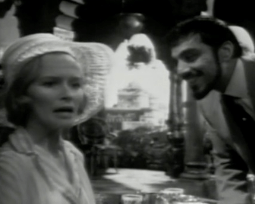 A PASSAGE TO INDIA (January 26th) – Long before the theatrical film came this teleplay that was first broadcast on the BBC’s Play of the Month in November, 1965. The cast of this 90-minute adaptation of the E.M. Forster novel included Sybil Thorndike, Virginia McKenna, Cyril Cusack and Zia Mohyeddin. Drama involving life and race relations in 1920s India under the Raj.
  THE AMOROUS FLEA (January 6th) – Majestic Productions put together this operatic comedy adaptation of Moliere’s play School for Wives. A young woman raised in virtual isolation is competed over by her much older patron and the son of that patron’s best friend. Lew Parker starred in this 90-minute presentation, repeating his stage role as the older suitor Arnolphe.
  N.E.T. PLAYHOUSE (1966-1972) – This anthology series from National Educational Television presented dramas, comedies, fantasies and musicals. Many were produced by N.E.T. themselves, others were produced overseas and a very few were movies theatrically released before being shown on N.E.T. Playhouse.
 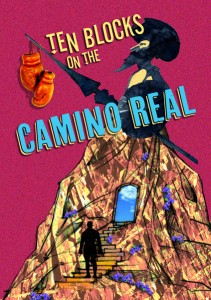 TEN BLOCKS ON THE CAMINO REAL (October 7th) – Martin Sheen starred as the downtrodden ex-boxer Kilroy in this 90-minute episode adapted from the play by Tennessee Williams. Janet Margolin, Albert Dekker and Lotte Lenya also starred.
 SPACE COMMAND (1953-1954) – Long, long before the recent television series of this name came Canada’s Space Command. James “Scotty” Doohan was Phil Mitchell, Robert Barclay played Frank Anderson, the 20-something young man who was the ostensible star of the show, Harry Geldard portrayed Captain Steve Cassell and Austin Willis was Dr. Fleming.
