Tag Archives: book reviews

THE GALLOWS MAN: NEGLECTED HORROR LEGEND

Balladeer’s Blog’s month-long celebration of Halloween continues with this slice of pure Americana.

gallows-manTHE GALLOWS MAN – This is another neglected American horror legend which has been presented in many different versions over the years. Ralph Sutherland was born in 1702 in either New York City or a town near the Catskills, depending on the version.

Sutherland was born into the New York gentry but in his adult years his drinking and gambling eventually embarrassed the family enough that they stopped associating with him. After boozing, whoring and gambling away a large part of his money Ralph was left with just one reasonably-sized home surrounded by a stone wall. He had enough funds left to maintain that house and took in an indentured servant – a beautiful teen girl from Scotland.

Sutherland’s foul and obnoxious nature soon led the girl to flee. In a rage Ralph mounted a horse and tracked her down before she got far. The black-hearted man tied the terrified girl to his horse and rode back to his home, but was either so furious or so drunk that he inadvertently dragged the poor female to her death. Continue reading

16 Comments

Filed under Halloween Season

THE CENTENARIAN (1822): GOTHIC HORROR

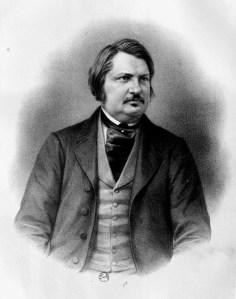
CentenarianTHE CENTENARIAN (1822) – Written by THE Honore de Balzac. Thirty-one days of Halloween continue here at Balladeer’s Blog! The Centenarian or The Two Beringhelds was one of the “quickie” novels that Balzac wrote in his early career, this one under the pseudonym Horace de Saint-Aubin.  

Balzac himself looked down on The Centenarian and other early works that he churned out for quick money like the Pulp writers of a century later. Still, this work has value, just like the early Pulp stories from writers like Tennessee Williams, Dashiell Hammett and others. Plus I’m a Napoleon geek so I love immersing myself in the time period in which the novel is set.

The title character is really Count Maxime Beringheld Sculdans. The Centenarian was born in 1470 and led an adventurous life, supposedly even serving as a ship’s doctor when Columbus visited the New World. During his wanderings across the globe Count Maxime studied all the medicine and related sciences that he could.

Under the Rosicrucians the Centenarian learned various secrets of alchemy, including universal healing powers and immortality. Those last two secrets often worked hand in hand: Maxime would use his powers to mystically withdraw the illness or injury out of a sufferer but his “fee” was the draining of the life essence of another person in return. 

Honore de BalzacThe Centenarian leeches out the vitality of his victims but NOT by sucking out blood like a vampire. He drains their life force via alchemical means with his “medical” equipment. By the time of the French Revolution and the Napoleonic Wars, Count Maxime has grown a bit weary of his eternal life in typical Gothic style.  

In recent centuries our title character has devoted himself to secretly watching over his family line, mysteriously saving their lives or killing off their enemies at crucial periods. The Centenarian has most recently intervened in Spain during the Wars of the French Revolution, saving the life of his descendant General Tullius Beringheld.

Intrigued, Tullius seeks out information on his enigmatic savior and eventually learns the Centenarian’s true identity and about his supernatural nature. By this point (the 1790s) Maxime’s body is misshapen. His arms are emaciated but his torso and legs are thick and muscular.

He is unusually tall but the skin on his head is so thin that his  scalp and facial features resemble a living skull. He smells of the grave but his powers of healing make others treat him with fear and respect despite the awful fee he demands.  

The Centenarian’s additional powers include immunity to hanging and other forms of mortal injury. He has superhuman strength and his fiery eyes can induce fear, paralysis or death. He can read minds and teleport as well.   Continue reading

10 Comments

Filed under Halloween Season

TOP SEVEN ROBERT LUDLUM NOVELS: NUMBER TWO

FOR BALLADEER’S BLOG’S SEVENTH PLACE LUDLUM NOVEL CLICK HERE 
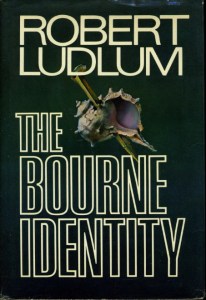
Bourne Identity2. THE BOURNE IDENTITY (1980)

TIME PERIOD: Vietnam War era to the late 1970s.

Robert Ludlum’s most popular fictional creation – Jason Bourne (Real name David Webb) – has become as thoroughly overused, distorted and bastardized as James Bond or Sherlock Holmes. Ludlum himself already watered down the character’s original impact with two additional novels putting the amnesiac figure in increasingly ridiculous situations.

Since then other writers have churned out so many silly Bourne stories (ten at last count) to the point where Jason Bourne In Spaaaaace is the only avenue left unexplored. Or maybe a crossover with All My Sins Remembered. The Matt Damon movies use virtually nothing but the Jason Bourne name.

To me the bulk of the appeal of the original novel The Bourne Identity was that a reader only had to suspend disbelief just enough to accept an amnesiac figure surviving the unique set of circumstances presented in that story.  

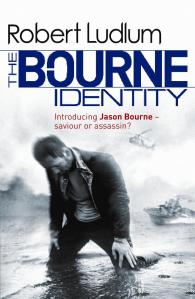
Bourne Identity 2At the end it was accepted by all characters that David Webb/ Jason Bourne was in no condition to continue his intelligence work. Not only because of his amnesia but because he had found happiness with Marie, which made him lose the near-suicidal edge he had needed to succeed as Bourne.  

In my opinion Ludlum should have done PREQUEL stories of David Webb as Delta in the Vietnam War’s Operation: Medusa or his days pursuing Carlos as Cain/ Jason Bourne PRIOR to his amnesia.    

HERO: Since there are virtually no spoilers left about this character who has had everything but his own comic book series I will go ahead and lay out all the details of the ORIGINAL figure. This is for potential Bourne fans who associate him purely with the silly super-soldier nonsense of the movies and have avoided him because of that.

I think transferring Jason Bourne to more recent time periods robbed the story of a great deal of its unique appeal. Movies CAN work as period pieces. Studios still churn out spy flicks set during World War Two for crying out loud. There’s no reason why they can’t keep the period setting for stories dependent on the Vietnam War or late Cold War events for their full impact. 

So again … HERO: DAVID WEBB, an American scholar who specialized in ancient Vietnamese culture and spoke multiple regional languages. Webb had been serving in various diplomatic posts throughout Indochina and had a Vietnamese wife and children.

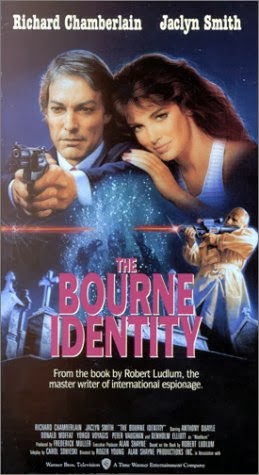
Bourne Identity 3When his wife and children were killed during a fly-by strafing from a plane of unknown national origin Webb left diplomatic work and volunteered for the top secret Operation: Medusa. (Ludlum’s fictional version of the real-life Phoenix Project.)

Under the codename Delta (later refined to Delta One), David Webb thrived in that Black Ops program. Delta proved ruthless and bloodthirsty, with his command of local languages and culture making him an irreplaceable asset against the Viet Cong, the North Vietnamese regulars and international mercenaries in the region. 

Operation: Medusa’s operatives served as assassins, torturers, guerillas and saboteurs, often locating POW camps and facilitating escapes. On one particular mission Jason Bourne, a treacherous Medusan from Australia, betrayed Delta and his team. In response Webb killed Bourne on the spot.   Continue reading

39 Comments

Filed under opinion

WILD AND WEIRD (1889) – NEGLECTED HORROR

Wild and WeirdHalloween is celebrated for all 31 days of October here at Balladeer’s Blog. Here’s another neglected gem. As Johnny Carson would have said “That izh some weird, wild shtuff.” 

WILD AND WEIRD (1889) – By Gilbert Edward Campbell. This compilation of three of Campbell’s short story collections presents some of the author’s best works. He often based his tales of terror on pre-existing folklore from around Russia, England and Italy but made them come alive in more polished form.

Here are some of the stories:  

THE MIDNIGHT SKATER – This tale gets extra points from me for presenting a reasonably unique monster: a female were-bear. That’s not really a spoiler since this is one of those stories in which modern readers will guess the twist just a few pages in. Olga, a beautiful gypsy girl, is wooed by plenty of men but most of them end up getting killed by a bear-like creature. It turns out Olga herself is the were-bear, who preys on her suitors when she gets them alone in the woods.

WHAT WAS IT? – I’m often surprised at how many horror stories from the 1800s and earlier were edgy enough to kill off children. This is another one of them. Playful, mischievous children are repeatedly warned not to enter a room called “the Infernal Room.” Kids being kids, they eventually enter it anyway and face death in the form of a child-hating ghost.

THE GREEN STAIRCASE – An eerie green staircase – think David Lynch meets Arthur Machen – leads to a portrait gallery. (But no, this strange room is NOT above a convenience store.) The art is hypnotically beautiful but if you stay too long or visit too many times the figures in the pictures come to life and reveal their malevolent nature.   Continue reading

2 Comments

Filed under Halloween Season

THE BLACK REAPER (1899): GOTHIC HORROR

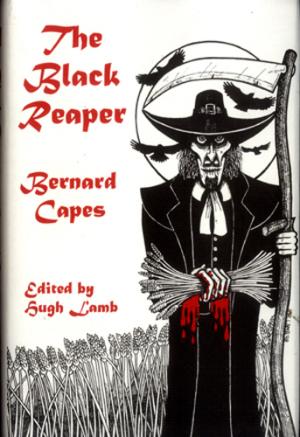
Black ReaperTHE BLACK REAPER (1899) – By Bernard Capes. Balladeer’s Blog’s month-long celebration of Halloween continues with this neglected horror tale. The story takes place in 1665 in a secluded British farming town called Anathoth.

The Black Reaper of the title is an interesting humanoid monster. Religious superstition and human evil mingle in this tale, just like in so many other great horror stories. And it seems Stephen King must have been, uh … “inspired” by The Black Reaper.

The citizens of Anathoth are described in the narrative as the kind of religious people who merely pay lip service to their beliefs but don’t live by them. They even treated their previous Vicar like a joke.

Now the plague is once more at large in the land and a new fire-and- brimstone preacher has replaced the disrespected man in Anathoth. The new “holy” man  frequently rails at the citizens, telling them that they are all horrible sinners and that God will one day mow them down like ripe corn.

All of them, that is, except the children. Continue reading

11 Comments

Filed under Halloween Season

CITY OF VAMPIRES (1867)

Vampire city 2Halloween Month moved another notch today, leaving us with just 20 days left. Balladeer’s Blog continues its month-long celebration with a look at another neglected gem of horror fiction.

LA VILLE-VAMPIRE (City of Vampires) 1867 – Written by the accomplished and prolific Paul Feval, it’s Village of Vampires, or City of Vampires or, if you prefer, Vampire City (Wham, bam, thank you ma’am! Va- va- va- Vampire CIT-EEE! … Had to be said.)

Paul Feval’s heroine in this story is the young Ann Ward, who went on to be Ann Radcliffe, pioneer of Gothic Horror through such works as The Mysteries of Udolpho and The Italian. Ann’s friends Cornelia de Witt and Ned Barton depart for the continent with their new acquaintance Otto Goetzi.

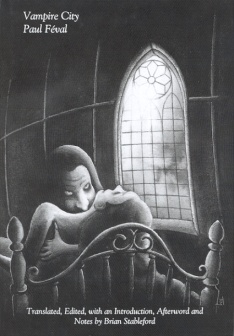
Vampire CityGoetzi turns out to be a vampire who lures Cornelia and Ned deeper and deeper into a trap. Back in England, Ann Ward deduces all this from odd letters that she receives from her friends and from horrific premonitions which come to her in nightmares.

Ann and a much older family servant called Grey Jack cross the English Channel to come to the rescue of Ann’s friends. Soon the trail leads to Belgrade and then to a dismal city called Selene by outsiders but known as the Sepulchre to its inhabitants, all of whom are vampires.    Continue reading

14 Comments

Filed under Halloween Season

THE SUPERHERO PANTHEON OF RURAL HOME – CROYDON – ENWIL PUBLISHERS

With superhero cosplay starting to take over Halloween what better time of year for a look at the neglected male and female superheroes of the Rural Home/ Croydon/ Enwil/ Orbit and McCormick conglomeration.

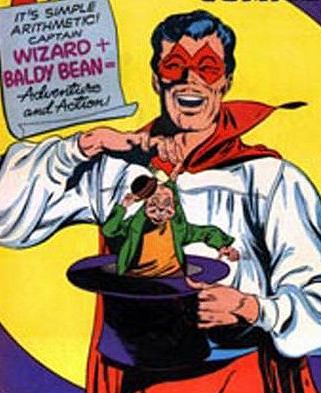
Captain WizardCAPTAIN WIZARD

Secret Identity: Joseph Preston

Origin: Joseph Preston was unjustly suspected of a murder he did not commit. While fleeing the police he took shelter in a haunted wax museum where he encountered a wax figure who was really the magician Theophrastus.

The magician’s powers told him Preston was innocent so he gave the man a mystical cape, costume and mask which granted him superpowers. Calling himself Captain Wizard our hero caught the real murderer and went on to fight the forces of evil on a regular basis.

First Appearance: Red Band Comics #3 (April 1945). His final Golden Age appearance came in 1946. 

Powers: Thanks to his enchanted costume Captain Wizard had super-human strength, could fly and was invulnerable. He also never required sleep. In addition he could switch from his street-clothes into his costume and vice-versa simply by saying “Abracadabra.”   Continue reading

51 Comments

Filed under Superheroes

ROBERT LUDLUM’S TOP SEVEN NOVELS: NUMBER THREE

FOR BALLADEER’S BLOG’S SEVENTH PLACE LUDLUM NOVEL CLICK HERE 

Holcroft Covenant3. THE HOLCROFT COVENANT (1978)

TIME PERIOD: Late 1970s into the near future of the 1980s.

The crowded sub-genre of espionage tales about fugitive Nazi war criminals working with a younger generation of acolytes to launch a Fourth Reich probably reached its height with this Ludlum novel. Every entertaining element of that sub-genre came into play in The Holcroft Covenant, all of them woven into one epic-length story.

Take The ODESSA File, Marathon Man and The Boys From Brazil and roll them in with the Tom Cruise movie Valkyrie plus the real-life files of Nazi Hunters like Simon Wiesenthal. Now stir in Robert Ludlum’s supreme talent for making implausibly melodramatic espionage plots seem chillingly possible and enjoy!   

PLEASE DON’T JUDGE THE HOLCROFT COVENANT BY THE HORRIBLE FILM ADAPTATION FROM 1985. THAT MOVIE IS A SILLY AND INEPT BUTCHERING OF THE NOVEL.

HERO: Noel Holcroft, an American architect who is secretly the son of the fictional Heinrich Clausen, a masterful economist whose financial acumen was a cornerstone of Hitler’s Third Reich. Noel’s mother fled Germany when she found she was pregnant and did not want her hated husband Heinrich raising their child. She married an American man who raised Noel with her as if he was his own child.
Holcroft Covenant 2All of that seems like ancient history to thirty-something Noel Holcroft, a successful New Yorker going into business for himself after working as an architect at various prestigious outfits. From out of the blue, representatives from the Grande Banque de Geneve contact Noel about a numbered Swiss Bank Account which his father left to him and the children of two associates.

Holcroft initially wants nothing to do with the bloody, tainted fortune of nearly 900 million dollars but the bankers from Geneva let him read documents from his father. In those aged documents addressed to his then-unborn son, Heinrich Clausen states he regrets being part of Hitler’s organization and – now that he has learned of the ongoing Final Solution at the death-camps – he wants to make amends. The secret account is the tool.

If Noel carries out his father’s wishes, he will inherit two million dollars from the bank account, with the rest going to Holocaust survivors or their families. All of this must be done in secret to prevent the Swiss Bank Account’s funds from being tied up in court for decades by claims against the Nazis from other individuals and nations victimized by the Third Reich.

This story element shows Ludlum at his best: the lure of two million dollars provides the very real incentive to Noel to go along with all the secrecy surrounding this strange Covenant of his father’s. More cynically, readers could say that it actually provides a rationalization for Holcroft to play along.

Our protagonist can assure himself that “Hey, if I don’t go along with this plan then hundreds of millions of dollars will never reach their intended beneficiaries … THAT’s why I’m cooperating, NOT just because of the money coming to ME.” This self-deceiving motive makes Noel Holcroft seem more real than many other Ludlum heroes.
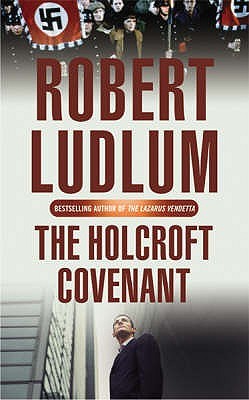
Holcroft Covenant 3VILLAIN: Johann Von Tiebolt, the son of one of Heinrich Clausen’s cohorts in diverting funds to the Geneva Account. Johann is known to the world at large as John Tennyson and is the designated New Fuhrer who will lead the Fourth Reich.

Yes, as would have been suspected by anyone whose mind wasn’t clouded by the possibility of two million dollars and a life of financial independence, the Geneva Account is REALLY intended for a global network of Nazi descendants and new recruits.

Johann Von Tiebolt/ John Tennyson has emerged as the ideal leader of the conspiracy. Blonde, blue-eyed and in excellent physical condition this New Fuhrer poses as a journalist. That cover lets him roam the world secretly committing political assassinations and otherwise furthering the goals of the gestating Fourth Reich.

SYNOPSIS: The 900 million dollars in the Geneva Account will finance the finalization of the decades-long plans the Nazis’ network has been working on. Those plans are for literal world conquest by way of political, financial and media manipulation. Noel’s father was lying to his son when he wrote about his Covenant.  Continue reading

32 Comments

Filed under opinion

THE DEVIL OF PEI-LING (1927): NEGLECTED HORROR NOVEL

Halloween Month rolls blithely along as Balladeer’s Blog presents another look at a neglected work of horror fiction.

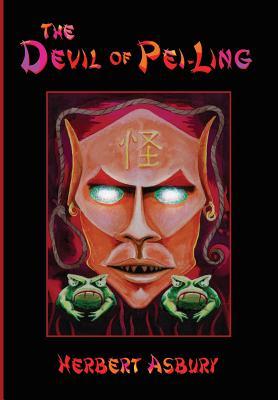
Devil of Pei LingTHE DEVIL OF PEI-LING (1927) – This minor masterpiece was penned by the Bard of the Bowery himself, Herbert Asbury! New York Detective Inspector Conroy tries to stop a reign of terror which is in actuality being inflicted on the world by supernatural forces from beyond the grave and from just north of Hell.
The Inspector was first drawn into the affair by the novel’s narrator, a physician friend of Conroy’s a la Doctor Watson to Sherlock Holmes. The doctor treats a comatose woman following a car accident and notices that she has deep red stigmata on her hands and feet. These stigmata don’t stop at an imitation of Christ’s wounds and begin to sprout nails as well. 

The horrors just keep coming from there, as a “living” crimson rope often appears out of nowhere to hang a series of law enforcement figures and jurors who sentenced a murderous magician named Paul Silvio to death by hanging.

As Conroy and his medical friend probe deeper they learn that after Silvio was hanged, his corpse animated itself long enough to threaten vengeance on everyone involved in his execution. Soon after the comatose stigmatic woman appears at the hospital other horrors abound.

Gigantic toads the size of small dogs show up, bloody human sacrifices take place and a bronze idol of a demonic being called Pei-Ling periodically comes to life to murder people. Continue reading

4 Comments

Filed under Halloween Season

ROBERT LUDLUM’S TOP SEVEN NOVELS: NUMBER FOUR

FOR BALLADEER’S BLOG’S SEVENTH PLACE LUDLUM NOVEL CLICK HERE 

Chancellor Manuscript4. THE CHANCELLOR MANUSCRIPT (1977)

TIME PERIOD: From shortly before J Edgar Hoover’s death in 1972 up to early 1973. The novel’s “what if” premise depicts the 77 year old FBI Director’s death as a planned assassination to prevent the Nixon White House from getting hold of Hoover’s legendary files. (That’s NOT a spoiler – all that is made clear in the novel’s opening pages.)

Those files contain so much “raw meat” on powerful U.S. figures that we readers are told that whoever takes hold of said files will be able to rule the U.S. from behind the scenes by blackmailing the rich and the powerful.

The novel’s naïvete shows in that premise. I despise Hoover but I’ve always considered his abuses to be the EPITOME of the behavior of “the intelligence community” (LMAO), not an aberration from it. The accumulation of private information about people carries with it the implicit intent to USE that information against them. Of course, these days Zuckerberg and his fellow Corporate Fascists cheerfully help “the intelligence community” (LMFAO) spy on all of us. 

At any rate this is an escapist novel so the tale gets told in a simplistic “good guys vs bad guys” way, despite Ludlum’s attempts at a more nuanced approach.   

HERO: Peter Chancellor, an up and coming novelist who is part muckraker and part conspiracy hound. His successful espionage novels have not only made him rich but have caused minor public uproars over the kind of governmental abuses we take for granted these days but which were considered shocking in this novel’s time period.  

chancellor manuscript 3Chancellor’s notoriety also means he gets a lot of conspiracy kooks feeding him “tips” about supposedly real intrigues of varying degrees of believability. Hey, there was no Internet yet, so what do you expect?
Peter’s high public profile attracts a mysterious man who tries to convince him the recently deceased FBI Director J Edgar Hoover did not die of natural causes but was instead assassinated. Chancellor doesn’t believe it but considers the idea the perfect springboard for his next novel. 

Before long Peter’s background research makes him a target of so many threats and acts of violence that he wonders if the notion of Hoover being assassinated is as far-fetched as he at first thought.

VILLAINS: Typical of Ludlum’s later novels there are multiple groups of antagonists. The main villains remain a mystery until the end of the story so I won’t spoil the identity of the people who really are behind the successful theft of Hoover’s files.

chancellor manuscript 2Instead, I’ll deal with the secondary but more active villains: a group of high-level conspirators who go by the code name …

INVER BRASS – In this novel they represent the Left-Wing Deep State just like Hoover represented the Right-Wing Deep State. Though they fancy themselves a benevolent group, they’ve become more like oligarchs, begging the question: how are they any better than Hoover himself? This group seems roughly based on the high-placed members of President Franklin Roosevelt’s unofficial “Kitchen Cabinet for Intelligence Affairs” (aka The Room).  

All presidents have had such unofficial advisors who operate out of the spotlight and out of the headlines but Inver Brass and some of its members are modeled very specifically on known FDR associates who belonged to The Room. As you would expect, that makes them VERY old by the time the events in The Chancellor Manuscript take place. 

The members: Continue reading

51 Comments

Filed under opinion