FOR BALLADEER’S BLOG’S SEVENTH PLACE LUDLUM NOVEL CLICK HERE
 NUMBER ONE: THE MATARESE CIRCLE (1979)
TIME PERIOD: Late 1970s with investigations into events from before World War One and later.
To me this lengthy, epic espionage novel from Robert Ludlum was his finest work, partly because it nicely encapsulated how – over the course of the 20th Century – the world gradually found itself at the mercy of elaborate “intelligence communities” (LMAO) working in conjunction with international corporate fascists.
There’s something almost poetic about the way that – with the hindsight we have here in 2017 – the bitter enmity between the novel’s central characters (one a U.S. agent and the other a Soviet agent) is washed away a mere decade before the real-world collapse of the Cold War paradigm.
And with that same hindsight it’s almost eerie how those two rivals come to realize that the real seeds of future totalitarianism lie in the New Feudalism’s ugly motto: Nations are obsolete, so wealth wedded to unchecked political power is the coming thing. Ludlum’s arch-villain Guillaume de Matarese was positively prescient.
LEAD HERO: Brandon Alan Scofield – Codename: Beowulf Agate. Forty-six year old veteran of Consular Operations, Ludlum’s fictional Intelligence Organization specializing in defections from hostile nations – mostly Communist – to the United States.
 As The Matarese Circle opens in 1979, Scofield has been with Consular Operations for 22 years, almost since its founding. A Harvard grad fluent in multiple languages, Brandon joined the U.S. State Department right out of college. After a couple years in the “real” State Department he gravitated to State’s covert section Consular Operations (or Cons Op for short).
In those early years Cons Op’s activities were not yet totally Top Secret. They were virtually a humanitarian organization which tried to accommodate as many people fleeing the Iron Curtain nations as possible. So many Eastern Europeans began seeking asylum in the Western World that the Soviets realized they had to take steps to cut off the flow of escapees.
Similar to the way they would later construct the Berlin Wall to prevent flight from East Berlin in particular, the Soviets clamped down on potential defections throughout Europe and elsewhere. Soviet intelligence agents – among them Vasili Taleniekov – began shutting down the almost openly- operating Cons Op defection network.
Violence escalated on both sides and eventually Consular Operations was forced to act more and more covertly. The organization was no longer able to accommodate asylum requests from the scores of people who appealed to them daily, hoping to escape to the U.S.
Now Cons Op had to narrow their scope exclusively to high-level defectors who were deemed sufficiently “valuable” to U.S. Intelligence, Military, Political and Scientific pursuits. Brandon Scofield proved proficient at the covert skills and the violence necessary to carry out Cons Op’s narrowed mission but was disillusioned by the changes.
Scofield was set to transfer to a different section of the State Department, intent on pursuing a career as a Diplomat. Unfortunately, shortly before that transfer could be finalized, KGB Agent Vasili Taleniekov (who knew nothing of the planned transfer) engineered the hit and run death of Scofield’s wife Karine, as a message to Beowulf Agate and his colleagues in Consular Operations.
Brandon Scofield’s fury over his wife’s fate steeled his resolve rather than intimidating him or making him careless. He canceled the transfer request and went on to be Cons Ops’ most effective field agent in Europe and the U.S.S.R.
Not only did Beowulf Agate thrive on stinging the Soviets by pulling off the most high-level defections he could, but he also took a more personal revenge by killing the brother of Vasili Taleniekov, the KGB man behind his wife’s murder.
From then on the professional and personal enmity between Scofield/ Beowulf Agate and Taleniekov/ The Serpent helped write the history of both their organizations. The two men clashed all over the map, with Scofield and his fellow Cold War versions of the Scarlet Pimpernel helping as many defectors as possible while Taleniekov and his KGB colleagues thwarted them whenever they could.
SECONDARY HERO: Vasili Vasilovich Taleniekov – Codename: The Serpent. (I’ve always felt the Viper would have made a better codename since it would reflect the “V” for Vasili just like Beowulf Agate’s codename matched the B.A. for Brandon Alan in Scofield’s name.)
As this novel opens Taleniekov has been with the KGB for 25 years. Like Scofield he was a brilliant student but the Soviet government decreed that with his aptitudes he would serve the State better as an intelligence agent rather than as an historian like he wanted. Continue reading →

 THE QUEER SIDE OF THINGS (1890s) – Written by James Frank Sullivan. Straight from the Gay Nineties, it’s a selection of Sullivan’s contributions to the Strand magazine’s short fiction column The Queer Side of Things.
  Konstantin Eduardovich Tsiolkovsky did real-life work crucial to space-flight and is one of the neglected pioneers of Science Fiction. Balladeer’s Blog takes a look at a few of his works.
  These flying plant-people from the Asteroid Belt obtain nourishment through chlorophyll and solar radiation. They also have advanced technology like the harnessing of dismantled asteroids into rings, resulting in lower gravity for manufacturing work.
  OUT OF THE EARTH (1920) – Coincidentally set in the year 2017 A.D. this tale features what readers are told is the first manned flight to the moon, some 48 years AFTER it happened in real life. An international team of tycoons and scientific adventurers are planning to explore the universe, with the moon an obvious first step.

 BLOOD AND IRON (1917) – Written by Robert Hobart Davis & Perley Poore Sheehan. Dramatic depiction of advanced technology being used in World War One. In Germany one of the Kaiser’s scientists is experimenting with replacing lost limbs and organs with mechanical replacements. He has been trying to create cyborgs out of maimed German soldiers from the front lines.
 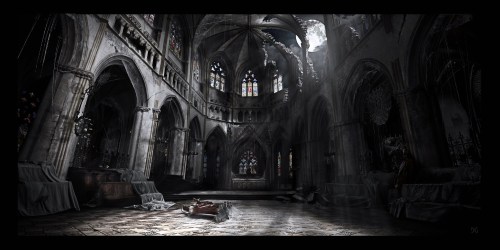 ALL HALLOWS (1926) – Written by Walter de la Mare. In recent decades Walter de la Mare’s horror stories have begun to get as much attention as his poetry. This particular tale is about a haunted cathedral but there is also a blatant subtext.
  Appropriately for a horror story our protagonist has arrived as the sun is going down. The odd, perhaps half-crazed Verger (Anglican Church Caretaker) impatiently leads the new arrival on a tour of the degenerating interior. Almost like a Halloween Funhouse host the Verger emphasizes the creepy lore about All Hallows.
 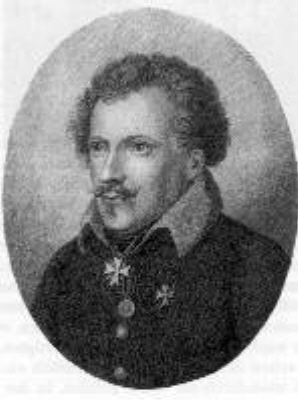 ROSAURA (1817) – Written by Friedrich Fouque. Halloween Month 2017 is dying quickly. Here is another neglected story from the late Gothic Horror period. Rosaura has a fairly unique supernatural premise so that alone should have earned it a wider following by now.
 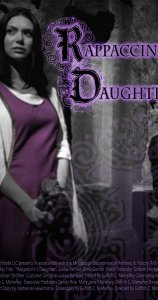 BEATRICE RAPPACCINI
  Balladeer’s Blog’s list of Robert Ludlum’s top seven novels was reasonably popular with readers. Here are links to each review of the set of seven:
 TIME PERIOD: The Man Who Laughs has the action set mostly in England in 1705. For Gothic Horror I prefer that time period to the late 1400s, when The Hunchback of Notre Dame takes place.
 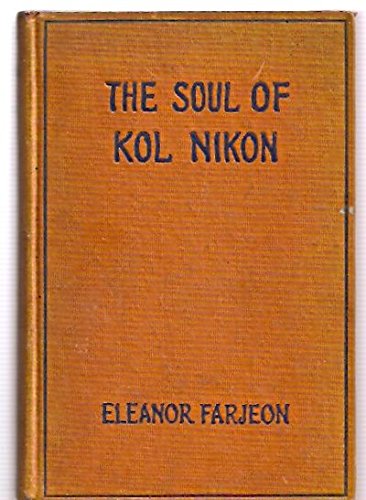 THE SOUL OF KOL NIKON (1913) – Written by author, poet and librettist Eleanor Farjeon as a serial in 1913. Later novelized. Halloween Month rolls along with another look at a neglected tale of horror.
  Balladeer's Blog