
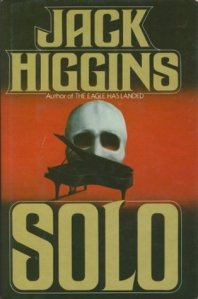
 SOLO (1980) – Written by Jack Higgins. Solo is not exactly one of my favorite espionage novels but it is definitely my favorite by Jack Higgins. It’s the story of efforts to catch an international assassin code-named the Cretan Lover. Luckily that ludicrous codename is often shortened to just “The Cretan” throughout the novel. I’ll use the same review format that I used for my look at The Top Seven Robert Ludlum Novels.
TIME PERIOD: From approximately 1960 to the late 1970s.
MAIN CHARACTER: John Mikali, a Greek concert pianist of much renown who leads a double life as the aforementioned Cretan Lover aka The Cretan. Mikali is descended from a fictional naval hero of the Greek War of Independence in the 1800s. His family remains wealthy and prominent, with his grandfather being an erudite and outspoken critic of the Colonels who seized control of Greece.
Young John himself is a gifted pianist but after getting drawn into a vendetta against the man who accidentally killed his beloved grandmother he fled into the French Foreign Legion. Despite his fey background John Mikali thrived in the Legion AND in the Algerian War, proving to be a ruthless, cold-hearted man who could kill enemy soldiers or non-combatants with equal skill and nonchalance. Continue reading
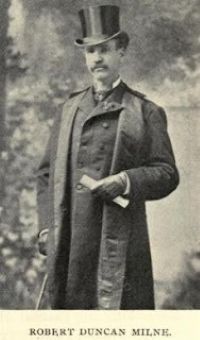 PHILIP HALL’S AIR SHIP – This tale was first published in the October 11th 1879 edition of The Argonaut. Inventor Philip Hall has constructed a steam-powered flying machine that also uses controlled explosions from compressed cartridges.
 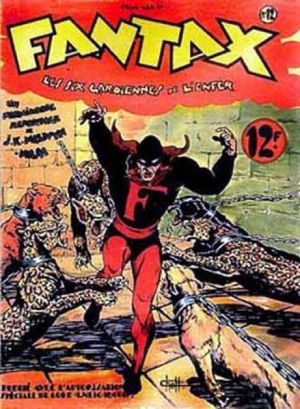 FANTAX
  SALTARELLA
  ACCOUNT OF AN EXPEDITION TO THE INTERIOR OF NEW HOLLAND (1837) – Written by multiple parties, with Lady Mary Fox, Richard Whateley and Lord Holland the likeliest authors. “New Holland” was an old name for Australia. In 1860 the novel was reissued under the title preface The Southlanders.
  Southland boasts a population of roughly four million and is divided into eleven distinct regions which, though under one overall parliamentary government, enjoy a large amount of internal sovereignty. Some regions are republics and others live under a hereditary monarchy. In several of the republics, however, their chief executive figure is still called a king despite being elected.
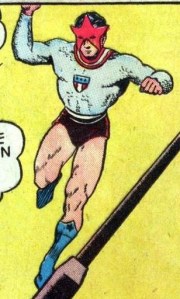 CAPTAIN VICTORY
  Powers: Captain Victory (No relation to the Jack Kirby character of that name) could fly and had massive super strength. The upper limits of his flying abilities and his strength were never established before the character disappeared.
  LIGHTNING GIRL
 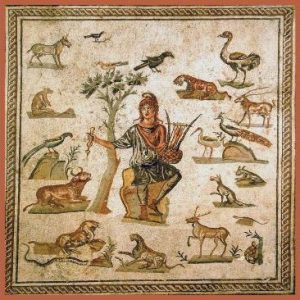 When we left off last time, Medea’s Aunt Circe had informed her that in order to stop the vendetta the Furies were waging against her, Jason, Orpheus and the rest of the Argonauts Medea must be purified from the taint of betraying her father and killing her brother through rites performed by Orpheus and the Meliae – the ash-tree nymphs who nursed the infant Zagreus (in this Orphic version).
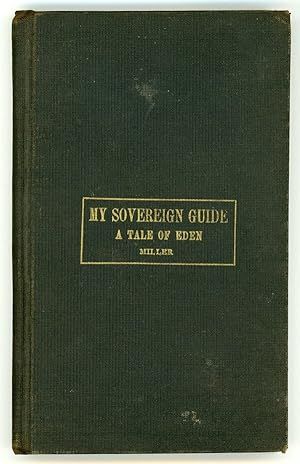 THE SOVEREIGN GUIDE: A TALE OF EDEN (1898) – Written by American William Amos Miller and published under the title My Sovereign Guide: A Tale of Eden, so I have no idea why everyone now starts the title with The instead of My. Regular readers of Balladeer’s Blog know that many works of “ancient” science fiction mixed in religious elements with the sci-fi. The Sovereign Guide is one of the most inventive and features angels using advanced technology. Taking the novel section by section:
  THE BLACK SPIDER
  Powers: The Black Spider was in peak physical condition and exceled at unarmed combat. He was also a skilled investigator and handy with a gun. Luckily, Ralph’s lifelong hobby was the study of spiders, so he used trained tarantulas and black widows from a package on his belt against his foes.
  SUPER MYSTERY COMICS Vol 1 #3 (Oct 1940)
 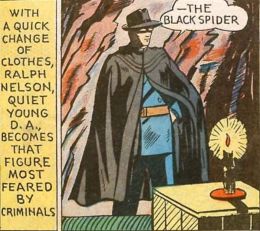 Meanwhile, D.A. Nelson goes to his secret lair – a cave in the woods called the Web, where he keeps his spiders and other items. He becomes the Black Spider and trails Harrigan like Peggy is doing. Our hero arrives in time to save her from Harrigan and a Risko gunman, but she tears off his mask and learns the Black Spider is really Ralph.
 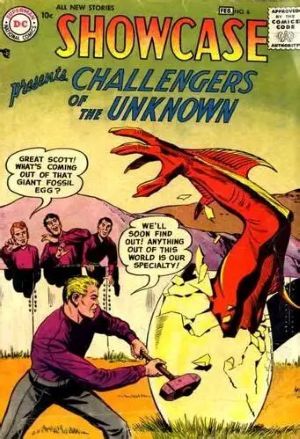 SHOWCASE Vol 1 #6 (Feb 1957)
 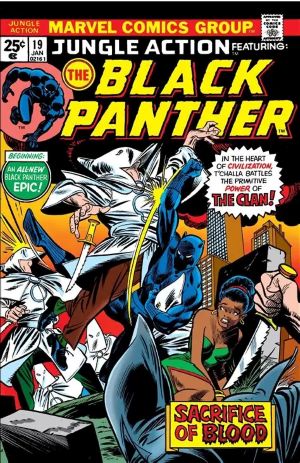 JUNGLE ACTION Vol 2 #19 (Jan 1976)
