
As Halloween Month continues, this week’s light-hearted and escapist superhero post from Balladeer’s Blog looks at DC’s character the Spectre.
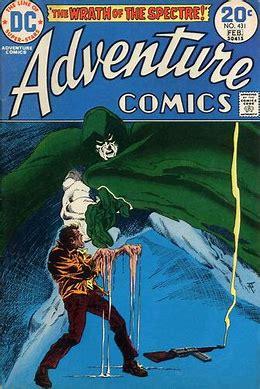 ADVENTURE COMICS Vol 1 #431 (February 1974)
Title: The Wrath of the Spectre
Villains: Armored Car Robbers
NOTE: For people unfamiliar with the Spectre, here’s the basics. His secret identity is Police Detective Jim Corrigan who was killed in the line of duty. Through a special dispensation from Heaven, Corrigan’s soul was permitted to reanimate his corpse and resume his detective duties, but he was really an undead avenger carrying out God’s justice.
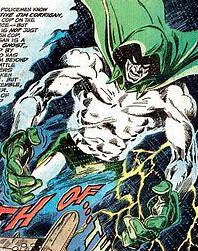 When situations demanding greater than human intervention arose, Jim could become the Spectre, his ghostly form in which he wielded vast powers that he used against earthly villains as well as supernatural menaces.
Synopsis: An armed gang robs an armored car loaded with money. The criminals kill four guards while carrying out the robbery, so Homicide Detective Jim Corrigan is assigned the case. Continue reading
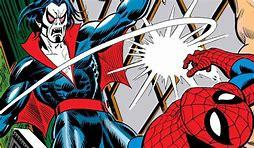 Balladeer’s Blog’s month-long look at Halloween continues! In the past, I examined the most Halloweenish covers for Marvel horror figures like
 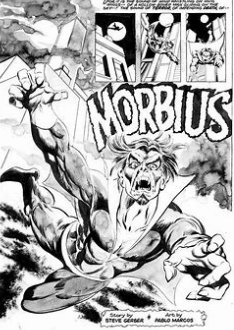 VAMPIRE TALES Vol 1 #1 (June 1973)
  Synopsis: One night in Los Angeles, Morbius tries to find his lady love Martine Bancroft (Adria Arjona in the movie), whom he was separated from shortly after his transformation into vampire form. He encounters Carolyn, a female member of the Children of Satan cult.
 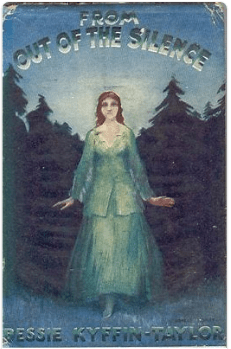 FROM OUT OF THE SILENCE: SEVEN STRANGE STORIES (full title) (1920) – Written by Lady Bessie Kyffin-Taylor. The stories are:
  Halloween Season is underway here at Balladeer’s Blog! This time around I have so many new readers that I’ll start out with this look at some VERY old horror stories that are basically Halloween versions of the Ancient Science Fiction reviews I write.
 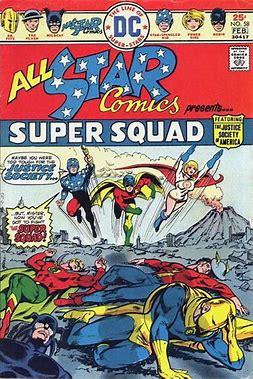 ALL STAR COMICS Vol 1 #58 (February 1976)
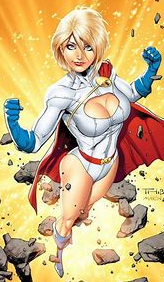 Synopsis: Dr. Fate, Flash, Hawkman, Robin, Wildcat, Green Lantern and Dr. Mid-Nite are joined by the Justice Society’s newest members – Power Girl, Earth-Two’s equivalent of Supergirl, and
  GIANT-SIZE SUPERVILLAIN TEAM-UP Vol 1 #1 (March 1975)
  AN AUTOMATIC ENIGMA (1878) – By Julian Hawthorne, son of Nathaniel Hawthorne. In the past Balladeer’s Blog has reviewed some of
  KAMANDI Vol 1 #1 (November 1972)
  After some time, the young man gets caught in the middle of a large-scale battle between an army of tiger-men and an army of leopard-men, all wearing the clothing and wielding the weapons of the humans who used to rule the world.
 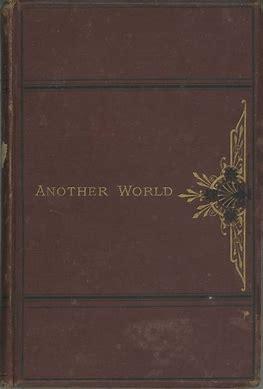 ANOTHER WORLD (1873) – This highly detailed account of life in Montalluyah (“God’s own city”), the capitol city of Mars, was written by British author Benjamin Lumley under the pen name Hermes. The book is presented as excerpts from historical accounts, including a biography of the Great Martian Reformer Tootmanyoso.
 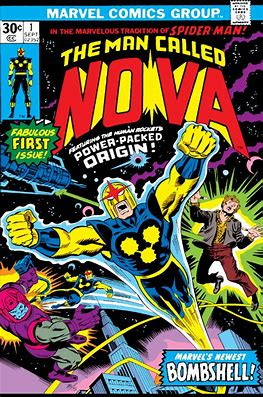 NOVA Vol 1 #1 (September 1976)
  Balladeer's Blog