
Balladeer’s Blog takes another look at a neglected epic myth, this one from Africa.
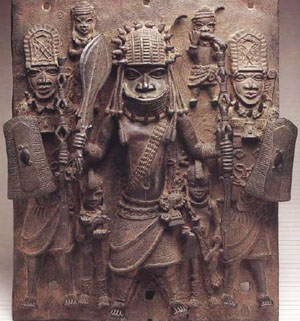 The mythic tale of Aiwel Longar comes from the Dinka pantheon. Nhialic is the supreme deity to the Dinka and the first man and woman he created were Garang and Abuk. The Dinka people live in the Upper Nile in Sudan, as they have for centuries.
AIWEL LONGAR
I often cover the way in which cultures which come into contact borrow mythic material from each other to embellish their own respective belief systems. The story of Aiwel Longar clearly influenced (and vice versa) Egyptian, Jewish, Christian and Muslim myths. It also bears striking similarities to the Gnostic Hymn of the Pearl.
PART ONE – Born as simply Aiwel, this figure was a gift from the god of the Nile River to Aiwel’s widowed and childless mother. The infant already had a full set of teeth when his mother picked him up out of the Nile River, where the river god had set him adrift.
Like many mythic figures Aiwel could talk and function like an adult at a very young age. While still a toddler he often stole and drank entire gourds full of milk. After one such binge Aiwel’s mother caught him and the young demigod warned her not to tell anyone or else she would die. Continue reading
 Balladeer’s Blog’s Forgotten Television feature provided background information on Reel Wild Cinema (1996-1997) and examined its first episode last time around. This time I’ll take a look at episodes two to four.
 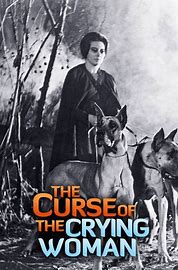 CURSE OF THE CRYING WOMAN (1963) – The Mexican horror film about La Llorona that got U.S. distribution and half-assed dubbing via K. Gordon Murray himself. I’ve reviewed this film in detail previously so for a quick recap for newbies to this flick it’s the old ghost story about an undead woman who sheds tears from her empty eye sockets while making with withering cries.
  THE NAKED WITCH (1961) – For starters, this is the Larry Buchanan film, NOT the Andy Milligan Naked Witch movie from a different year. As usual for Buchanan this was filmed in Texas, and is yet another variation of the tale about a witch who gets put to death but returns a century or more later to slay all the descendants of her killers.
 The PITTSBURG (KS) STATE GORILLAS will host the HARDING UNIVERSITY BISON.
 The GRAND VALLEY STATE LAKERS will host the UNIVERSITY OF INDIANAPOLIS GREYHOUNDS.


 BATTLE OF THE JAPAN SEA (1969) – Japan’s Toshiro Mifune led the cast of this Japanese film about their successful naval clashes with Russia during the often-forgotten Russo-Japanese War (February 1904 – September 1905). U.S. servicemen stationed in Japan played the Russians.
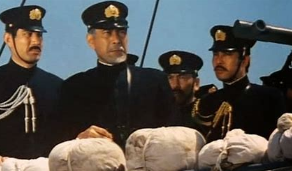 On to the film itself. Battle of the Japan Sea employs the approach that moviegoers will recall from The Longest Day, A Bridge Too Far, Midway, even Inchon and others, by having an all-star cast (in the Far East) act out set pieces throughout the scattered fighting.
 The SOUTH-WESTERN COLLEGE MOUND-BUILDERS (Kansas Collegiate Athletic Conference) will host the UNIVERSITY OF ST. FRANCIS COUGARS (Mid-States Football Association).
 The DICKINSON STATE BLUE HAWKS (North Star Conference) will host the KANSAS WESLEYAN UNIVERSITY COYOTES (Kansas Collegiate Athletic Conference).
 REEL WILD CINEMA (1996-1997) – This program is still beloved by us fans of Psychotronic movies and the So Bad It’s Good subculture. Reel Wild Cinema helped feed America’s growing appetite for bizarrely awful cinema, an appetite most recently whetted back then by Joel Hodgson’s Mystery Science Theater 3000.
  Similar to Jonathan Ross’ Incredibly Strange Film Show, Reel Wild Cinema also aired interviews with many cult figures from fringe cinema as well as campy trailers for vintage Golden Turkeys. Also like the Jonathan Ross show, Reel Wild Cinema featured an animated opening accompanied by catchy theme music.
  DOWN GOES NUMBER TEN – In NCAA Division Two the BEMIDJI STATE BEAVERS welcomed the nation’s number 10 team – the AUGUSTANA (SD) VIKINGS. A scoreless 1st Quarter was followed by a 7-0 Beavers lead at Halftime. The Vikings went up 10-7 in the 3rd Quarter but the 4th saw Bemidji State come from behind to win the game 17-10.
  EIGHTY-SIX – The NAIA’s BENEDICTINE COLLEGE RAVENS traveled to face the WILLIAM WOODS UNIVERSITY OWLS in this game. The Ravens converted their 17-0 opening Quarter lead into a 58-0 advantage by the Half. After the break Benedictine College remained perfect on defense as they coasted to an EIGHTY-SIX to NOTHING triumph.
 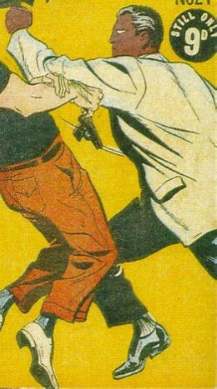 THE SHADOW
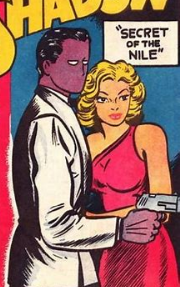 Comment: Many of this hero’s villains were femmes fatale along the line of
  CONVERSATIONS ON THE PLURALITY OF WORLDS (1686) – Written by Bernard le Bovier de Fontenelle. The author offered up some science fiction concepts that were considered real possibilities in 1686. These ideas were presented within the frame of conversations, as indicated in the full title. The conversations happened over the course of six evenings.
