Tag Archives: Ancient Greek Comedy

ANOTHER ANCIENT GREEK THEATER UNEARTHED

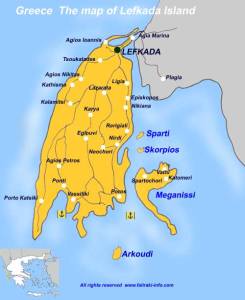
Lefkada 2Regular readers of Balladeer’s Blog are familiar with my obsession with ancient Greek comedies. A related story has hit the news – on the Ionian island of Lefkada a previously unknown ancient amphitheater was discovered recently.
The find is located on Koulmou hill and is being further excavated by the Lefkada and Aitoloakarnania Antiquities Ephorate. (On a side note, remember the Ephors of ancient Sparta?) So far digs in 13 areas have uncovered the theater’s rows of seats, the orchestra section and assorted walls. No surviving ancient sources refer to a theater in this area so ancient Greek stage geeks like me are in Dork Heaven right now!  Continue reading

4 Comments

Filed under Ancient Greek Comedy, Uncategorized

ANCIENT GREEK COMEDY: COTHURNUS (circa 405 B.C.)

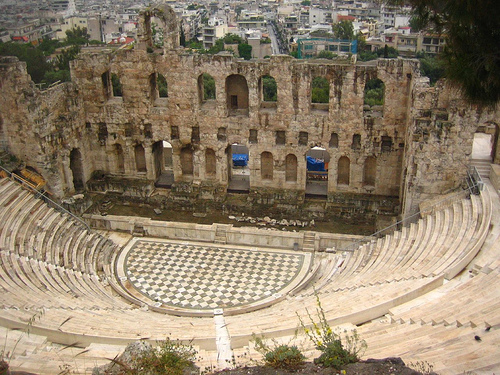
The Ruins of the Theater of Dionysus in Athens.

The Ruins of the Theater of Dionysus in Athens.

Balladeer’s Blog takes another look at an ancient Greek comedy. This time around I’m examining Cothurnus by Philonides, a comic poet who may also have acted and produced for the Athenian stage as well. It cannot be definitively determined if the “Philonides” referred to in those capacities are all one and the same or separate figures.

THE PLAY  

Like most ancient Greek comedies Cothurnus has survived only in fragmentary form and with very few fragments at that. The title refers to a type of footwear of the time period. A cothurnus could be worn on either the left foot or the right foot because of its softness and looseness. Because of this the word “cothurnus” also became a sarcastic term for a politician who tried to position themselves on both sides of an issue, claiming victory no matter which way the political winds blew.

This is certainly another element of Old Comedy that we can still relate to 2,400 years later. Philonides was specifically using this term and this comedy to target Theramenes. To give a comprehensive look at Theramenes’ political juggling act would take too much time, suffice it to say he would flip-flop not just on specific issues but would retroactively claim to have supported whichever side won, would change political affiliations again and again and even set up other public figures to take the fall for his own failures (like arranging for six generals to be blamed and executed for his own part in the Arginusae travesty). Continue reading

23 Comments

Filed under Ancient Greek Comedy

ANCIENT GREEK COMEDY: AUTOLYCUS circa 420 B.C.

Jesse Ventura: Wrestler turned governor of Minnesota

Jesse Ventura: Wrestler turned governor of Minnesota

With the ongoing domestic violence situation with the NFL’s Ray Rice, the fake “drowning rescue” at USC plus the usual number of other scandals plaguing high-profile athletes at the moment this seemed a good time to examine the ancient Greek comedy Autolycus. This play was written by Eupolis who, along with Aristophanes and Cratinus constituted the Big Three of Attic Old Comedy. As with so many comedies of the time period Autolycus has survived only in fragmentary form, unfortunately.

THE PLAY

The title character of Eupolis’ comedy Autolycus was an Athenian athlete who earned a high degree of fame for his performance at the Great Panathenaia in 422 B.C. To simplify the concept the Great Panathenaia was a “local” version of the Olympic games and did not have participants from all over the known Western World.

Like so many figures from ancient Athens Autolycus had both male lovers and female lovers. The plot of this comedy dealt with the way in which Autolycus’ male lover Kallias – a wealthy heir – had begun grooming Autolycus for a run at political office. The play depicted Autolycus (son of Lykon) as being all muscles and no brains, prompting Kallias to insist his lover be “coached up” on politics by one of Lykon’s servants – an erudite man who suffered financial losses and was reduced to the lackey class in Athens.  

Once again we have an ancient Greek comedy with a theme we can still relate to today. On one level we can picture unlikely figures like Arnold Schwarzeneggar or Jesse Ventura successfully winning gubernatorial races despite their public reputations as “jocks” instead of statesmen. On a deeper level the theme of the comedy can also be applied to ANY figures who are deemed politically viable because of their accomplishments in a field COMPLETELY unrelated to the skills necessary to the art of governing.   Continue reading

36 Comments

Filed under Ancient Greek Comedy

ANCIENT GREEK COMEDY: BAPTAE (c: 415-413 BCE)

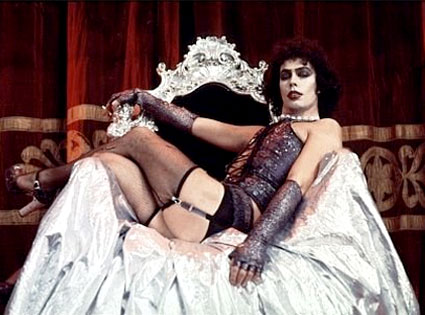
Dr Frank N Furter

Dr Frank N Furter

For Balladeer’s Blog’s latest post on Ancient Greek Comedy I will examine another fragmentary work by Eupolis, who, along with Aristophanes and Cratinus was one of the Big Three of Attic Old Comedy.

BAPTAE was a comedy satirizing the latest faddish belief system to hit Athens: the cult of the Dorian and Thracian goddess Cotyto. Just like Kabala or transcendental meditation and other systems have enjoyed a brief vogue with entertainers and even some movers and shakers various foreign deities would periodically develop a following in ancient Athens. Eupolis was lampooning the fashionable appeal of one such cult and also ridiculed other elements of Cotyto worship as we will see.

The title Baptae came from the fact that the worshippers of Cotyto would immerse or “baptize” their garments in blue, green or purple dye, an expensive and very ostentatious indulgence for the time period. And yes, Baptae and baptizing are from the same root word, since it originally referred to immersion in any liquid, not just water.

The main element of the Athenian version of the cult of Cotyto was the fact that her devotees were exclusively male and all of them DRESSED AS THE GODDESS as part of their rites of worship. Even today we can Continue reading

46 Comments

Filed under Ancient Greek Comedy

EIGHT ANCIENT GREEK COMEDIES WITH THEMES THAT ARE STILL RELEVANT

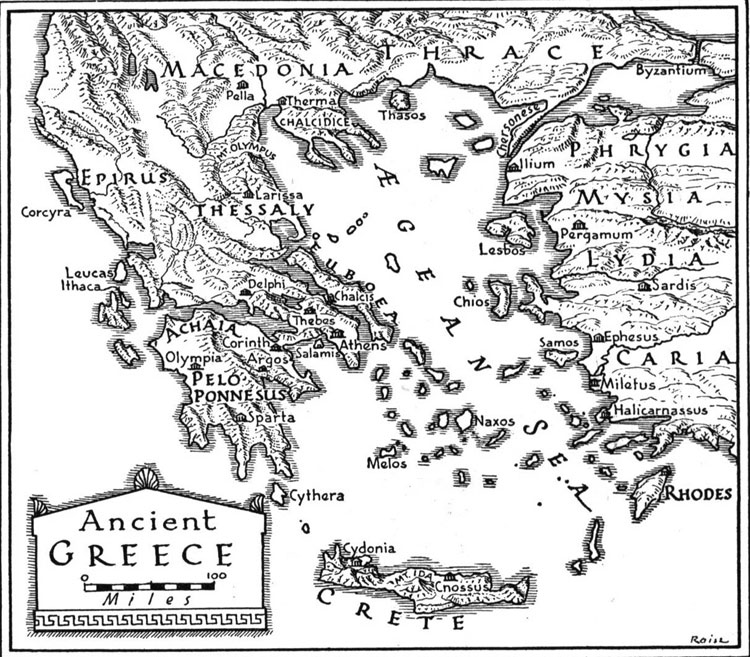
Map

Map

The satirical comedies written and performed during the glory years of the ancient Athenian Democracy still pack a punch after more than 2,400 years. Athens faced many of the same issues and dilemmas we Americans face. Part of the reason for that is the fact that our founding fathers were great students of ancient Greek democracy and modeled some of our own institutions on the Athenian model.

The comedies are also much more sophisticated than modern audiences expect, featuring political views, sexual material and metatheatrical humor that seems several centuries ahead of their time. Breaking the fourth wall is not a postmodern concept like some people have convinced themselves – it was a convention established in these ancient works of comedy.

Irreverence toward any and all subjects – including the gods they worshipped – was permitted by the Athenians in the “anything goes” arena of the Theatre of Dionysus, where the comedies competed with each other at festivals, chiefly the Dionysia and the Lenaea.

TRIPHALLES – By Aristophanes. This comedy was a mythological burlesque and featured the fantastic story of the title character, a man with three penises. Mythological burlesques could be comedies that parodied the story of a specific mythological figure or could simply lampoon the grandiose approach of mythic tales. This would be done by employing the storytelling technique of a sweeping epic to tell a less-than-majestic story. Picture a modern-day grand opera about the John Holmes or Continue reading

124 Comments

Filed under Ancient Greek Comedy

ANCIENT GREEK COMEDY: THE PAGEANT OF LETTERS (C 402 BCE)

Time for another examination of an ancient Greek comedy. In the past several months Balladeer’s Blog has reviewed dozens of examples of Attic Old Comedy. We’ve gotten to appreciate our shared humanity with the ancient Athenians, America’s forerunners in the experiment of democracy, with comedies that dealt with politics, economics, philosophy and irreverence for religion.

This time we’ll deal with a comedy that is more light-hearted for a change, but which deals with a subject that still affects a very large part of the world to Continue reading

74 Comments

Filed under Ancient Greek Comedy

ANCIENT GREEK COMEDY: THE BANQUETERS (427 BCE)

 For background info on ancient Greek comedies and my previous reviews of them, click here (also features a list of my source books): https://glitternight.com/ancient-greek-comedies/

What Meet the Beatles was to the British Invasion, The Banqueters was to Attic Old Comedy. (Yes, I love silly comparisons) This play was the first comedy written by Aristophanes, the leading light of ancient Greek comedy, and was performed at the Lenaea festival of 427 BCE when Aristophanes was nineteen years old. The Banqueters won second prize, making it a very auspicious debut for the man often considered the greatest political satirist of the ancient world.

THE PLAY

The Banqueters is a comedy that once again lets us feel our shared humanity with the ancient Athenians, in this case over the perennial conflicts caused by Generation Gaps and the tension between pointlessly clinging to the past and pointlessly embracing new ideas just because they’re new, even though they may be just as flawed as the older ideas they replace. This is one of the many comedies of Aristophanes that survive in fragmentary form, not in their entirety. 

SYNOPSIS

An Athenian landowner with staid, old-fashioned views is hosting a lavish banquet in honor of Heracles. The attendees are the landowners’ Phratry- brothers (think of a cross between college fraternity brothers and social lodge brothers) and they are the title banqueters who make up the chorus of the play, offering wry commentary on the action of the comedy, often with jokes that break the fourth wall and address the audience directly.

The landowner is using the event to Continue reading

48 Comments

Filed under Ancient Greek Comedy

ANCIENT GREEK COMEDY: ALCAEUS

Balladeer’s Blog has  examined 24 ancient Greek comedies so far in terms of their continuing relevance over 2,400 years later. This will be the fourth time I will focus on one of the ancient Greek comedians whose entire corpus is very, very fragmentary, touching briefly on all of their known works. For background info on ancient Greek comedy plus my previous reviews click here: https://glitternight.com/ancient-greek-comedies/ 

ALCAEUS – This comic playwright came along for the tail end of Attic Old Comedy. Alcaeus’ career ranged from approximately 405 BCE to the 380s BCE and we have fragmentary remains of eight comedies from an unknown total body of work.

1. TRAGI-COMEDY – This play gave comedic treatment to the traditional rivalry between comedy and tragedy on the ancient Athenian stage. The comedy had fun with the Continue reading

66 Comments

Filed under Ancient Greek Comedy

ANCIENT GREEK COMEDY: LYSIPPUS

Balladeer’s Blog has examined 21 ancient Greek comedies so far in terms of their continuing relevance over 2,400 years later. This will be the third time I will focus on one of the ancient Greek comedians whose entire corpus is very, very fragmentary, touching briefly on all of their known works. For background info on ancient Greek comedy plus my previous reviews click here: https://glitternight.com/ancient-greek-comedies/ 

LYSIPPUS – This writer of Attic Old Comedy redefines the expression “fragmentary” because even less is known about his life than about shadowy figures like Susarion and Epicharmus. Lysippus came in 1st place with an unknown comedy at a Dionysia around 440 BCE. Fragmentary evidence survives from just three of his comedies out of an unknown total body of work so this will be my shortest blog post on ancient Greek comedy. 

We’ll start with my favorite random quote from Lysippus’ fragments. It displays his pride in Athens and reflects the city-state’s status as the combined New York, Rome and Tokyo of its era:  “If you have never come to Athens you are a fool. If you have come to Athens and not been captivated by her charms you are  ignorant. If you have been captivated by the charms of Athens and ever left her you are but a beast.” 

I. BACCHAE – Not to be confused with the various tragedies of the same title or the comedy by Diocles. Too little survives to tell if the play presented a comedic version of the tragic events depicted in other works titled Bacchae. The parabasis included the type of segment that would later be frequently repeated in Attic Old Comedy as Lysippus took shots at his competitors. That segment featured joking insults that break the fourth wall and Continue reading

20 Comments

Filed under Ancient Greek Comedy

ANCIENT GREEK COMEDY: POLYZELUS

 Balladeer’s Blog has now covered 16 Attic Old Comedies, so readers have been treated to a nice assortment. Most recently I experimented with a new type of format for addressing in bulk those comedies which have survived in such fragmentary form they don’t merit a full-length review.

Instead of examining individual comedies in these posts, I will focus on those ancient Greek comedians whose entire corpus is very, very fragmentary, touching briefly on all of their known works. For background info on ancient Greek comedy plus my previous reviews click here: https://glitternight.com/ancient-greek-comedies/ 

POLYZELUS – Very little is known about this comic playwright except that his comedies came in first place an impressive four times at Lenaea festivals. His career spanned from approximately 410 BCE to 380 BCE and fragments from just five of his plays have come down to us out of an unknown total number of works.

Aside from the political satire Demos- Tyndareus his fragmentary comedies all fall under the subgenre of Attic Old Comedy known as mythological burlesques. And of those four mythological burlesques three are specifically birth comedies, in other words lampoons of the VERY odd circumstances that generally accompanied the conception and birth of the deities in Greek myths. Remember, this type of bawdy disrespect for the gods was tolerated only in the “anything goes” arena of the comedy performances.

I. DEMOS- TYNDAREUS (410 BCE) – The Tyndareus part of this political comedy’s title refers to the mythical figure who came back from the dead like Lazarus in Continue reading

43 Comments

Filed under Ancient Greek Comedy