Tag Archives: African mythology

MERINA GODS IN MADAGASCAR

mgnewzz.gif (320×350) Covering the myths and deities of the various peoples of Madagascar is a pretty sizeable job to undertake. I decided to use the same approach I’m using with the Americas and take things on a tribe-by-tribe basis.

First off I’ll be tackling the Merina people. Let me emphasize that for my fellow mythology geeks – this list will be JUST about Merina gods and myths. There are a variety of cultural groups from Madagascar, each with their own pantheon of deities, but plenty of mythological reference books do them the disservice of lumping everything into one big category labeled “Madagascar” or “Malagasy Mythology”.

This causes confusion because it would be like lumping gods from Celtic, Norse, Greco-Roman, Slavic, Etruscan and Hittite mythology in one big puddle called “European Gods” with no attempt to break them into their separate pantheons. So if the following gods either are not in whatever reference books you personally use or if your books list a different figure as “Madagascar’s” patron deity of a certain concept there is no need to jump in with objections. I will eventually hit all the cultural groups. 

ITRIMOBE – The primordial sea-beast who lived on the Earth when it was nothing but endless ocean. For untold years Itrimobe enjoyed its solitary subaquatic existence. Eventually it grew bored and set out to examine the parameters of the world it lived in. It swam down all the way to the bottom of the sea, then swam upward as far as it could go and at last poked its head out into the air and sunlight.

Itrimobe swam east, north, west and south but found no land and no way out of the endless ocean. Curious, the entity dug three holes in the center of the Earth and one hole at each end, allowing much of the water to drain. This drainage caused the formation of the continents, which the now-amphibious Itrimobe explored. Unfortunately the blazing sun overhead eventually dried Itrimobe out to a dangerous degree and blinded it.  The remaining ocean water was nowhere near deep enough for the gigantic creature to submerge itself ever again, causing its body to die. Continue reading
8 Comments

Filed under Mythology

WOI: EPIC HERO OF LIBERIA

LiberiaBalladeer’s Blog presents another neglected epic myth from around the world. In this case, Liberia’s Woi Epic of the Kpelle people.
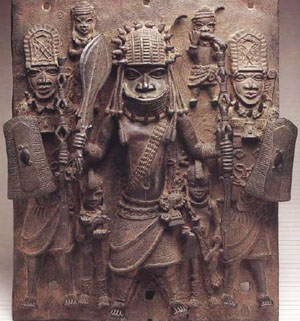
The Woi Epic is often studied for its use of music, dance, singing and audience participation to reflect the action in the story. Think of it as a combination opera, ballet, live drama and Rocky Horror Picture Show screening.

The order of the episodes in the epic is not set in stone and a performance may include only a few of the episodes, all of them or just one. The finish of each episode is marked by the performer(s) announcing “Dried millet, wese” to which the audience repeats simply “wese.”  

ONE – Woi, a culture deity and master of ritual magic, and his wife Gelengol are the only living things that exist. After Woi impregnates his wife she eventually gives birth to human beings, chickens, goats, cows, sheep and, after all other life-forms, spiders. (Plenty of African myths feature a female deity giving birth to multiple living creatures and many feature the woman also giving birth to tools and weapons and utensils.)    

TWO – Woi notes that the demonic figure Yele-Walo has stolen one of his bulls by sneaking up on it in the form of a rattan plant. Yele-Walo took the bull with him to his hideaway “behind the sky.” Woi prepares for battle and is aided by squirrel-monkeys, tsetse flies and horse-flies. Yele-Walo also steels himself for the upcoming fight. Continue reading

14 Comments

Filed under Mythology

AFRICAN MYTHOLOGY: THE EPIC OF AIWEL LONGAR

Balladeer’s Blog takes another look at a neglected epic myth, this one from Africa.

Aiwel LongarThe mythic tale of Aiwel Longar comes from the Dinka pantheon. Nhialic is the supreme deity to the Dinka and the first man and woman he created were Garang and Abuk. The Dinka people live in the Upper Nile in Sudan, as they have for centuries.

AIWEL LONGAR

I often cover the way in which cultures which come into contact borrow mythic material from each other to embellish their own respective belief systems. The story of Aiwel Longar clearly influenced (and vice versa) Egyptian, Jewish, Christian and Muslim myths. It also bears striking similarities to the Gnostic Hymn of the Pearl.

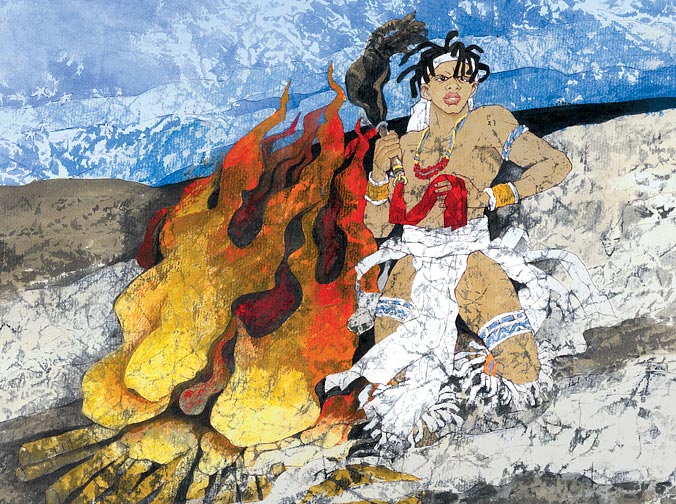
PART ONE – Born as simply Aiwel, this figure was a gift from the god of the Nile River to Aiwel’s widowed and childless mother. The infant already had a full set of teeth when his mother picked him up out of the Nile River, where the river god had set him adrift.

Like many mythic figures Aiwel could talk and function like an adult at a very young age. While still a toddler he often stole and drank entire gourds full of milk. After one such binge Aiwel’s mother caught him and the young demigod warned her not to tell anyone or else she would die.  Continue reading

10 Comments

Filed under Mythology

KIKUYU CREATION MYTH FROM KENYA

Regular readers of Balladeer’s Blog are familiar with my love of mythology. I’ve covered many gods, goddesses and epics from around the world. This blog post will examine the Kikuyu (also spelled Gikuyu) Creation Myth of the Kikuyu people of what is now Kenya.

kenyaA. Ngai, the creator god, divider of the universe, divider of the land from the sea and owner of the dazzling light, descended to the Earth shortly after making it. Mists covered the entire world because of how freshly made it was.

B. After inspecting the world, Ngai established his Earthly home atop Kirinyaga (Mount Kenya), where the deity may be prayed to but he can never be perceived by human eyes.

C. Ngai developed a swelling in his knee. He cut it open (or in some versions it burst open on its own) and out came three sons, named Kikuyu/ Gikuyu, Masai and Kamba. Those sons were to marry and produce the three tribes/ nations which would be named for the husbands.

           As this portion of the tale continued, Ngai offered his three sons the choice of a spear, a bow or a digging stick. Kikuyu chose the digging stick and established agriculture; Masai selected the spear and learned to tend herds on the plains; and Kamba took the bow and established the practice of hunting for game. Continue reading

7 Comments

Filed under Mythology

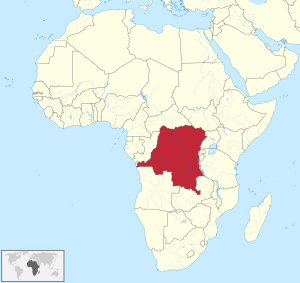
NINETEEN GODS OF THE NYANGA PEOPLE

Nyanga territoryAfter Balladeer’s Blog’s examination of the Mwindo Epic many readers expressed an interest in Nyanga mythology. I’m all about giving readers what they want so here are brief looks at the deities of the Nyanga people.

KATEE – The god of hedgehogs. Katee spoke through one of his animal avatars to warn the semidivine hero Mwindo about some of Kasiyembe’s death traps.

MWERI – The moon goddess. Her domain is the moon itself and is  composed of alternate hot, sandy wasteland and lush blue waters. Mweri sees everything that happens at night and therefore has ties to lovemaking, fertility, sleeping, thievery and assassinations. She can send dreams or nightmares as well as prophetic messages in those dreams. Visitors to Mweri’s domain can be left wandering in the hot wasteland or even set on fire by her, depending on the goddess’ whim.  Continue reading

7 Comments

Filed under Mythology

MWINDO – EPIC MYTH OF AFRICA

Balladeer’s Blog’s examination of an epic myth of the Nyanga people of Africa.

PART ONE

MwindoMwindo is yet another semi-divine hero from global mythology. This epic will explore his unusual birth, his heroic deeds and victories over various monsters and hostile gods.

Many of the myths from Africa survived mostly in oral form until comparatively recent decades, so there are even more variations of African epics than readers may be used to. To cite just one example: Mwindo himself is usually referred to by the epithet Kabutwa-kenda, “the little one just born yet walking”. However there are a few versions of the myth in which Mwindo and Kabutwa-kenda are TWO SEPARATE FIGURES and are half-brothers.

masc graveyard smallerIn the versions where they are two separate entities Mwindo is a villainous figure while Kabutwa-kenda is the main hero of the epic. Regular readers of Balladeer’s Blog will be reminded of the Navajo twin gods Nayanazgeni and Thobadzistsini. Nayanazgeni was usually the hero of the epic about the defeat of the evil gods called the Anaye but in the Apache version of the myth his brother Thobadzistsini is the hero and Nayanazgeni is reduced to being a comic relief coward. 

To stay in the area of comparative mythology for a moment Mwindo also shares qualities with the Sumerian demigod Gilgamesh. Like Gilgamesh, Mwindo goes from being brashly overconfident about his own supernatural powers to becoming a more humble hero and more capable ruler as the tale goes on.

The Mwindo Epic begins in the village of Tubondo, surrounded by raphia trees and located on a high hill. The founder and Chief of the village was named Shemwindo and he had seven wives because the Nyanga considered seven to be the number of perfection. Nyanga villages had seven separate kinship halls even if there were not seven separate kinship groups in the village. This was done out of deference to the sheer perfection of the number seven.  Continue reading

18 Comments

Filed under Mythology

MERINA MYTHS: TOMPONDRANO

Tompondrano

The French who first came into contact with the people of Madagascar mistook Tompondrano for Leviathan from Christian mythology.

TOMPONDRANO – “Lord of the waters.” The supreme snake deity in Merina mythology. Not only were all other serpents subordinate to Tompondrano but he often acted as an ambassador between snakes and human beings, negotiating the end to conflicts between the two groups. 

A major myth about this deity includes its role in advising the Vazimba how to use sacrifices to appease gods and demons. The Vazimba were little people who were previously the dominant race of Madagascar. They are similar to the Menehune in Hawaiian myths and to “little people” who figure into mythology and folklore from around the world.  

One day a Vazimba boy was playing with a seven-headed serpent monster. That serpent decided to keep him and make him live with him under the water. The Vazimba prayed to Tompondrano to save him. Tompondrano advised the Vazimba boy to be patient, then sent the Kingfisher bird to the Vazimba’s parents with word that sacrificing a chicken and a sheep to the seven- headed serpent would appease it and get it to release their son. Continue reading

6 Comments

Filed under Mythology

TWENTY BUNYORO DEITIES: AFRICAN MYTHOLOGY

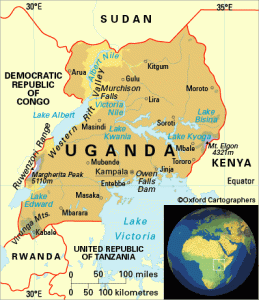
The year 2020 will see plenty of Top Twenty lists here at Balladeer’s Blog. Here’s a look at 20 Bunyoro Gods. Bunyoro was located in and around present-day Uganda. The people had an elaborate pantheon of deities. For the top gods of the Nyanga people instead, click HERE

UgandaRUHANGAThe supreme god of the Bunyoro pantheon. The creator and initiator of the world after he separated the Earth from the sky and adorned the sky with stars. Ruhanga stayed remote and, though omnipotent, was seldom invoked or prayed to. He provided the Banyoro people (Bunyoro for the place, Banyoro for the people) with children, animals and the harvest, but also was the author of disease, sickness and death.  

On the freshly-created Earth Ruhanga put three seeds into the ground and in 1 day 3 calabashes had grown. all on one stem. He took a man/woman couple out of the first 2 calabashes but found just a lone man in the third.  Ruhanga named the men KAKAMA, KAHIMA and KAIRU.  

After subjecting the men to tests to determine their worth, Kakama was judged the most worthy and Ruhanga decreed his descendants would be the ruling class. He further decreed that Kahima’s descendants would be the cattlemen class and Kairu’s descendants would be the farmer class. (No the myth doesn’t say who Kairu has the children with.) Continue reading

20 Comments

Filed under Mythology

WOI: EPIC HERO OF LIBERIA

LiberiaBalladeer’s Blog presents another neglected epic myth from around the world. In this case, Liberia’s Woi Epic of the Kpelle people.
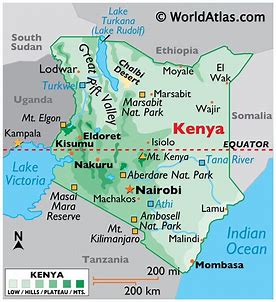
The Woi Epic is often studied for its use of music, dance, singing and audience participation to reflect the action in the story. Think of it as a combination opera, ballet, live drama and Rocky Horror Picture Show screening.

The order of the episodes in the epic is not set in stone and a performance may include only a few of the episodes, all of them or just one. The finish of each episode is marked by the performer(s) announcing “Dried millet, wese” to which the audience repeats simply “wese.”  

ONE – Woi, a culture deity and master of ritual magic, and his wife Gelengol are the only living things that exist. After Woi impregnates his wife she eventually gives birth to human beings, chickens, goats, cows, sheep and, after all other life-forms, spiders. (Plenty of African myths feature a female deity giving birth to multiple living creatures and many feature the woman also giving birth to tools and weapons and utensils.)    

TWO – Woi notes that the demonic figure Yele-Walo has stolen one of his bulls by sneaking up on it in the form of a rattan plant. Yele-Walo took the bull with him to his hideaway “behind the sky.” Woi prepares for battle and is aided by squirrel-monkeys, tsetse flies and horse-flies. Yele-Walo also steels himself for the upcoming fight. Continue reading

20 Comments

Filed under Mythology

NKUBA: LIGHTNING GOD OF THE NYANGA

Nyanga territoryNKUBA – The god of lightning. Nkuba was known and feared for his quick temper and his great power. Powerful Chiefs and shamans could call on Nkuba to kill their enemies with his deadly lightning bolts.

The lightning god was immune to cold and heat and lived a nomadic existence on clouds in the sky. He could solidify lightning to use it as a makeshift staircase between the heavens and the Earth.

Nkuba admired anyone who killed with the same merciless swiftness that he himself demonstrated. The god even became a blood brother to the seven-headed monster Kirimu because of the creature’s prowess at killing. Continue reading

8 Comments

Filed under Mythology