 Over five years ago Balladeer’s Blog began a detailed look at the neglected folklore surrounding the Fool Killer figure. It’s been a while since I left off and I’m about to dive back in. There are so many new readers here that I’m posting a recap of the very first Fool Killer item from the 1850s. Next time I’ll resume where I left off – in 1913.
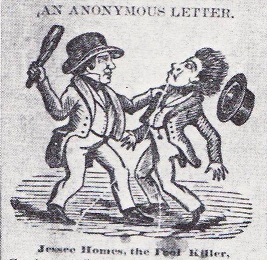 Balladeer’s Blog kicks off a multi-part examination of the neglected 1800s folk figure called the Fool Killer. I will cover the various stories featuring the Fool Killer and the different ways the character was used by the authors. If I ever examine the related character called the Rascal Whaler it will be in a separate series of blog posts.
NOTE: FOOL KILLER LORE IS STRICTLY FOR ADULTS. IT IS NOT FOR THOSE WHO ARE SIMPLE-MINDEDLY OFFENDED BY ANYTHING AND EVERYTHING.
The Fool Killer stories began in 1850s North Carolina. Charles Napoleon Bonaparte Evans, editor of the newspaper called The Milton Chronicle, introduced the character around 1851 (some sources say as early as the late 1840s). If Evans had been a political cartoonist he might have used the Fool Killer as his mascot, like the figure Punch over in England or Puck here in the U.S.
 However, since Evans was all about the written word, he used the Fool Killer as a much more active figure. Evans’ Fool Killer – claiming Jesse Holmes as his real name – roamed North Carolina and Virginia (which at the time still consisted of what would become West Virginia) looking for fools to kill with a club/ walking stick he always carried with him. The character would then send letters to Editor Evans explaining why he had chosen victims, defending his actions with puckish commentary.
I’ve always been struck by the similarity with the way real-life serial killers would correspond with newspapers, explaining and/or defending their deeds. In the case of Charles Evans’ Fool Killer, it was Evans himself writing the letters as if they were pieces of correspondence that “Jesse Holmes” sent to him.
The killings never happened, of course, and were simply Evans’ way of using political commentary in an entertaining way. Instead of high-brow social criticism, the Fool Killer Letters were very dark satire in which the mock author of the letters bashed the life out of corrupt politicians and other malefactors. Continue reading →

 Previously I examined Joel Chandler Harris’ 1902 story Flingin’ Jim And His Fool-Killer, set in Georgia in October of 1872, plus Ridgway Hill’s Facts for the Fool-Killer, set in and around Buffalo, NY in 1909.
  Here is my usual post-completion collection of chapter links, in this case for The Villon Legend.
  PART THREE – Trader Horn’s skills at bartering and deal-making with the indigenous people grew as he acquired more and more experience. His account always expressed his awe at the high populations of animal life throughout the region in the 1870s-1880s.
  MELUNGEON VARIATIONS PART ONE
 If he had, one possible source would be the Fool Killer figure from Melungeon folklore in East Tennessee and other Appalachian areas. Or, since we have no way of checking exact dates, Evans’ darkly satirical tales may have influenced the existing Melungeon lore since Melungeons at the time were scattered from Tennessee to North Carolina, Kentucky and Virginia.
 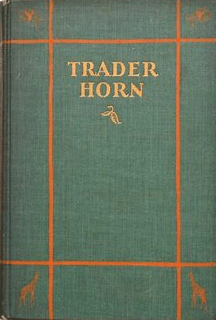 PART TWO – Aboard the S.S. Angola, the teenaged Alfred Horn approached Africa on his first assignment as a Trade Agent for the firm of Hatson & Cookson, whose business operated from Bonny Brass to Old Calabar and up the Niger River as well as coastal ports along Cameroon.
  TRADER HORN (1927) – This book was the quasi-autobiographical account of Alfred Aloysius Horn (1854-1931), a British trader in Africa during the 1800s. Ethelreda Lewis added pertinent commentary to each chapter.
 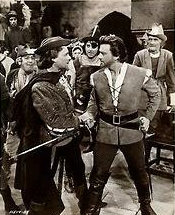 FRANCOIS VILLON PART SEVEN – We pick up this time in 1460, as Villon’s roaming career as a highwayman and armed burglar among the Coquillards was fast approaching its end, though the poet seems not to have realized it. None of his poetry from 1458 and 1459 has survived, unfortunately.
 FRANCOIS VILLON PART SIX – We pick up at the point in 1457 when the fugitive outlaw Villon found a warm and unexpected welcome in the court of Rene, Duke of Anjou. This figure was also known as “Good King Rene” because technically the crown of the Kingdom of Sicily was part of his royal inheritance.
 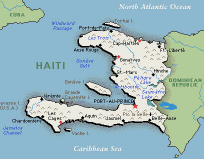 ZACA – The Voodoo god of agriculture and the harvest, making him the patron deity of farmers and fieldworkers. Zaca is the friendliest and most approachable of the gods and may be addressed as “Cousin Zaca” if spotted in the fields.
  Balladeer's Blog