
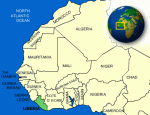
 Balladeer’s Blog presents another neglected epic myth from around the world. In this case, Liberia’s Woi Epic of the Kpelle people.
The Woi Epic is often studied for its use of music, dance, singing and audience participation to reflect the action in the story. Think of it as a combination opera, ballet, live drama and Rocky Horror Picture Show screening.
The order of the episodes in the epic is not set in stone and a performance may include only a few of the episodes, all of them or just one. The finish of each episode is marked by the performer(s) announcing “Dried millet, wese” to which the audience repeats simply “wese.”
ONE – Woi, a culture deity and master of ritual magic, and his wife Gelengol are the only living things that exist. After Woi impregnates his wife she eventually gives birth to human beings, chickens, goats, cows, sheep and, after all other life-forms, spiders. (Plenty of African myths feature a female deity giving birth to multiple living creatures and many feature the woman also giving birth to tools and weapons and utensils.)
TWO – Woi notes that the demonic figure Yele-Walo has stolen one of his bulls by sneaking up on it in the form of a rattan plant. Yele-Walo took the bull with him to his hideaway “behind the sky.” Woi prepares for battle and is aided by squirrel-monkeys, tsetse flies and horse-flies. Yele-Walo also steels himself for the upcoming fight. Continue reading
 PART TWENTY-NINE – As always part of the fun comes from the way the Fool Killer’s opinions are a mix of today’s left-wing and right-wing attitudes. Some you’ll agree with, others you won’t but it’s always interesting.
  PART TWENTY-EIGHT – Here is a look at some of the Fool Killer’s targets from James L Pearson’s January of 1921 issue of The Fool-Killer. New imagery invoked was of the Fool Killer sitting on a high hill picking off fools as the world revolved around him. (A very odd quasi-Axis Mundi)
  Labor Day weekend is the appropriate time to post this look at neglected working class folk hero Joe Magarac. This figure was the Steel Mill equivalent of Paul Bunyan and John Henry.
  As a lame play on words since this is Labor Day season I’ll present Joe Magarac’s origin and then depict his tales as “Labors” like in The Labors of Hercules.
  PART TWENTY-SEVEN: Here is a look at some of the Fool Killer’s targets from James L Pearson’s April of 1920 issue. As always we find an intriguing mix of attitudes, some of which would please us today or anger us today.
 TALHAE – Also called Tarhae. The wife of King Hamdalpa of Wan-Ha in Yongsong had been married to him for seven years but had yet to produce an heir to the throne. She prayed to the gods for a child and at length she produced a large egg, from which a handsome boy named Talhae emerged.
  Forget Mysterious Dave Mather, most of whose real-life escapades are well-chronicled. THESE gunslingers are little more than names which popped up in occasional newspaper accounts or journal entries. So tantalizingly little is known about them that they’d make great RPG material for those so inclined.
 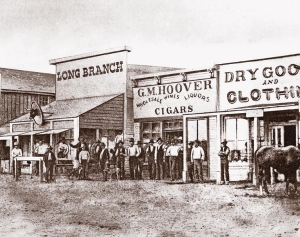 ARKANSAS BILL – A gunfighter who made Dodge City, KS his home base in the late 1870s. Arkansas Bill was sometimes referred to in indignant articles about Western violence written in Washington DC’s Evening Star and other Eastern newspapers. The gunman claimed to be a Bounty Hunter who had slain twenty-two men thus far in his career.
  TUILAKEMBA – This figure was the son of Tuilangi, the god who ruled over the Skyland, and a mortal woman. When Tuilakemba was a little boy he was often ridiculed by the other children for not having a father on hand like they did. One day the young demigod had had enough and threatened to kill his mother unless she told him who his father was.
 Balladeer's Blog