Let’s mark Friday here at Balladeer’s Blog with a look at a demigod often referred to as “the Fijian Hercules.” For more than 20 other gods from Fiji see my blog post HERE.
 TUILAKEMBA – This figure was the son of Tuilangi, the god who ruled over the Skyland, and a mortal woman. When Tuilakemba was a little boy he was often ridiculed by the other children for not having a father on hand like they did. One day the young demigod had had enough and threatened to kill his mother unless she told him who his father was.
She did so and Tuilakemba was spitefully satisfied. He took to carrying around an ironwood war-club wherever he went. He would use it to strike the heads off flowers, gleefully anticipating one day knocking off the heads of his enemies in wartime just as easily, given his massive strength.
On one occasion he took a nap, planting the ironwood war-club upright in the ground next to him while he slept. When he awoke he saw that the war-club had grown into an enormous tree which reached all the way up to the Skyland realm of his father. Tuilakemba took advantage of the situation and climbed up the newly-formed tree to the land above.
The little boy walked through the jungle of Skyland until he reached the village ruled by his father Tuilangi. That lord of the land above was in the middle of a council of war regarding his armies’ recent losses in their ages-old conflict with the evil gods of the sky. Continue reading →

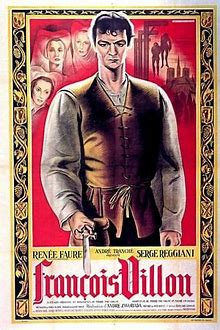 This is the fourth part of Balladeer’s Blog’s look at the swashbuckling legends that surround Francois Villon (1431-1463?), remembered as one of France’s greatest poets and a notorious outlaw.
 FRANCOIS VILLON PART THREE – We left off last time with Villon forced to flee Paris after killing the priest Sermoise in a duel over a woman named Isabeau. Already well-versed in the criminal underworld of the region from his career as a thief, Francois hid out just 17 miles southwest of Paris at the Abbey of Port Royal-des-Champs.
  FRANCOIS VILLON – This part picks up with one of the most infamous incidents from Villon’s career as an outlaw and iconoclast. He graduated from the Sorbonne as a Master of Arts and had acquired such a reputation for youthful rebellion and hard-drinking bad craziness that “Villonerie” had become a catch-all term for disorder and disobedience.
  THE QUEST OF SETH FOR THE OIL OF LIFE (1962) – Written by Esther Casier Quinn, this is one of the best and most concise works of comparative mythology that I have ever read. It’s a medieval legend often compared to the Grail story and is appropriate for Holy Thursday. The Quest of Seth for the Oil of Life is also known as The Quest of Seth for the Oil of Mercy, The Legend of the Rood and many other titles.
 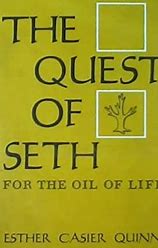 For those not familiar with this particular popular offshoot of the canonical story of Jesus Christ here’s a brief overview:
 THACH SANH – A son of the supreme deity Ngoc Hoang. His father forced him to incarnate as a human and in this demi-god form he fought monsters, rescued the son of the chief sea god Long Vuong, vanquished his evil foster-brother and married a beautiful princess.
 FRANCOIS VILLON (1431-1463?) – The swashbuckling legends that surround this real-life French poet have sometimes been compared to tales of Robin Hood or Dick Turpin. Like Dick Turpin, Villon really did exist, but in his case he left behind an impressive body of literary work and he is still considered one of France’s greatest poets.
  GEORGE ADAMSKI (April 17th, 1891 – February 26th, 1965) occupied a special place in the history of cults. In 1936 he claimed to represent the Royal Order of Tibet and preached “its teachings” in California (where else).
  The readjustments started after George Adamski published Pioneers of Space in 1949, a general look at the infant Flying Saucer phenomenon, and in 1952 he claimed to be in telepathic contact with a being from Venus. Claims of additional contacts followed, including hieroglyphic writings from the Venusian.
 If you enjoy serious analog horror like
  Around 2012 Richard Littler began mocking up some fake 1970s public health posters and government pamphlets for schools and general consumption. He presented them with an enjoyably twisted slant that perfectly captured the vaguely menacing, often insulting approach of such material.
  THE BILLDAD
