
This is the final part of Balladeer’s Blog’s look at the swashbuckling legends that surround Francois Villon (1431-1463?), remembered as one of France’s greatest poets and a notorious outlaw.
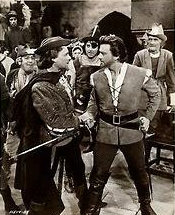 FRANCOIS VILLON PART SEVEN – We pick up this time in 1460, as Villon’s roaming career as a highwayman and armed burglar among the Coquillards was fast approaching its end, though the poet seems not to have realized it. None of his poetry from 1458 and 1459 has survived, unfortunately.
Accounts vary wildly, but Francois and some of his outlaw colleagues had supposedly been taking advantage of the feud between Archbishop Thibaud d’Aussigny of Orleans and his subordinate clergy members. Prior to Villon’s fugitive status, the Archbishop might have been a figure who appealed to him. D’Aussigny was a genuine reformer whose appointment was opposed by the Pope and the King, but whose political allies had maneuvered him into position despite all that. Continue reading
 FRANCOIS VILLON PART SIX – We pick up at the point in 1457 when the fugitive outlaw Villon found a warm and unexpected welcome in the court of Rene, Duke of Anjou. This figure was also known as “Good King Rene” because technically the crown of the Kingdom of Sicily was part of his royal inheritance.
 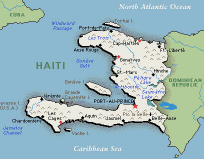 ZACA – The Voodoo god of agriculture and the harvest, making him the patron deity of farmers and fieldworkers. Zaca is the friendliest and most approachable of the gods and may be addressed as “Cousin Zaca” if spotted in the fields.
 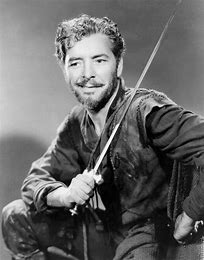 FRANCOIS VILLON PART FIVE – We left off last time with Villon on the run again, having fled Paris after the Navarre College job in which he and his fellows robbed a record amount of gold for the time period.
 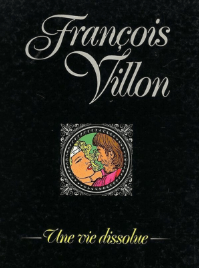 From early 1457 and for a few years more, Villon continued his outlaw existence in and around the French province of Anjou and the Loire River Valley. Depending on the source, Francois either officially became a member of the criminal fraternity called the Coquillards at this time or was already a member and deepened his ties to them.
 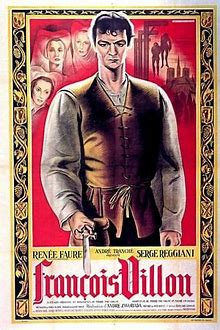 This is the fourth part of Balladeer’s Blog’s look at
  FRANCOIS VILLON PART THREE – We left off last time with Villon forced to flee Paris after killing the priest Sermoise in a duel over a woman named Isabeau. Already well-versed in the criminal underworld of the region from his career as a thief, Francois hid out just 17 miles southwest of Paris at the Abbey of Port Royal-des-Champs.
  FRANCOIS VILLON – This part picks up with one of the most infamous incidents from Villon’s career as an outlaw and iconoclast. He graduated from the Sorbonne as a Master of Arts and had acquired such a reputation for youthful rebellion and hard-drinking bad craziness that “Villonerie” had become a catch-all term for disorder and disobedience.
  THE QUEST OF SETH FOR THE OIL OF LIFE (1962) – Written by Esther Casier Quinn, this is one of the best and most concise works of comparative mythology that I have ever read. It’s a medieval legend often compared to the Grail story and is appropriate for Holy Thursday. The Quest of Seth for the Oil of Life is also known as The Quest of Seth for the Oil of Mercy, The Legend of the Rood and many other titles.
 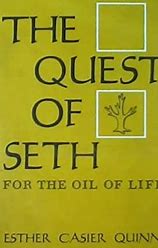 For those not familiar with this particular popular offshoot of the canonical story of Jesus Christ here’s a brief overview:
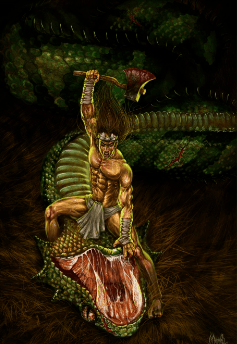 THACH SANH – A son of the supreme deity Ngoc Hoang. His father forced him to incarnate as a human and in this demi-god form he fought monsters, rescued the son of the chief sea god Long Vuong, vanquished his evil foster-brother and married a beautiful princess.
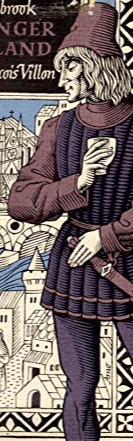 FRANCOIS VILLON (1431-1463?) – The swashbuckling legends that surround this real-life French poet have sometimes been compared to tales of Robin Hood or Dick Turpin. Like Dick Turpin, Villon really did exist, but in his case he left behind an impressive body of literary work and he is still considered one of France’s greatest poets.
  Balladeer's Blog