
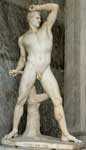
Cratinus
Welcome to another Balladeer’s Blog post on ancient Greek comedies. If Pytine was an episode of Friends it would be titled The One Where Cratinus Fires Back At Aristophanes. This play is also known under English language titles like Wine Flask, Flagon, The Bottle, and others along those lines.
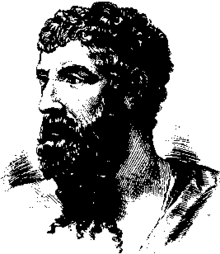
Cratinus, seen at left posing for the Attic Old Disco soundtrack album for Saturday Night Fever (Travolta stole all his moves from Cratinus, by the way) and galvanized by the tongue-in- cheek caricature that Aristophanes presented of a drunken, washed- up Cratinus in his previous year’s comedy The Knights, turned that caricature into the premise of his final comedy.
THE PLAY
From the fragments of Pytine that remain it seems Cratinus had an actor portraying himself (Cratinus) as the booze-soaked Grand Old Man of Attic comedy at the time. I always picture the character as a cross between Dudley Moore in Arthur and Tom Conti in Reuben, Reuben. Anyway, in the play Cratinus is married either to Thalia, the Muse of Comedy or to simply a female personification of Comedy.
Comedy complains to Cratinus’ friends, who make up the chorus, that she wants to take her husband to court for abandonment. She states that he is neglecting their marital bed because he has been spending too much time sleeping around with Methe, in this comedy a personification of Drunkenness.
Academic opinion varies on whether or not Methe is supposed to be a hot young woman or a hot young man, and since this is an ancient Greek comedy it definitely could go either way. Not enough of the comedy survives to make it clear so Methe’s gender will remain a controversy.
Cratinus’ friends plot to save their buddy’s marriage by stopping him from drinking. They enact their “intervention” by smashing every last one of his containers of wine, and some of the comedy came from how many different types of vessels Cratinus had been hiding his booze in.
Cratinus counters the destruction of all his drinking vessels by purchasing a pytine, a very durable wine flask reinforced with wicker. The pytine is so strong it will withstand all the friends’ attempts to destroy it, thus foiling their plan to save Cratinus’ marriage to Comedy or the muse Thalia.
Cratinus defends his drinking by saying wine is the source of all his poetic inspiration (the comedies were all in verse). This line of reasoning sets up the most famous line from Pytine when Cratinus says “You’ll never write great poetry if all you drink is water.” Continue reading


 Balladeer’s Blog presents another examination of an ancient Greek political satire. This comedy by Aristophanes was one that I was planning on covering very soon when I started posting my reviews of Attic Old Comedy years ago. For various reasons it kept falling by the wayside.
  More than 2,300 years before George Orwell’s Animal Farm and 1984, Aristophanes was dealing with some of the same political themes.
  Anteia was written by the comic poet Philyllius. This comic poet’s career seems to have spanned approximately from the 410s BCE to 390 BCE. One of his comedies won 1st prize at a Lenaea festival in the 390s and he won 1st prize at an unknown Dionysia. His fellow comedian Strattis credited him with being the first Attic Old Comic to use real torches on stage.
 A hetaera could move from man to man or keep one man for extended periods. What they were was openly known but the hetaerae occupied the top rung in the open “sex for pay” business in ancient Greece. Political figures could be publicly known as a hetaera’s steady man and it was not a career ender, but the man would be in for a lot of ribbing in the comedies of the time, usually as the butt of jokes pointing out how such an “ugly” man could ONLY get such a beautiful sex partner by paying her.
 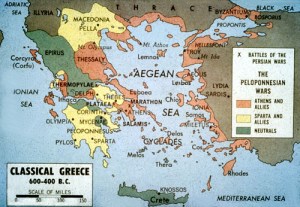 DEMOS-TYNDAREUS (410 BC) – Written by Polyzelus.
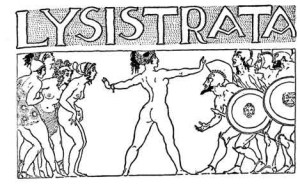
 Many of you have been kind enough to let me know that the new movie Chi-Raq, about black-on- black violence in Chicago, can be added to the long list of adaptations of Lysistrata by Aristophanes.
  By 411 BCE the Peloponnesian War between Athens (and its allied city-states) and Sparta (and its allied city-states) had been raging for roughly 20 years. The war provides the backdrop for many of Aristophanes’ surviving comedies and is especially apt where Lysistrata is concerned.
 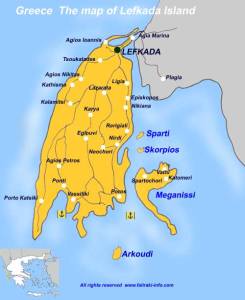 Regular readers of Balladeer’s Blog are familiar with my obsession with ancient Greek comedies. A related story has hit the news – on the Ionian island of Lefkada a previously unknown ancient amphitheater was discovered recently.
  Balladeer's Blog