
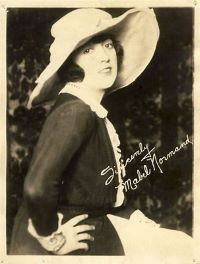
 MABEL NORMAND – Born Amabel Ethelreid Normand on November 9th, 1893 in New York, this silent film comedienne blazed trails for countless subsequent actresses as well as female directors and screenwriters. Like so many silent film stars Normand is largely neglected today except for my fellow silent movie geeks and I.
Though known as a comic genius, Mabel’s big break came from a role in an 18-minute dramatic short titled Her Awakening (1911). Her performance caught the eye of up-and-coming film giant Mack Sennett, who hired her for his comedies. The two started a romantic relationship embellished decades later in the Broadway musical Mack & Mabel (1974).
A SELECTION OF MABEL NORMAND FILMS (1910-1915) – During her career, Normand starred in over 220 films, so I’m dividing her movies into time periods.
 INDISCRETION OF BETTY (1910) – Mabel had her first starring role in this short drama but had appeared in an unknown number of previous films in smaller roles. Mabel played Betty, the wife in the marriage of a social-climbing couple.
Her husband’s income does not yet support the airs they try to put on, leading to some bitter lessons for the pair about life and marital finances.
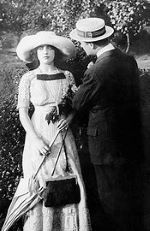 HER AWAKENING (1911) – The above-mentioned short in which Mabel caught the eye of Mack Sennett, who then signed her for comedy collaborations. In this short drama, Normand played a young lady trying to snare a successful husband.
She is ashamed of her poor home and her elderly, handicapped mother and prevents her beaus from meeting the mother. The situation results in the tragic death of her mother.
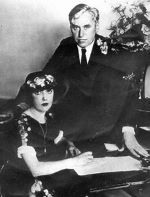 THROUGH HIS WIFE’S PICTURE (1911) – Mabel Normand’s first film short with Mack Sennett. He directed and had a supporting role in this 9-minute comedy about a misunderstanding that threatens a marriage.
Mabel as the wife attends a costume party where she thinks she will catch her loyal husband trying to start an affair with another woman. The costumed pirate she mistakenly thinks is her husband is actually an unmarried friend of the husband. The “pirate’s” flirtatious conduct toward a young lady makes Normand furious. Continue reading
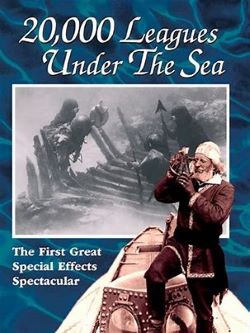 20,000 LEAGUES UNDER THE SEA (1916) – The famous first cinematic adaptation of the Jules Verne classic. Having loved the version of this pioneering 1916 film that was available during the 1990s and earlier I had put off watching the restored and upgraded version released in 2010.
  Personally, I would have preferred that Universal had just produced a shorter 20,000 Leagues film that was all Leagues and nothing but Leagues, then release The Mysterious Island later as a sequel. In 1916 audience expectations were not yet such that movies had to run the 86 to 105 minutes boasted by surviving copies of 20,000 Leagues.
  SANTA CLAUS (1925) – This 28 minute and 44 second movie was directed by Frank Kleinschmidt, the famous explorer and documentary filmmaker. Santa Claus has an irresistible charm and with its short running time might be the ideal way of introducing silent films to modern day viewers who are unfamiliar with them.
 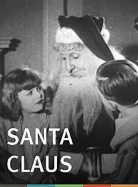 Santa Claus opens with Saint Nick himself welcoming us with arms spread wide. The story proper gets underway as we join two children – a brother and sister – who sneak out of their beds overnight to wait for Santa in their living room.
  SCROOGE, OR MARLEY’S GHOST (1901) – This big-screen Christmas Carol adaptation was the first-ever cinematic depiction of the Charles Dickens classic. The criminally neglected British silent film pioneer R.W. Paul produced the movie and fellow trailblazer Walter R. Booth directed.
 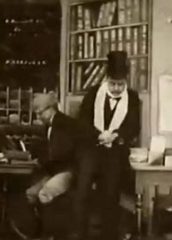 Back to this 1901 production. Scrooge was originally just over 6 minutes long but like so many movies from the silent era it suffered damage in the decades ahead. About 5 minutes have survived and the film bears a few similarities to the 13-minute Edison Films Christmas Carol from 1910.
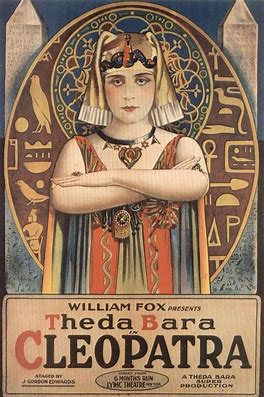 CLEOPATRA (1917) – Born Theodosia Goodman in Cincinnati, OH on July 29th, 1885, Theda Bara was the first monumental “man-eating”, femme fatale sex symbol in American cinema. It was inevitable that she would portray one of history’s most notorious women. Only part of this film has survived, and the story is a mix of various accounts of Cleopatra’s activities.
 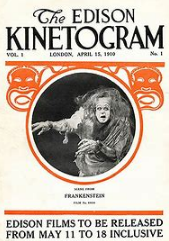 FRANKENSTEIN (1910) – This first ever cinematic depiction of the classic horror story was produced by Edison Studios, as in Thomas Edison. Luckily Frankenstein has survived, and existing copies run from 11 minutes to 16 minutes.
  Edison Studios efforts were known for their slipshod, seat of their pants nature, and Frankenstein serves up my all-time favorite back-to-back dialogue boards. “Frankenstein leaves for college.” followed by “Two years later Frankenstein has discovered the mystery of life.” (… And Frankenstein Created Cram School)
 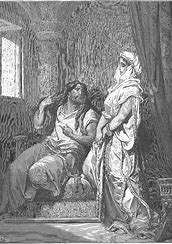 SAMSON AND DELILAH (1902) – This 6-minute short was directed by Ferdinand Zecca, Walter Pathe’s right-hand man. This film has survived and is an interesting historical piece. It’s the earliest surviving silent movie about Samson, the iconic Zecca’s first Samson film, plus Samson and Delilah is one of the silent era shorts that were tinted by hand – frame by frame.
 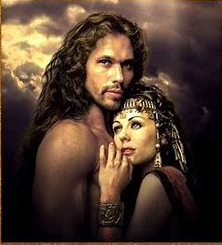 This 1902 effort opens with Samson’s “labor” of tearing off the gate of Gaza, then just dumping it rather than carrying it away. We get other standard bits from the tale of this Biblical Judge including, of course, the seductive Philistine woman Delilah learning that the secret of Samson’s strength lies in his uncut hair.
 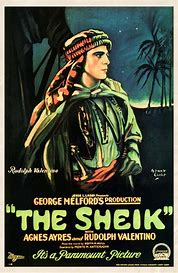 THE SHEIK (1921) – Edith Maude Hull’s 1919 novel came to the big screen to cement Rudolph Valentino’s rising star. He shone as Sheik Ahmed Ben Hassan with Agnes Ayers as Lady Diane Mayo.
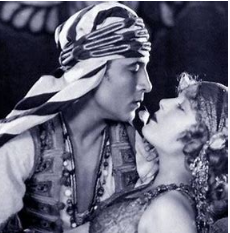 A lot of Gothic Romance Novel antics follow in this film that has not aged well. Valentino’s wide eyes and flaring nostrils were masterfully parodied by Peter Sellers in a comedy bit decades later.
 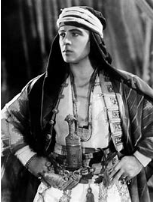 As their battle of wills goes on, Diane is seized by caravan robbers and taken to their leader’s lair. Sheik Ahmed leads his men to the rescue, and, with Stockholm Syndrome well and truly in charge, Lady Diane “realizes” how much she has fallen in love with her abductor.
 RIN TIN TIN (1918-1932) – Here at Balladeer’s Blog, I’m even fonder of dogs than I am of silent movies, so this post will combine the two topics. Sadly, most silent films have become so little remembered that few people even realize that there actually WAS a real Rin Tin Tin, adopted by American soldiers during World War One.
 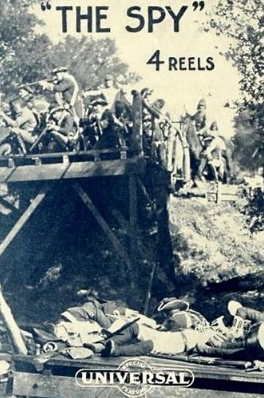 THE SPY (1914) – This four-reel movie was based on the 1821 novel of the same name by THE James Fenimore Cooper. The story is set largely at a home in Scarsdale, New York as American Rebel families share feuds, intrigues and romances with British Loyalists.
  Balladeer's Blog