
 Here at Balladeer’s Blog I love sharing my enthusiasms. My blog posts where I provide contemporary slants to Ancient Greek Comedies to make them more accessible have been big hits over the years, so I’ve been trying it with operas, too. Previously I wrote about how Philip Wylie’s science fiction novel Gladiator could be done as an opera. Then I looked at how an opera version of the 1966 Spaghetti Western Django could be done and then an opera based on the novel Venus in Furs.
This blog post starts a look at how the original Dune novel could be done as an entire cycle of operas. If you’re not familiar with the story it is set over 20,000 years in the future, when humanity has colonized many Earth-like planets.
DUNE
LANGUAGE: Spanish. I’ve resigned myself to the fact that most of my fellow English-speakers find English-language operas to be silly. The prosaic nature of the forced rhymes in a language we are well-versed in does seem to rob opera of its mystique and its grandeur.

BALLADEER’S BLOG
SINGERS: Two Baritones, two Bass-Baritones, two Sopranos, one Mezzo-Soprano, four Tenors, a contralto and a Bass.
ACTS: FOUR ACTS
STORY: My fellow Dune geeks may get annoyed with this change, but remember, adaptations for staged performances have to be made very tight. I would start out at the Arrakeen Great Hall as the family and court members of House Atreides have just arrived on Arrakis/ Dune, the desert planet. All the scenes that the book covered while the Atreides family were preparing to depart their home on Caladan would instead play out shortly after their arrival on their new planetary fiefdom. Continue reading
 ROLLER BLADE (1986) – They’re the Cosmic Order of the Roller Blade and they’re female Jedi Knights on roller skates. Well, sort of. Where does one begin when reviewing this film that is so beloved by all of us fans of bad movies? Let’s start with the setting and then tackle the characters as well as Roller Blade’s legendary director Donald G Jackson (R.I.P.).
  “Skate or Die” is the ugly motto of the survivors in this kill or be killed future. That’s because the filmmakers absurdly pretend that traveling via roller skates or skateboards is the only way to move swiftly enough to have a chance of evading the dangerous gangs and mutants.
  MOTHER SPEED (Katina Garner) – The Mother Superior of the Order of the Roller Blade. She is in a wheelchair yet still wears roller skates on her feet since such skates are part of the Order’s sacred garments. Mother Speed, like all the good guys in Roller Blade, speaks in grandiose faux-Shakespearean littered with “thees” and “thous” and “yea, verilies.” ESPECIALLY “yea, verilies.”
  THE SECRET OF THE SUPER-TELESCOPE (August 1923) – Doctor Hackensaw’s new invention, a super-telescope, provides the most detailed looks at Earth’s moon ever seen. A secret civilization is detected and photographed. NOTE: This is the start of the first serialized Hackensaw storyline.
  IDAHO TRANSFER (1973) – This film, directed by Peter Fonda and starring mostly unknowns, deals with time travel and post-apocalypse themes. It was retitled Deranged for its DVD release. I have no idea why.
  DOCTOR HACKENSAW’S SECRETS – Written by Clement Fezandie. Doctor Hackensaw and his adventures were similar to Paul B’Old’s short stories about Professor Jerome Mudgewood, but with less emphasis on humor. Both figures dealt with the often destructive consequences of their own inventions or discoveries. Ferzandie’s Hackensaw tales were published in the magazine Science and Invention.
  RED STAR (1908) – Written by Alexander Malinowski under the name Alexander Bogdanov. This pro-communist science fiction novel came three years after the failed uprising of 1905 and sixteen years BEFORE Aelita: Queen of Mars, a silent sci-fi film which depicted a similar communist paradise on Mars.
  They reveal that Lenni’s brilliant paper described the concepts of nuclear fission and anti-gravity that the Martians use in their spaceships. Recognizing his superior mind they sought him out in order to take him on board their interplanetary vessel and transport him to Mars. Once there they will let him observe their culture like they secretly observed Earth culture during their stay.
  A JOURNEY IN THE TWENTY-NINTH CENTURY (1824) – Written by Faddei Bulgarin, who had served in the Polish Legion of Napoleon’s Grand Army in his youth before going on to work for the Czars of Russia. In this fascinating tale an unnamed narrator gets swept overboard in the Gulf of Finland in 1824. The cold water and another element somehow put him in suspended animation and when he comes to he is all the way over in Siberia, where his body was recovered in the waters of Cape Shelagski centuries after he was lost at sea.
 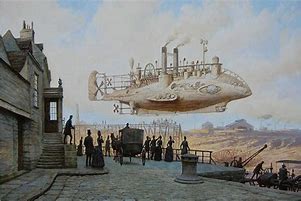 THE YEAR 4338, LETTERS FROM PETERSBURG (1835) – Written by Vladimir Fedorovich Odoevski. Set in the year 4338 A.D. this novel is told through correspondence from Hyppolitus Tsungiev, a Chinese college student in Saint Petersburg to Chinese friends in Peking. In that far future year Saint Petersburg has grown to be a megalopolis so large that it extends all the way to Moscow.
  MOONBASE 3 (1973) – This BBC attempt at realistic, “no aliens or monsters” science fiction is a mixed bag, but I think it deserves a much bigger audience. Among the elements in the show’s favor is the fact that only 6 fifty-minute episodes were made, so it makes viewers a little more willing to forgive the program’s faults.
  Created by Barry Letts and Terrance Dicks of Doctor Who fame, Moonbase 3 is sort of like Doomwatch crossed with The Sandbaggers. However, Moonbase 3 keeps its science even closer to reality than Doomwatch did, so it can be a bit dry. Well, okay, VERY dry, but that’s a nice antidote to non-stop explosions, ray-guns blasting and other Space Opera cliches.
 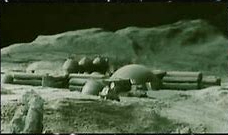 As for the show’s similarities to The Sandbaggers, there is bureaucratic in-fighting aplenty, unexpected deaths and an emphasis on dialogue over action. And, like both of those other programs, Moonbase 3‘s characters have to deal with perpetually tight budgets limiting the success of their missions.
  MARVEL SUPER-HEROES #18 (January 1969)
  The Badoon killed every Alpha Centauran because they considered them and their control of the living metal Yaka to be a threat. Similarly, the lizard-like aliens committed genocide on Pluto, Jupiter and Mercury as well, because they felt threatened by large numbers of foemen possessed of the enhanced abilities of those genetically engineered humans.
