
 A.D. 2000 (1890) – Written by Alvarado M. Fuller, this was one of the earliest imitations of Edward Bellamy’s 1888 work Looking Backward. The main character is a Cavalry Lieutenant named Junius Cobb.
Lieutenant Cobb has invented a powerful explosive that the Army has contracted for use. Cobb has also befriended a scientist named Jean Colchis and fallen in love with the man’s daughter Marie. Colchis has invented a means of “crystallizing ozone” and Cobb uses that process to induce a state of suspended animation on himself.
 With the cooperation of friends, Lt. Cobb seals himself away in a San Francisco replica of the Statue of Liberty with an alarm set to revive him in the year 1987. Due to a mathematical error, however, our main character is not awakened from suspended animation until the year 2000 A.D.
One of the friends who helped seal Junius Cobb away back in 1887 has a grandson who is president of the United States in the year 2000, and the president has a party sent to San Francisco to revive Cobb lest his state of suspended animation continue indefinitely. Cobb recovers slowly, but within months he is ready to become acquainted with the world of 2000 A.D. Continue reading
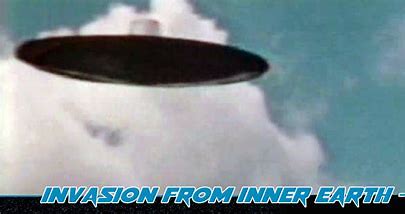
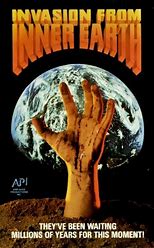 INVASION FROM INNER EARTH (1974) – This hilariously bad science fiction film was one of the early efforts from Bill Rebane, whose low budget movies were to Wisconsin what Larry Buchanan and his productions were to Texas. Invasion from Inner Earth is a perfect example of “so bad it’s good” filmmaking … for the first half hour or so. After that the story drags on agonizingly and the apparently improvised dialogue pushes your sanity to the breaking point.
  Some news broadcasts take the events seriously but others present the victims of the chaos as bone-headed rubes deserving of ridicule. We are even shown viewers laughing at these victims but we never understand why, since the Earth is obviously under attack with millions of dead and missing. At no time are we shown the mockers getting their comeuppance for their smirking callousness despite how wrong they are. It’s that kind of movie.
  THE PLANET JUGGLER (1908) – Written by J. George Frederick. An early space opera set in an undesignated future year. Absurdly enough, Esperanto has become the global language in a reflection of the high hopes held by Esperanto speakers at the time this book was written.
  The Planet Juggler claims to have monitored Earth people for a decade, thus accounting for their fluency in Esperanto, but world leaders are skeptical that it’s all a hoax perpetrated by someone on our own planet. To disabuse Earthlings of that notion, the alien entity shuts down all of the electricity in and around New York.
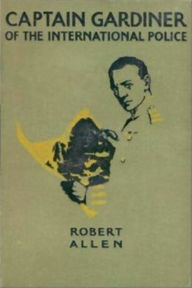 CAPTAIN GARDINER OF THE INTERNATIONAL POLICE (1916) – Robert Allen Dodd wrote this story over one hundred years ago under the name Robert Allen. Narration informs us that the story is set 60 years after the conclusion of the then-raging World War. Since we know it ended in 1918 we can look forward to visiting the “far-off future” of 1978.
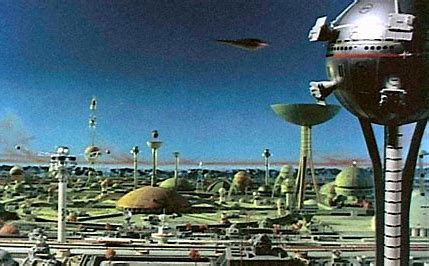
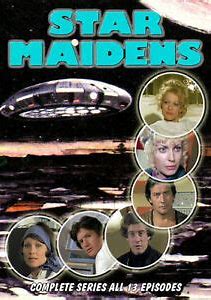 STAR MAIDENS (1975-1976) – This obscure (only 3 reviews to date on IMDb) British-German television series from the 1970s has the same kind of campy visual appeal as U.F.O., Space: 1999 and every other Gerry & Sylvia Anderson series in history.
 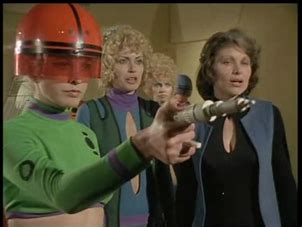 The futuristic planet called Medusa was ruled by women with an iron fist, with men relegated to the roles of domestic servants or laborers in mines and factories, etc. Men were outrightly owned by women and the “Men’s Liberation Movement” was outlawed and hounded. Gareth Thomas of all people starred as one of two rebellious men who escape Medusa in a stolen spaceship and head for 1970s Earth.
 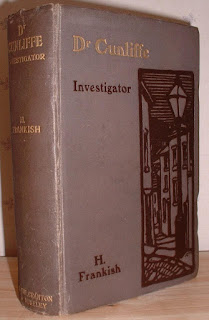 DR. CUNLIFFE, INVESTIGATOR (1913) – Written by Harold Frankish. This book was a collection of short stories centered around Frankish’s fictional “scientific detective” Dr. Theodore Cunliffe.
 THROUGH THE HORN OR THE IVORY GATE (1905) – Written by Anatole France. In this story a Frenchman, the tale’s narrator, finds himself in the year 2270 A.D. The large buildings that used to fill Paris have been replaced by small cottages inhabited by people whose tastes run to fine art and statuary.
  SCIENCE FICTION THEATRE (1955-1957) – In Balladeer’s Blog’s Forgotten Television category here’s a look at Science Fiction Theatre, which was a syndicated series that lasted from 1955-1957. The program did 39 episodes in each of its two seasons, however, so there are 78 episodes in its history. Season One was in color, Season Two was in black & white.
  Balladeer's Blog