
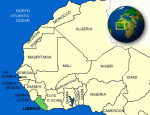
 Balladeer’s Blog presents another neglected epic myth from around the world. In this case, Liberia’s Woi Epic of the Kpelle people.
The Woi Epic is often studied for its use of music, dance, singing and audience participation to reflect the action in the story. Think of it as a combination opera, ballet, live drama and Rocky Horror Picture Show screening.
The order of the episodes in the epic is not set in stone and a performance may include only a few of the episodes, all of them or just one. The finish of each episode is marked by the performer(s) announcing “Dried millet, wese” to which the audience repeats simply “wese.”
ONE – Woi, a culture deity and master of ritual magic, and his wife Gelengol are the only living things that exist. After Woi impregnates his wife she eventually gives birth to human beings, chickens, goats, cows, sheep and, after all other life-forms, spiders. (Plenty of African myths feature a female deity giving birth to multiple living creatures and many feature the woman also giving birth to tools and weapons and utensils.)
TWO – Woi notes that the demonic figure Yele-Walo has stolen one of his bulls by sneaking up on it in the form of a rattan plant. Yele-Walo took the bull with him to his hideaway “behind the sky.” Woi prepares for battle and is aided by squirrel-monkeys, tsetse flies and horse-flies. Yele-Walo also steels himself for the upcoming fight. Continue reading
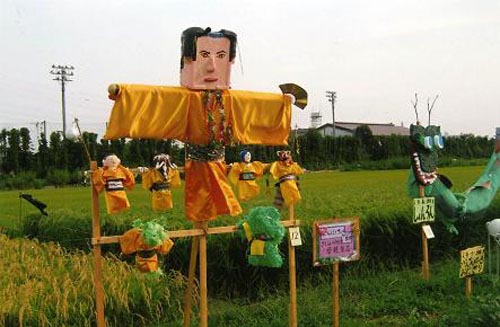
 TALHAE – Also called Tarhae. The wife of King Hamdalpa of Wan-Ha in Yongsong had been married to him for seven years but had yet to produce an heir to the throne. She prayed to the gods for a child and at length she produced a large egg, from which a handsome boy named Talhae emerged.
  TUILAKEMBA – This figure was the son of Tuilangi, the god who ruled over the Skyland, and a mortal woman. When Tuilakemba was a little boy he was often ridiculed by the other children for not having a father on hand like they did. One day the young demigod had had enough and threatened to kill his mother unless she told him who his father was.
 Voodoo mythology is a fascinating hybrid of Yoruban, Dahomey, Fon and Christian mythology intermixed with touches from Caribbean belief systems.
  ADI-MAILAGU – This goddess was one of the evil deities driven from the Skyworld by the Fijian demigod Tuilakemba. When Adi-Mailagu first fell from the sky humans witnessed her landing in Uruone, Fiji. She fell into the small Kele Kele River and caused the water to overflow the banks. Embarrassed, the goddess emerged from the water in the form of a large grey rat and fled into the jungle since Fijian deities are vulnerable when in animal form.
 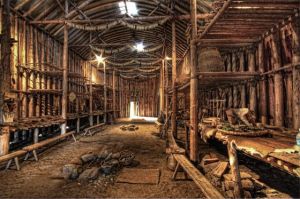 HODADEION PART 11: THE WRATH OF HODADEION – As the demigod Hodadeion stalked angrily toward the large longhouse lodge in which the cannibal wizards and their women were tormenting his younger brother Otgoe, he had but one regret. That was that the Chief of the cannibal wizards, Dagwahgweoses, was away at his private lodge and would need to be dealt with separately.
  HODADEION PART 10 – THE CANNIBAL WIZARDS – Now safely on the northern side of Niagara Falls following his battle with the whirlwind, the demigod Hodadeion continued walking toward the northeast.
  HODADEION PART 9 – BATTLE WITH A WHIRLWIND – At what is now called Niagara Falls, the demigod Hodadeion stood facing an enormous Dagwanoenyent. Those beings were the ancient whirlwinds so often fought by Iroquois deities.
  The people of Fiji believed in an epic journey for the souls of the deceased. That journey is even more detailed than the Soul’s Journey envisioned by the Tupari of Brazil.
