
Balladeer’s Blog continues its examination of the many facets of Fool Killer lore. FOR PART ONE, INCLUDING THE HISTORICAL CONTEXT, CLICK HERE
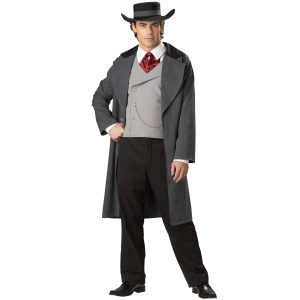 PART TWENTY: I need to interrupt my look at the 1910-1917 and 1919-1922 Fool Killer items for this time around. In a surprising development Balladeer’s Blog was contacted by THE actual Fool Killer. Using Jimmy Neutron-level science I determined that this correspondent was indeed the actual supernatural figure who had been at large in America since the 1830s.
After some introductory email exchanges the Fool Killer confirmed for me that Jesse Holmes was not his real name but he often used it as his alias going back to Charles Napoleon Bonaparte Evans’ original publication of The Fool Killer Letters from roughly 1850 to around 1880.
The roaming vigilante stated that since there was absolutely nothing that I or any other mortals could do to stop him from slaying whenever and wherever he pleased he was happy to answer assorted questions for me. He did so in the following email:
 Coming to you as I wander in search of fools to kill, as usual a murder of crows following in my wake to feast upon the ample corpses I leave behind me in my travels.
Eddie, or Mr Wozniak or Balladeer or however you prefer to be addressed, I noticed from your queries that you have that modern-day obsession with wanting definitive answers. I’m not able to provide them regarding my exact nature nor would I if I WAS able.
Your tracing of my origins to the Tennessee Hills of the 1830s was part of the reason I contacted you. I figured your perseverance and your perceptive comments about the Hill Portughee or Melungeons importing tales of Longstaff from Portugal showed you deserved to be my new correspondent. You’re no Charles Evans or James L Pearson but I’ve been a mighty long time without a confidant so you’ll do.
My birth around 1830 was roughly as recounted in Mountain Legends. I can correct the record on one particular item, though. My Daddy, whatever he really was, was not the Devil. Not even I could have overcome Satan himself like I did and driven him from the Tennessee Hills. He may have been “A” devil or demon or maybe something from another world. Maybe he was just a relic from Earth’s distant past or some unknown thing that walked up from the very bottom of the ocean.
Whatever he was he wasn’t human, that’s for certain, but he sure had a taste for the ladies of the mountains. Whenever any of the Hill Portughee or folks like them needed some of my Daddy’s otherworldly metalworking or medicinal cures or any other products of his arcane arts and sciences the men and the uncomely women always had better come across with some Melungeon gold to pay for it. Continue reading
 PART NINETEEN: James Larkin Pearson, creator of this new Fool Killer, featured a complaint that I can relate to, since I go through the same thing here at Balladeer’s Blog – “Democrats write and ask me to lambaste the Republicans and Republicans write and suggest that I cuss out the Democrats. All right, boys, I am going to comply with both requests, and then you will both be mad.”
  *** Equally sleazy, money-hungry “spiritualists” – nicknamed “Boogers” in the slang of the time. Arthur Conan Doyle was still alive in 1919 and, as usual, that otherwise rational man willingly served as a public cheerleader for those con artists who claimed to be able to contact one’s dead loved ones.
  PART EIGHTEEN: In this issue the Fool Killer stated his mission in his newest incarnation (Or “regeneration” we could say with tongue in cheek.) was “the general overturning of all established institutions of every kind.” … “The Hour of Doom has struck for many of this old world’s pet institutions.” Quite a long way from his 1830s mission of driving the Devil out of the Tennessee Hills and killing fools who tried stealing the “hidden” gold of the Melungeons!
 PART FIFTEEN: Last time around I examined Joel Chandler Harris’ 1902 story Flingin’ Jim And His Fool-Killer, set in Georgia in October of 1872, plus Ridgway Hill’s Facts For The Fool-Killer, set in and around Buffalo, NY in 1909.
  PART FOURTEEN: FACTS FOR THE FOOL-KILLER (1909) by Ridgway Hill.
  Facts For The Fool-Killer finds the fictional character operating from Buffalo, NY and vicinity. The Fool Killer now wears the blue uniform and tall helmet of a turn-of-the-century policeman and wields a police officer’s billy-club in lieu of his usual club/ walking stick/ cudgel.
  PART THIRTEEN: FABLES IN SLANG (1899)
  “The written word equivalent of political cartoons” might be another way of describing the fables. In any event Ade did accompany the fables with assorted illustrations.
  PART TWELVE
 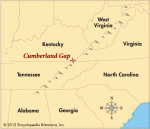 Now we’re in the 1880s and 1890s. The Fool Killer lore of the Melungeon people was absorbing traces of Mormon influence from the wider culture. The Melungeons were NOT Mormons but their Fool Killer tales took on pseudo-religious elements from Mormon lore, like the notion that the Melungeons may be even older than the previously held legends about pre-Columbian Portuguese explorers or ancient Phoenicians.
  If he had, one possible source would be the Fool Killer figure from Melungeon folklore in East Tennessee and other Appalachian areas. Or, since we have no way of checking exact dates, Evans’ darkly satirical tales may have influenced the existing Melungeon lore since Melungeons at the time were scattered from Tennessee to North Carolina, Kentucky and Virginia.
 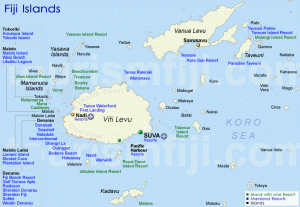 ROKOMAUTU – A son of the supreme deity Ndengei by his sister. This deity was born from his mother’s elbow as another example of birthing oddities in world mythology. Rokomautu was so headstrong he tried to force even his own parents to worship him.
  Labor Day weekend seemed like the appropriate time to post my long-delayed look at neglected working class folk hero Joe Magarac. This figure was the Steel Mill equivalent of Paul Bunyan and John Henry.
  As a lame play on words since this is Labor Day season I’ll present Joe Magarac’s origin and then depict his tales as “Labors” like in The Labors of Hercules.
  Balladeer's Blog