
Balladeer’s Blog continues its examination of the many facets of Fool Killer lore. FOR PART ONE, INCLUDING THE HISTORICAL CONTEXT, CLICK HERE
 PART THIRTY-ONE: Moving on to the July 1921 issue of James Larkin Pearson’s monthly Fool-Killer publication. The Fool Killer’s (I prefer no hyphen) targets this time around were:
*** Politicians and pundits who were still pushing the notion that the World War which ended in November of 1918 really was “The War to End All War” and that the world was poised for an era of peace and tranquility with no more bloodshed.
*** Nations which were still trying to develop ever-deadlier chemical weapons, despite the uproar over the long-term consequences of such weapons in the war from 1914-1918.
*** In particular the Fool Killer targeted jingoistic U.S. War Department scientists and /or officials who spoke of a deadly gas that our country had just developed – a gas which could supposedly “depopulate a whole city in a few minutes.”
 Pearson and his Fool Killer wondered if, despite official claims that the government was trying to prevent other nations from getting hold of the formula, the U.S. might wind up using the gas ourselves at some future time and therefore become “the Huns” of a new war.
Here in 2020 we are accustomed to the notion that our own elected officials – from both parties – may be as totalitarian and destructive as any others. That realization came after decades of real-life scandals plus fictional espionage and science fiction stories using (eventually overusing) the “Are we are own worst enemy? theme.
I find it incredibly intriguing to see a contemporary 1921 example of that justifiable suspicion. The image of the Fool Killer – homicidal vigilante though he’s always been – taking down scientists, military men or politicians gambling with such poisonous gasses is wildly ahead of its time.
*** In a REALLY prescient bit, he targeted people who felt that Germany should be forced harder and harder to try to pay war reparations no matter what damage it did to that nation’s economy. We all know where that wound up taking the world. Continue reading
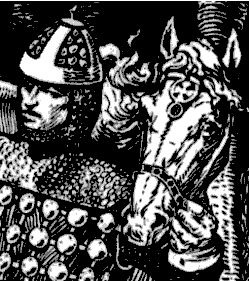 REINOLD, MAUGRIS THE MAGICIAN AND THE ENCHANTED HORSE BAYARD – Reinold was another of Charlemagne’s nephews, like the Paladin Roland. Reinold, also called Rinaldo, was the son of the Emperor’s sister Aya and her husband, Duke Aymon of Ardennes. Reinold’s sister Bradamante, covered previously at Balladeer’s Blog, was the white-armored Paladin in Charlemagne’s court, making her literally a “white knight.”
 Once, while riding outside Paris, Reinold was presented with a magnificent suit of armor by Maugris the magician, the younger, more active counterpart to Merlin from Arthurian lore. (In some versions Maugris – aka Malagigi – also gives Reinold a horse, but since this tale centers around Reinold’s taming of the mount Bayard I’m omitting that to keep the story stream-lined.)
 I. A 14 ft tall giant named Ferragus was preying upon Charlemagne’s subjects, carrying them away at will and devouring them in his cave. When the Emperor was made aware of this situation by the inhabitants of the affected region he called for a volunteer from among his Paladins to kill the giant.
 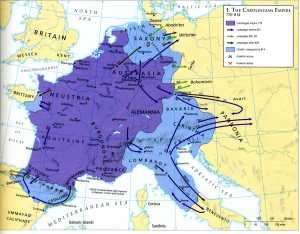 Our previous installment ended with the army of Charlemagne besieging the Muslim Saracen army which had taken Rome after forcing them to withdraw inside the city following their defeat in battle. Roland, Ogier and others had been knighted by Charlemagne himself after distinguishing themselves in combat.
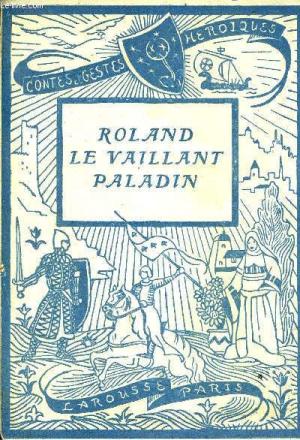
  Though Charlemagne was a real historical figure, a body of folkore has risen around him and his Paladins (knights). Part of that folklore was that the Pope crowned Charlemagne as the new Holy Roman Emperor on Christmas Day, even though the crowning really took place the following February. Since the story of Charlemagne’s crowning as Emperor was told as a Christmas story for centuries I always use Christmas time to examine him and his Paladins.
 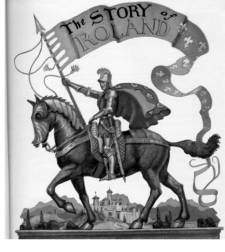 HOW ROLAND AND OGIER BECAME PALADINS – The Emperor could not expect his nephew to immediately step into service as a Paladin, since he had a great deal to learn. Charlemagne placed him as a Page in the household of Duke Namo of Bavaria, where Roland began his career alongside many other young nobles.
  As always part of the fun comes from the way the Fool Killer – in this case James Larkin Pearson’s version in his monthly publication – took aim at politicians from both parties and at other “fools” of the day. March of 1921’s targets:
 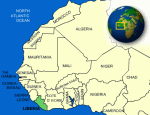 Balladeer’s Blog presents another neglected epic myth from around the world. In this case, Liberia’s Woi Epic of the Kpelle people.
  PART TWENTY-EIGHT – Here is a look at some of the Fool Killer’s targets from James L Pearson’s January of 1921 issue of The Fool-Killer. New imagery invoked was of the Fool Killer sitting on a high hill picking off fools as the world revolved around him. (A very odd quasi-Axis Mundi)
  Labor Day weekend is the appropriate time to post this look at neglected working class folk hero Joe Magarac. This figure was the Steel Mill equivalent of Paul Bunyan and John Henry.
  As a lame play on words since this is Labor Day season I’ll present Joe Magarac’s origin and then depict his tales as “Labors” like in The Labors of Hercules.
