Tag Archives: mythology

KIVIOQ: INUIT MYTHOLOGY’S PREMIER MONSTER SLAYER

For more of my entries on Inuit myths click herehttps://glitternight.com/inuit-myth/
KIVIOQ – The greatest hero and monster- slayer of Inuit mythology. The exact structure of Kivioq’s saga varies wildly from region to region, some of them with a fully Continue reading

4 Comments

Filed under Mythology

HITTITE MYTH: THE SUN GOD AND THE COW


Love Child: Made fun of in school ...

Love Child: Made fun of in school …

Reaction to my recent examination of Hittite gods and goddesses has been through the roof! To keep up a little with the demand here’s a quick look at another Hittite myth, this one involving the sun god Istanu. 

Istanu, the Hittite sun god was riding his solar chariot across the sky one day and noticed that a cow had brazenly wandered into the area where the shepherd goddess Hapantali tended Istanu’s sheep. The sun god let his chariot continue its course, pulled by two of his prized rams with their shining golden fleeces, as he descended to upbraid Hapantali for her oversight in allowing the bovine intruder to graze with his sheep. Continue reading

12 Comments

Filed under Mythology

HITTITE DEITY: LELWANI, THE DEATH GODDESS

amdearl002p1LELWANI – The goddess who ruled over the subterranean land of the dead and was thus answerable to Kumarbi, the deity who ruled over all of the undergound realms. Charnel houses and mausoleums were sacred to her. Continue reading

20 Comments

Filed under Mythology

HITTITE MYTHOLOGY: THE TOP DEITIES

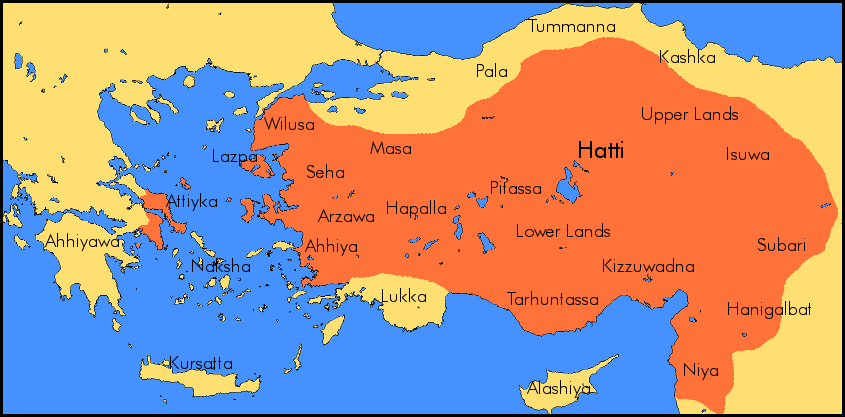
Hittite empireThe Hittite Empire spread throughout Anatolia, covering a large part of what is now Turkey and Syria as well as some parts far eastward and southward of there (accounts vary). The scarce remains of the texts regarding the deities worshipped by the Hittites are tantalizingly fragmentary but reflect and/or influenced myths from Mesopotamia across the west to ancient Greece and south to Canaanite territory.

ARANZAH – The god of the body of water that bore his name – the Aranzah River. The Aranzah is better known as the Tigris, which begins its journey southward from the Taurus Mountains in what is now eastern Turkey. This deity was a brother of the storm god Tarhun (Teshub to the Hurrians) and like him was born in the belly of the god Kumarbi.

ISTUSTAYA and PAPAYA – The Hittite goddesses of destiny. The two deities sat by the shores of the Black Sea where they would spin the threads that are each mortal’s destiny, taking special care with the fates of kings. The two left their seaside location only for special occassions like conferences of all the gods. Collectively the two were called the Gulses by the Hittites and the Hutena by the Hurrians. The ancient Greeks added a third to their number and called them the Morae (Fates).    Continue reading

91 Comments

Filed under Mythology

LEGENDS OF THE SPRING: A LOOK AT THOSE SEASONAL MYTHS WHICH HAVE THE SAME THEME

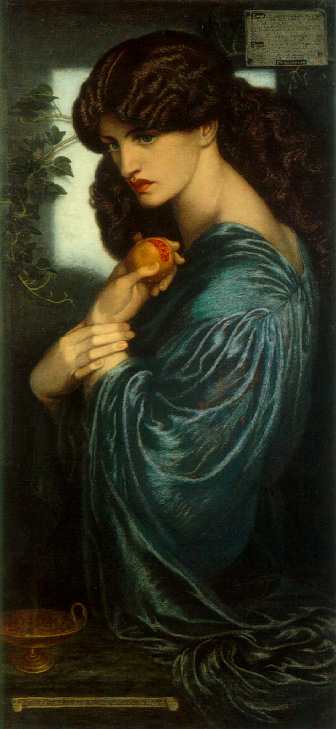
Persephone and pomegranateSpring keeps trying to arrive but this bitter winter refuses to give up just yet. Our nationwide longing to be liberated from the tyrannical grip of winter made this a good time to examine some of the ancient myths about winter and the coming of spring. The celebration of those myths at this time of year plus the fact that many of those myths centered around dead and resurrected deities necessitated Christianity’s attempt to superimpose its OWN dead and resurrected deity over top of those older stories. Hence the celebration of Easter in springtime. (And it’s not just Christianity that behaved that way – other religions also would superimpose their own celebrations over top of those held in honor of the previously dominant gods in their region. I’ll cover the behavior of those other belief systems – especially Islam and the Incan faith – another time.)

Not all seasonal myths conformed to the following pattern. I’m limiting this list to the ones that did.

PERSEPHONE

Pantheon: Greek (The Romans called her Proserpine)

The Tale: Persephone was the beautiful daughter of the goddess Demeter (Ceres to the Romans). Persephone caught the eye of Hades, the god who ruled over the realm of the dead. Overcome with lust Hades (Pluto to the Romans) emerged from his subterranean domain and stole Persephone away to his realm to become his Queen.

The Savior: Demeter went searching for her daughter throughout the world, often assuming the form of a mortal woman. Her search wore on and on with no results, causing Demeter to fall more and more deeply into despair. Because she was the goddess of nature that despair manifested itself in colder weather, in the leaves falling off the trees, other vegetation dying and some animals hibernating or migrating to flee the cold.  Continue reading

42 Comments

Filed under Mythology

TUPARI MYTHOLOGY: KARAM THE SUN GODDESS

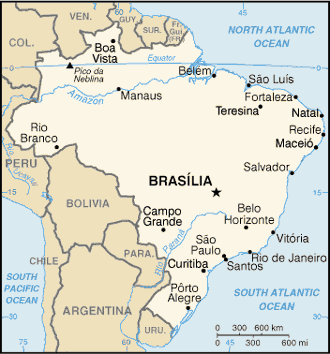
Tupari live near the Rio BrancoKARAM – This deity was the sun goddess of the Tupari people who lived near the Rio Branco in Brazil. Karam was much more pwerful than her husband Puepa the moon god and Continue reading

4 Comments

Filed under Mythology

TUPARI MYTHOLOGY: THE GODDESS VAUGEH AND HER SPOUSE MPOKALERO

Tupari live near the Rio BrancoVAUGEH – The goddess who embodied female physical beauty for the Tupari people who lived near the Rio Branco region of what is now Brazil. Her spouse MPOKALERO was her counterpart, the god who embodied male physical beauty. The two of them were also the patron deities of sexual desire and caused carnal attraction between people.

In Tupari beliefs when a Continue reading

12 Comments

Filed under Mythology

SHUGENDO MYTHOLOGY: A LOOK AT EN NO OZUNU

En No OzunuRegular readers of Balladeer’s Blog know that I consider all religions to be mythology, which people are usually fine with unless it’s their own personal religion I’m examining. At any rate En No Ozunu is revered as the founder and most active mythical figure in the belief system called Shugendo, and in some offshoot cults of Shugendo as a virtual patron deity of ninja practices and ancient weather forecasting.

Practitioners of the Shugendo faith are called Yamabushi and their belief system fuses elements of Shinto, Ainu, Buddhism and Taoism along with features of shamanism and the ancient Japanese reverence for mountains, all of which are considered sacred ground in Shugendo. The ninja connection is very big in popular culture but actually the Ainu are more technically the originators of many ninjutsu practices. For an even bigger pop culture tie-in there are versions of the En No Ozunu myth in which he is the father of Sadako (Neil Sadako?), the female figure in the Ringu novel plus its Japanese and American film adaptations. 

En No Ozunu supposedly began his existence on Earth when he was born to a mortal woman who was Continue reading

40 Comments

Filed under Mythology

IROQUOIS EPIC MYTH: PART TWO OF HODADEION, THE GOD OF MAGIC

Iroquois longhouse lodge village

PART 2 – THE WASP-MEN – (Hodadeion was the son of the creator god Tharonhiawakon and a mortal woman, the same mortal woman who bore him Hodadeion’s siblings. Those siblings were Otgoe, the wampum god and Yeyenthwus, the future goddess of chestnut trees.)

Hodadeion ventured to the north despite his sister Yeyenthwus’ warnings. He came across a few more villages that were now deserted like his own and he realized how far-reaching was the reign of terror of the cannibalistic wizards who had decimated the population of Continue reading

5 Comments

Filed under Mythology

IROQUOIS EPIC MYTH: HODADEION, THE GOD OF MAGIC

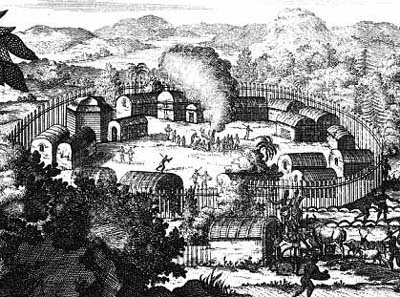
Iroquois longhouse lodge villageIn the tradition of Balladeer’s Blog’s previous looks at neglected epic myths from the Navajo, Vietnamese, Dinka, Greek and Chinese pantheons I will examine the saga of the Iroquois god of magic Hodadeion. This will be done in the same style as my examinations of the Navajo war god’s battle with the Anaye, the war between the Vietnamese jungle and monsoon gods and the Chinese Divine Archer Yi’s adventures.

1. Hodadeion was the son of the creator god Tharonhiawakon and a mortal woman, the same mortal woman who bore him Hodadeion’s siblings. Those siblings were Otgoe, the wampum god who loved chestnuts and Yeyenthwus, the future goddess of chestnut trees.

Tharonhiawakon was gone for years at a time attending to other matters in the world and while Otgoe was a toddler and Hodadeion and Yeyenthwus in their teens an entire village full of cannibalistic humans led by a Continue reading

2 Comments

Filed under Mythology