Tag Archives: Military History

FLYBOYS (2006): WORLD WAR ONE ACES

Here is a fairly entertaining film fictionalizing the escapades of the American pilots in the Lafayette Escadrille during World War One. It’s based on facts but altered enough for a big screen drama. There’s even a Red Baron pastiche called the Black Falcon.

3 Comments

Filed under Neglected History

AMERICAN ACE OF WORLD WAR ONE: FRANK LEAMAN BAYLIES

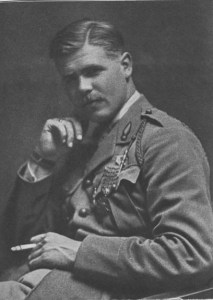
Frank Leaman BayliesFRANK LEAMAN BAYLIES – For the first eleven days of November Balladeer’s Blog takes a look at neglected figures of World War One, ending on Veterans Day. Frank Leaman Baylies tried to serve as a pilot in the U.S. Army but was rejected for supposedly poor vision, so in May 1917 he enlisted in the French flying corps instead.

Baylies flew with Escadrille 73 as the 13th man in the unit, flying a plane numbered 13. Frank philosophically shrugged off superstition, feeling lucky to be flying at all after being rejected by his home country’s air corps. In December of 1917 he was transferred to Escadrille 3, and really found his niche flying a Spad.

On February 19th, 1918 Baylies got his first verified kill, ultimately notching a total of 12 plus one more possible by May 31st. March 28th saw Frank shot down over No Man’s Land. After landing his crippled aircraft Baylies grabbed the altimeter and time-piece from the plane before scrambling toward the French trenches. The pilot was pursued by German soldiers but made it safely to the French lines.   Continue reading

3 Comments

Filed under Neglected History

EDDIE RICKENBACKER: AMERICA’S GREATEST FLYING ACE OF WORLD WAR ONE

Eddie RickenbackerBalladeer’s Blog had proceeded from the assumption that most readers were familiar with flying ace Eddie Rickenbacker but comments and emails indicate otherwise. Here’s a look at him as we lead up to another November 11th, now called Veterans Day but formerly known as Armistice Day since November 11th, 1918 marked the end of World War One.

EDDIE RICKENBACKER – “Fast Eddie” Rickenbacker was first known as a race-car driver who competed in four Indianapolis 500’s before the U.S. entered World War One. Upon America’s entry into the conflict Rickenbacker enlisted in the Army and was in France with his unit by late June 1917.

Fast Eddie’s mechanical abilities – honed working with engines during his racing days – kept him grounded as a mechanic for several months. During that period Rickenbacker learned to fly in nearly every spare moment. Eventually he got his wings and took to the air with America’s legendary Hat in the Ring Squadron (the 94th Aero Squadron).    

Eddie made Ace – five confirmed kills – with less than a full month between his first kill and his fifth. Lieutenant – eventually Captain – Rickenbacker scored his sixth verified kill on May 30th, 1918 before getting an ear infection which kept him out of the air for a few months. Many more kills lay ahead of him.   Continue reading

9 Comments

Filed under Neglected History

SEVEN AMERICAN ACES OF WORLD WAR ONE

eugene-bullard

Eugene Bullard

For another Veterans Day post I’ll do another shoutout to the Flying Aces of World War One. The movie Flyboys is a good fictional film about their mystique (but based on the real-life Lafayette Escadrille).

EUGENE BULLARD – This African-American boxer from Columbus, GA served in the French Foreign Legion as early as the Battle of Verdun in 1916 and had already won a Croix de Guerre before joining the legendary Lafayette Escadrille on a bet.(!) He qualified but the prejudiced Frenchman Dr Edmund Le Gros rejected him for service.

Bullard instead flew a Spad 7 with French Escadrille 93. Eugene still had an uphill fight against prejudice and the French supposedly failed to credit him with all of his kills, limiting him to just 2 in the official records but tradition credits Bullard with between 5 and 9. He had what may be the best nickname outside of the Red Baron and was called the Black Swallow of Death. On the side of his plane he painted the words “ALL blood runs red” in reference to the bigotry he had faced.

paul-iaccaciTHE IACCACI BROTHERS – In the 1960s young American men would head to Canada to avoid serving in the Vietnam War. During World War One a number of young American men headed to Canada to serve in British Military Units because the U.S. had not yet entered the conflict.

Two of those men were Paul T Iaccaci  and his younger brother August. The brothers served in the 20th British Squadron flying Bristol F.2 Fighters.

Both brothers were Ivy League men – Paul at Harvard, August at Princeton. Both Iaccaci’s became Aces on the exact same day – May 31st, 1918. Paul ended the war with 17 kills and his brother August … kept the uncanny coincidences going with 17 kills of his own. In late October of 1918 August was wounded in the eye and spent the few remaining days of the war hospitalized in England.   Continue reading

5 Comments

Filed under Neglected History

THE TEXAS NAVY: NEGLECTED MILITARY UNIT

Texas NavyThe Memorial Day Holiday is marked here at Balladeer’s Blog with items about neglected conflicts and neglected military units from American history. The latest unit to be examined is the Navy of the Republic of Texas. I’ll examine the period from the Texas Revolution against the tyrannical Mexican government up through the Texas Republic joining the U.S. as the State of Texas.

During the Fall Season of 1835 Texas rebelled against Mexico’s despotism and in March of 1836 officially declared their independence. On September 1st, 1835 two Texas ships – the San Felipe and Laura – clashed with the Mexican vessel Correo de Mejico. Maritime fallout from the incident severely limited Mexico’s efforts to prevent the rebellious Texans from importing arms and supplies for the conflict.

By November of 1835 the Texas government established an official navy to serve at sea and along the Rio Grande. Commodore Charles E Hawkins was in command. During the Texas Revolution their navy prevented the Mexican Navy from establishing a blockade of the new Republic’s coast and its port cities. Those naval forces simultaneously raided Mexican merchant ships, plundering supplies for the Texan land forces.  Continue reading

14 Comments

Filed under Neglected History

MEDAL OF HONOR WINNERS FOR THE 1871 KOREAN EXPEDITION

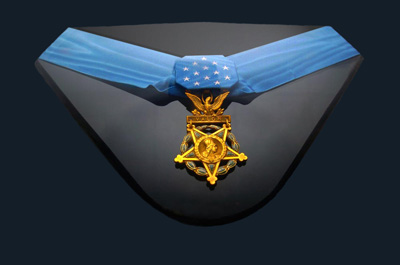
Medal of HonorTHE THREE-DAY MEMORIAL DAY WEEKEND IS HERE! As always Balladeer’s Blog marks the event with a few looks at neglected conflicts from America’s past. The servicemen who fought in those actions are just as deserving of being memorialized as those who fought in more familiar wars.  

KOREAN EXPEDITION OF 1871 – A Diplomatic Mission was sent to Korea that year, with the time period’s usual military escort of war ships on such ventures. The U.S. expedition was snubbed on the diplomatic side and then Korean shore batteries opened fire upon the military escort. The Americans launched reprisal raids for a few days then departed, leaving U.S. – Korean relations somewhat cold for years afterward. Medal of Honor Winners:

William F LukesWILLIAM F LUKES

Navy Rank: Landsman 

Citation: June 9th – 10th, 1871 – During the assault on the Han River Forts on Ganghwa Island, Lukes came to the assistance of injured Lieutenant Hugh McKee. The Landsman fought his way through heavy resistance to the fallen McKee’s location and refused to abandon his comrade.

Through swordplay, bayonet charges and hand-to-hand combat William received a severe sword cut to the head, a wound which would cause him to suffer convulsions for the rest of his life from the brain damage. When American reinforcements arrived they found the unconscious Lukes had suffered 18 bayonet wounds in the fighting.    Continue reading

4 Comments

Filed under Neglected History

WORLD WAR ONE: DIFFERENCES WITH WORLD WAR TWO

Since we are marking the 100 year anniversary of America’s entry into World War One here is Balladeer’s Blog’s handy guide to some differences and key players between that conflict and World War Two.
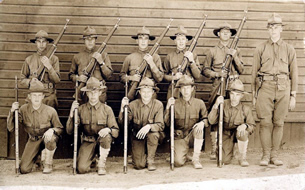
American Dough Boys WW I – Lasted from 1914 to 1918  *** WW II – Lasted from 1939 to 1945 

WW I – America entered the war in April, 1917 *** WW II – America entered the war in December, 1941

WW I – Italy and Japan fought on the side of the Allied Powers *** WW II – Italy and Japan fought on the side of the Axis Powers

WW I – Germany, under Kaiser Wilhelm, led the Central Powers *** WW II- Germany, under Adolf Hitler, led the Axis Powers

WW I – Sinking of the Lusitania *** WW II – Japanese attack on Pearl Harbor

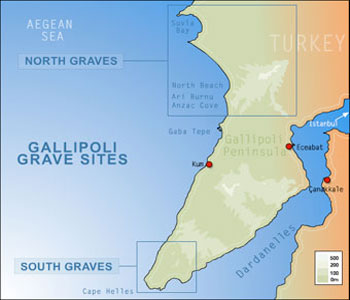
WW I – The Allied disaster at Gallipoli *** WW II – The Allied disaster Operation: Market Garden
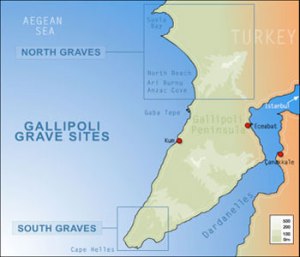
gallipoliWW I – Douglas MacArthur is an American Commander in charge of the Rainbow Division in Europe *** WW II – Douglas MacArthur is Commander in Chief of the entire Pacific Theater of Operations

WW I – George S Patton is an American Cavalry Officer who eventually becomes a tank commander *** WW II – George S Patton is an American Army commander leading troops in North Africa, Italy and France Continue reading

2 Comments

Filed under Neglected History

THE REVOLUTIONARY WAR: THE FORGOTTEN YEAR

continental armyHAPPY MEMORIAL DAY FROM BALLADEER’S BLOG! Here’s a look at the overlooked final year of fighting in America’s Revolutionary War. 
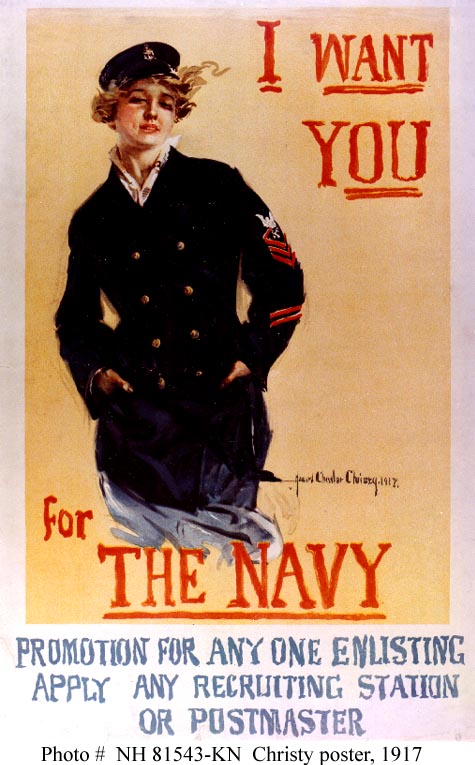
THE FORGOTTEN YEAR OF THE REVOLUTIONARY WAR (1781 – 1782) – My fellow Revolutionary War geeks and I are forever rolling our eyes at documentaries that act like Cornwallis’ surrender at Yorktown marked the end of that conflict. True, it was the last MAJOR battle of the war, but there were 13 more months of open bloodshed and another year after that before the peace treaty was signed. 

October 1781 to November 1782 saw General “Mad” Anthony Wayne’s campaign to fully recover Georgia from British Loyalists and Continue reading

6 Comments

Filed under Neglected History

U.S. NAVAL BATTLES OF WORLD WAR ONE

Navy in World War OneYes, Memorial Day Weekend is here so Balladeer’s Blog will once again feature a few seasonal posts. In keeping with my blog’s theme I will take a look at more military actions that don’t get the attention that others do. The members of the armed forces who died in those battles deserve to be remembered as fondly as those who perished in more renowned clashes. The army gets more attention than the navy and World War Two gets more attention than World War One so I’m shedding light on two neglected areas at once with this look at U.S. Navy battles of the First World War.

OCTOBER 15th, 1917 – America entered the war just six months earlier and the Navy had been transporting the American Expeditionary Force under General “Black Jack” Pershing to Europe, with additional Navy craft escorting those transport ships and fighting German U-Boats. On this date the USS Cassin encountered U-Boat 61 and, after an hour’s pursuit the German submarine turned to fight the Cassin. After a lengthy exchange of torpedoes and depth charges the Cassin was battered but still afloat, while the U-61 suffered substantial damage also, including the destruction of its conning tower, forcing the sub to break off the action and flee.

NOVEMBER 17th, 1917 – The USS Fanning and USS Nicholson clashed with the German U-Boat designated U-58 when eagle-eyed sailors spotted the German sub’s periscope above the water line. Depth charges from the two U.S. ships damaged the U-58 and forced it to surface and engage in standard ship-to-ship combat. The Fanning and Nicholson sank the U-Boat, becoming the FIRST United States ships to Continue reading

Leave a comment

Filed under Neglected History

MEDAL OF HONOR: A FEW RECIPIENTS FROM THE PHILIPPINE WAR

Medal of HonorMemorial Day is fast approaching! It’s a day for remembering the people who go out and actually DO something and acknowledge their service along with the physical risks and the political abuse heaped upon them. In keeping with my blog’s theme of addressing items that slip through the cultural cracks I’m showcasing a few of the Congressional Medal of Honor winners from the neglected war fought in the Philippines from 1899 to 1902.

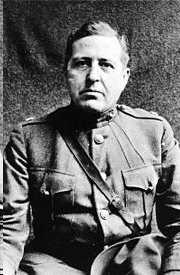
Hiram BearssHIRAM BEARSS (Correct spelling) – This Captain won the Medal for his actions on November 17th,1901 during a battle at the confluence of the Sohotan and Cadacan Rivers in Samar. Bearss led his men in a surprise attack on the enemy positions in the fortified cliffs. Relying mostly on bamboo ladders the Captain and his troops drove their opposition from their entrenched positions, literally “charging uphill” against enemy fire.

They also had to contend with the countless booby-traps lining the hills, many of which had been in place since the Spanish- American War of 1898. Those deadly traps took the form of pits, poison- tipped spears, trip-sprung vine nets loaded down with literally tons of stones and many others. The opposition in the caves honeymooning the cliffs needed rooting out as well with various forms of death lurking around every twist and turn in the caverns. Continue reading

4 Comments

Filed under Neglected History