
 For Balladeer’s Blog’s review of the first episode of this 1971-1973 series about non-Holmes detectives of the Victorian and Edwardian Ages click HERE
*** This review will cover the three Martin Hewitt mysteries that were dramatized in the first season of The Rivals of Sherlock Holmes.
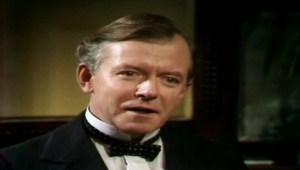 Episode: THE AFFAIR OF THE TORTOISE (November 22nd, 1971)
Detective: Martin Hewitt, created by Arthur Morrison. The first Martin Hewitt story was published in 1894.
Review: Martin Hewitt was created by the same author who created Horace Dorrington, covered in a previous review of The Rivals of Sherlock Holmes. Unlike Dorrington, Hewitt is honest and looks out for his clients’ interests more than his own. Unfortunately, as portrayed by Peter Barkworth, he’s also more than a little bland.
Well, “bland” might be uncharitable. “Professional” may be more fitting. Barkworth’s Hewitt is serene and reassuring, putting his clients at ease no matter what crisis they’re going through.
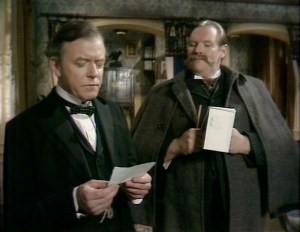 In The Affair of the Tortoise Martin Hewitt is hired by Miss Chapman (Cyd Hayman), a former governess that he has just located so she could receive an inheritance from a distant relative. Miss Chapman wants Hewitt to clear one of her neighbors, Goujon (Timothy Bateson), of murder charges.
Goujon is suspected of killing Rameau (Stefan Kalifa), a rowdy, hard-partying Haitian official residing in London. The drunken Rameau often played practical jokes on Goujon and recently went too far, causing the death of the Frenchman’s pet tortoise. Continue reading
 DYNAMO
 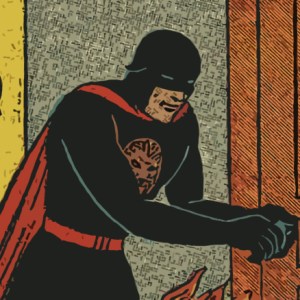 BLACK LION
  Balladeer’s Blog’s love of quality horror ARGs (Alternate Reality Games) has been well established. In the past I’ve examined productions like Local 58, Claridryl and Jack Torrance (NOT the character from The Shining.)
  The eerie storyline revolves around the disappearance of a beautiful young Polish woman named Ania Slowinska and the dark, seemingly supernatural forces behind it. As the tale unfolds it becomes apparent other women have fallen victim to the same forces, with one having had all her teeth removed after being murdered.
  Organs and limbs seem to be stolen for transplant use and replaced with porcelain or papier mache substitutes. This practice extends even to the heads of the victims … sometimes while they’re still alive. Obviously this is for adults only.
  HAPPY MEMORIAL DAY! As always Balladeer’s Blog marks the event with a few looks at neglected conflicts from America’s past. The servicemen who fought in those actions are just as deserving of being memorialized as those who fought in more familiar wars.
 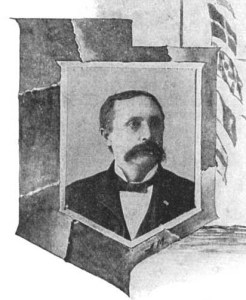 WILLIAM F LUKES
 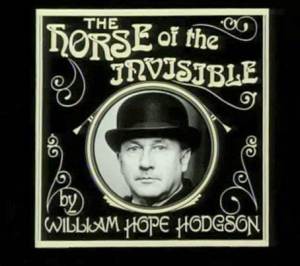 Episode: THE HORSE OF THE INVISIBLE (October 18th, 1971)
 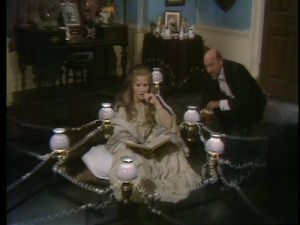 Given that this program is titled The Rivals of Sherlock Holmes the best way to describe The Horse of the Invisible would be as a hybrid of The Hound of the Baskervilles and The Speckled Band crossed with the John Silence series of occult mysteries.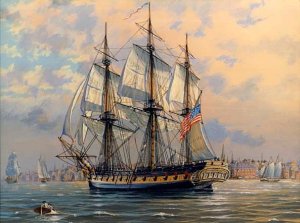
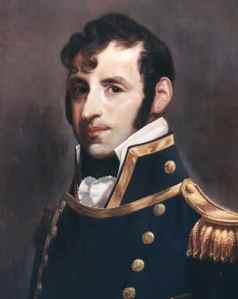
 MAY ??, 1800: The Adams defeated and captured the French ship Grinder.
  Memorial Day Weekend is fast upon us with this topical post from Balladeer’s Blog. This one covers some naval actions from America’s undeclared, neither fish nor fowl, quasi-Naval War with France. Often called Stoddert’s War in reference to Benjamin Stoddert, America’s first Secretary of the Navy, this conflict was waged largely in the West Indies.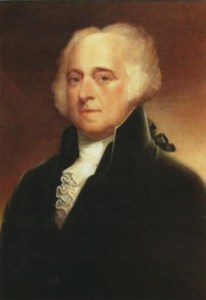
 PART FORTY-THREE: The targets of James Larkin Pearson’s version of the Fool Killer in the January of 1911 issue:
 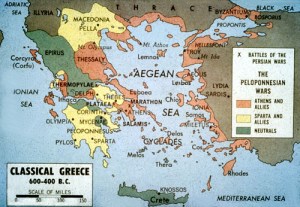 POLEIS – In this post I’m looking at Poleis (Cities), written by Eupolis, one of the Big Three of Ancient Greek Comedy along with Aristophanes and Cratinus. This satirical comedy is dated from approximately 422 B.C. to 419 B.C. Like so many other such comedies it has survived only in fragmentary form.
  As for how people can be “costumed” as cities, picture how it would be done with American cities. The chorus member representing New York might be depicted as the Statue of Liberty, Saint Louis as the Arch, Pittsburgh as a steel worker, Los Angeles as a brain-dead movie star and so on.
