
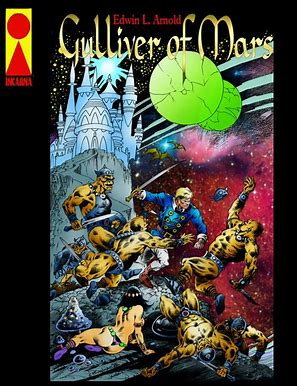
 GULLIVAR JONES ON MARS (1905) – Written by Edwin L Arnold. In Part One of this review I explored this novel’s alternate titles and its cult reputation, plus the controversy which used to rage over whether or not Edgar Rice Burroughs may have read this work and gained inspiration for certain elements of his John Carter of Mars series. I also dealt with the end of that controversy when it became better known that BOTH Arnold and Burroughs may have been inspired by Gustavus Pope’s 1894 novel Journey to Mars.
Here in Part Two is the review proper, including revisions I would have made to Edwin Arnold’s incredibly flawed story.
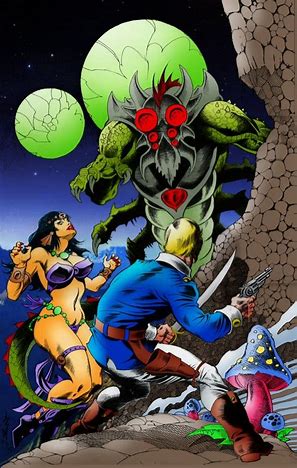 Gullivar Jones on Mars starts out in the late 1860s or early 1870s with U.S. Navy Lieutenant Gullivar Jones, a veteran of the Union forces in the Civil War, in New York City on shore leave. He comes into possession of a Turkish rug with unexplained mystical powers. While standing on the unrolled rug he wishes he was on Mars and the flying carpet transports him there. (?)
REVISION: I would keep all of Gullivar Jones’ background info the same, but instead of the Turkish rug I would have him be one of many New Yorkers drawn to a strange spacecraft which lands near the docks. The daring Jones would climb into the remote-controlled vessel, which would trap him inside, sedate him with gas and then fly off back to Mars. Continue reading
 Balladeer’s Blog’s reviews of my picks for The Top Five Harry Flashman Novels are still getting more than their share of attention. (Click
  Projected Title: FLASHMAN DOWN UNDER
  Once word reached California about Australia’s very own Gold Rush, Harry could have boarded a ship for Down Under either along with some of the Cali Aussies OR trying to slip away from them for his usual reasons – having slept with some of their women, conning them out of money, etc.
  GULLIVAR JONES ON MARS (1905) – Written by Edwin L Arnold, this novel was originally published under the title Lieut. Gullivar Jones: His Vacation. Years later, with the spelling of the lead character’s first name altered, it was published as Gulliver of Mars. Over the years it was revived under a variety of titles. I’m using the title that I prefer – Gullivar Jones On Mars.
  If Arnold had written this story decades later it could have been said that he was intentionally subverting the tropes of heroic sword & science epics. Unfortunately, this novel instead seems to be the victim of ineptitude on the author’s part.
  THE HOUSE ON THE BORDERLAND (1908) – Written by William Hope Hodgson. This tale is a terrific but often overlooked forerunner of Lovecraftian horror blended with traditional haunted house elements. Throw in material that puts the reader in mind of Madame Blavatsky’s and Aleister Crowley’s horror fiction and it’s a magnificent story for Halloween.
  Balladeer’s Blog’s Month-long celebration of Halloween nears its end for 2020 as I take a look at the most seasonal covers of the 1970s Marvel Comics series Son of Satan. The latest Marvel television show, Helstrom, is a very watered-down and weak version of their horror character Daimon Hellstrom, the son of Satan and a mortal woman. (They didn’t even use both “L’s” in the name Hellstrom for the series title, as if h-e-l-l is too shocking for public use.)
 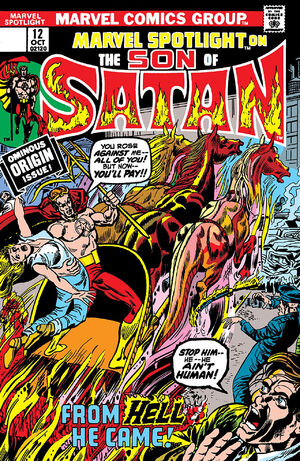 MARVEL SPOTLIGHT Vol 1 #12 (October 1973)
 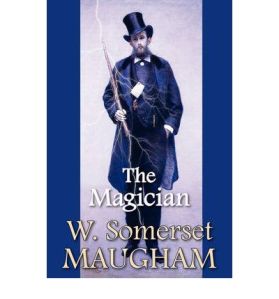 THE MAGICIAN – During Halloween Season a few years back Balladeer’s Blog reviewed the 1926 silent movie adaptation of The Magician. This time around I’ll review the original Somerset Maugham novel from 1908. It’s no secret at this late date that the malevolent sorceror of the title, Oliver Haddo, was based on the real-life Aleister Crowley. In fact, Crowley would accuse Maugham of plagiarism when he reviewed The Magician under the name Oliver Haddo, his fictional counterpart.
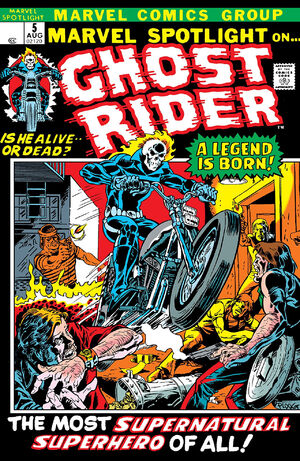 MARVEL SPOTLIGHT Vol 1 #5 (August 1972)
  THE DUST CLOUD (1912) – Halloween Month continues here at Balladeer’s Blog with a look at this tale written by British author E.F. Benson. The story deals with a ghostly automobile and for me the 1912 setting and several macabre touches give it a certain charm that makes it irresistible.
  As Halloween Month continues here’s a look at the very early years of the Marvel Comics horror character Blade the Vampire Slayer, who debuted in 1973. In retrospect I prefer the original “look” for this dynamic figure: the long coat, the bandolier of six teakwood knives and the green-hued “photo-optic visor” aka goggles aka biker shades. I’ve never liked swords for vampire slaying so the wooden knives used by Blade back then appeal to me more.
  alleged legal fights with the original creator of Blade, fights that eventually necessitated the changes in Blade’s look and trademark weaponry. Suffice it to say that the 1970s Blade strikes me as an “Indiana Jones of horror” with a vintage Pulp Magazine vibe. And football player Eric Dickerson would have made a perfect cinematic Blade if a movie had been done in the early 1980s, right after Raiders of the Lost Ark. With Pam Grier as Safron Caulder and Oliver Reed as Deacon Frost.
 TOMB OF DRACULA Vol 1 #10 (July 1973)
  Our vampire slayer arrived in time to save all but a few of the “beautiful people” from Dracula.
 Balladeer's Blog