
This weekend’s light-hearted, escapist superhero post from Balladeer’s Blog will look at the Charlton Comics heroes based on how they were BEFORE DC Comics bought them from the defunct company. I will cover more than just the heroes depicted in pastiche form in Watchmen.
 YELLOWJACKET
Secret Identity: Vince Harley
First Appearance: Yellowjacket Comics #1 (September 1944)
Origin: Best-selling mystery novelist Vince Harley suffered a home invasion at his mansion home, where he indulged in his longtime passion of raising bees. During the stress of that attempted robbery, Harley’s superpowers manifested as a self-defense mechanism. From then on, he fought crime as the costumed superhero Yellowjacket.
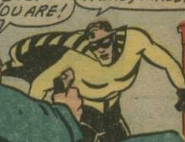 Powers: Yellowjacket was a probable mutant with the power of mentally controlling bees. He used his armies of those insects to sting, distract or harass opponents in battle. In addition, this hero was in peak physical condition and excelled at unarmed combat. Continue reading
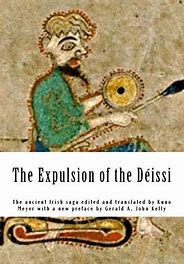 THE EXPULSION OF THE DEISSI (Tucait innarba na nDessi i mMumain ocus aided Chormaic) – Once believed to be a genuine historical narrative, The Expulsion of the Deissi has long been recognized as yet another case of mere quasi-historical myth-making.
  THE VISION OF ADOMNAN (Fis Adomnain) – This was a tale of the vision that Saint Adomnan supposedly had during his lifetime (c 679-704 A.D.). Several centuries before Dante’s Divine Comedy (Inferno, Purgatorio, and Paradiso), The Vision of Adomnan depicted the future saint being conducted through Heaven, Purgatory, and Hell so that he could share this “vision” with others.
 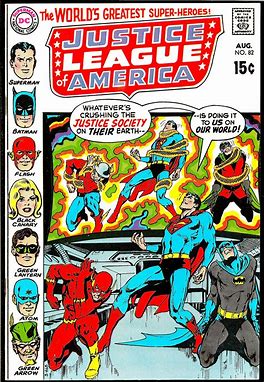 JUSTICE LEAGUE OF AMERICA Vol 1 #82 (August 1970)
  THE VOYAGE OF MAEL DUIN (Immram curaig Mail Duin) – Dated to around the late 900s A.D. or earlier, this story deals with the epic quest of Mael Duin (aka Maildun and Maeldune) and the crew of his ship as he seeks revenge on his father’s killers. This lengthy epic deserves to be as well-known as the Odyssey or the Quest for the Golden Fleece.
 Mael Duin matured, and proved better than his presumed siblings at athletic, martial and academic competitions. Losing their temper over this, one of our hero’s foster brothers ridiculed Mael Duin for not even knowing who his real father and mother were.
  Yesterday’s blog post about the dystopian film Golem (1980) called to mind a pair of Robert Ludlum’s espionage novels from the 1970s. Both of them are spy thrillers but reflected Ludlum’s distrust of both left-wing and right-wing fanatics. Sadly, they also predicted a lot of what citizens around the world face right here in 2023. It’s not just science fiction that can prove virtually prophetic.
 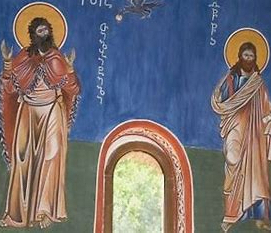 TWO SORROWS OF THE KINGDOM OF HEAVEN (Dá brón flatha nime) – This is a variation of the tales about Elijah and Enoch, who asked to be risen physically to Heaven while still alive. Because of their virtuous lives, their desire was fulfilled, but their “sorrows” centered around the limitations of their physical forms amid the wonders of Heaven. For just one example, they cannot fly like the angels and souls around them.
  Next, he reads to them about Christ returning for the Final Judgment accompanied by the Hosts of Heaven. Each human who appears before him is accompanied by a personal angel and a personal devil. The angel speaks of the person’s good deeds and the devil about their bad deeds. Jesus then assigns souls to Heaven or Hell.
 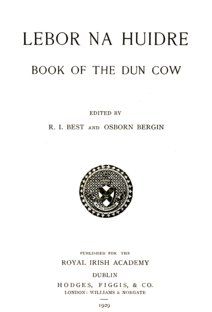 BOOK OF THE DUN COW (Lebor na hUidre) – In the past, Balladeer’s Blog has done deep dives into gods, goddesses and epics from
 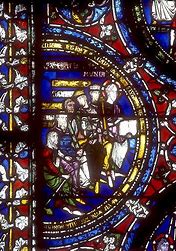 SIX AGES OF THE WORLD (Sex aetates mundi) – This was one of the many texts from many Christian-influenced cultures that viewed the world from Creation through Jesus Christ as being Six Ages. In this fictional context each age was roughly 1,000 years.
 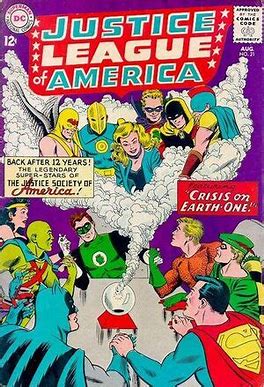 JUSTICE LEAGUE OF AMERICA Vol 1 #21 (August 1963)
 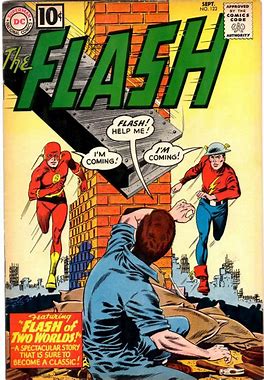 The company’s method of adapting more “up to date” versions of their Golden Age heroes without losing the copyrights on those figures was to state that the original versions of all their old heroes came from an alternate Earth, designated Earth-Two. The Earth with the newer heroes was called Earth-One, since they were the newer, CURRENT versions.
 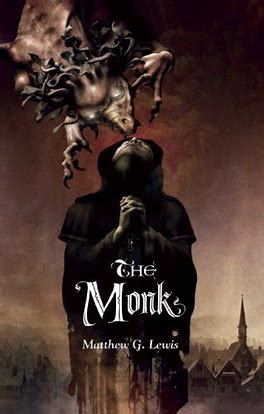 THE MONK (1796) – Written by Matthew G. Lewis. Though The Monk was preceded by other works of Gothic Horror like The Castle of Otranto (1764) and The Necromancer (1794), Lewis’ novel cranked up the supernatural elements a great deal. It also painted the Catholic clergy in extremely unflattering terms, at least in the initial edition.
  Balladeer's Blog