
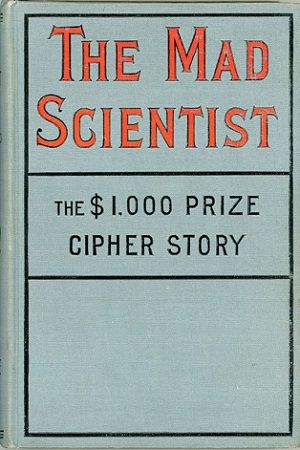
 THE MAD SCIENTIST: A TALE OF THE FUTURE (1908) – Written by Raymond McDonald, a pen name for two Canadians – Raymond Alfred Leger and Edward Richard McDonald. An unusual aspect of this novel was the publisher’s offer of a thousand-dollar reward for any reader who deciphered and provided the best breakdown of a coded message in the story.
Despite being penned by two Canadians, this tale is set mostly in the United States of the near future. An interesting benefit to authorship by two non-Americans of the time is the rare objectivity they bring to issues like labor vs management, socialism vs capitalism and both the creative AND destructive aspects of scientific progress.
The Mad Scientist: A Tale of the Future inspires genuine examinations of all sides of those subjects and doesn’t devolve into a simplistic “good guys vs bad guys” narrative until dramatic necessity demands it in the finale.
The title character is Maxim Folk, a scientific genius who embodies the cliche of pushing so hard to show how he can do something that he neglects to ask IF he should do it. His work in the properties of electricity, matter and light waves is decades ahead of his colleagues. Continue reading
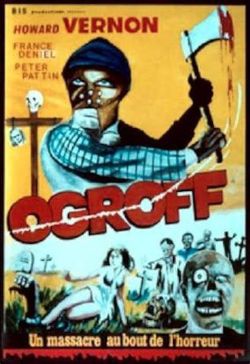 OGROFF aka The Mad Mutilator (1983) – This thoroughly bizarre French movie whose maker somehow conned horror icon Howard Vernon into appearing is easily one of the worst films ever made. Norbert G. Moutier owned a video store in France and published a horror fanzine.
 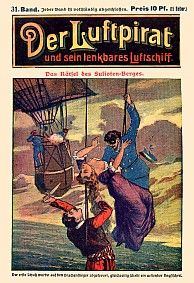 RIDDLE OF THE SULIOTEN MOUNTAIN – Kapitan Mors and his crew land their air ship on a mountain on a Greek island between Korfu and the Ionian Isles. A Suliot sponge diver sees the Luftschiff land and informs the villainous autocrat who imposes his own iron rule on the locals.
 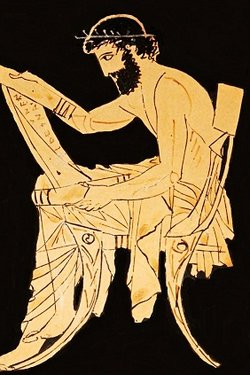 Welcome to another one of Balladeer’s Blog’s posts about ancient Greek comedies, this one written by Cratinus, who was one of the Big Three of Attic Old Comedy with Aristophanes and Eupolis the other two.
 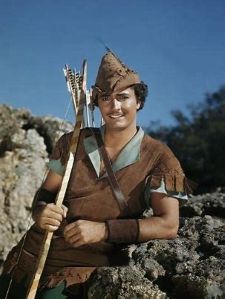 Today, actor and director John Derek is remembered mostly because of his wives – Bo Derek, Ursula Andress, Linda Evans and Pati Behrs.
 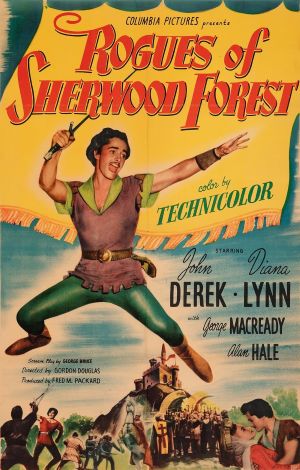 ROGUES OF SHERWOOD FOREST (1950) – John starred as Robin, Earl of Huntington, the son of Robin Hood. When Richard the Lionheart passes away in 1199 A.D. King John (George Macready) returns to his old ways of oppressing and heavily taxing the citizens. He also imports an army of foreign mercenaries faithful only to him, not England.
  The Great Garloo was a two-feet tall remote controlled “monster” toy from Marx. Garloo could be controlled to walk, bend down and pick up things. For adults, boring, but for kids, it must have been the best gift they got that year.
  EVERGLADES aka Lincoln Vail of the Everglades (1961-1962) – This short-lived syndicated series stood out from other law-enforcement programs of its era by not being set in either a big city or the American West. Constable Lincoln Vail of the Everglades County Patrol policed the Florida Everglades in his airboat, giving this series its signature visual appeal.
  In the middle 1980s/ Way down on Level 31 … There was The Texas 27 Film Vault. Balladeer’s Blog continues its salute to the FORTIETH anniversary year of this neglected cult show that debuted on Saturday February 9th, 1985.
  There’s also a Great White Hunter as the hero and a mad scientist whose inventions include a machine that turns black people into white people!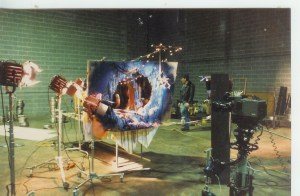
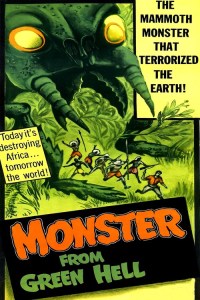
 THE MOVIE: Monster From Green Hell was one of the many, many “Big Bug” films of the 1950s. Most of those “bugs” on the loose were mutated to giant size by atomic radiation but in this flick it was cosmic radiation instead which was the culprit.
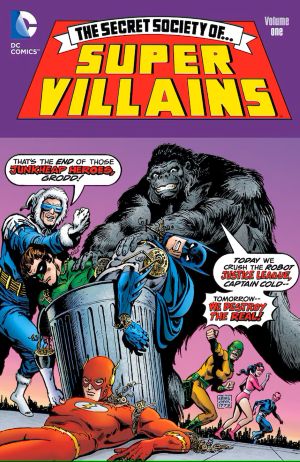 SECRET SOCIETY OF SUPER-VILLAINS Vol 1 #1 (Jun 1976)
 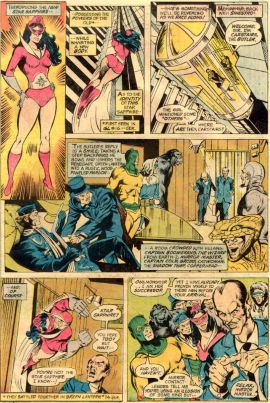 Identical invitations are received by the supervillains called Gorilla Grodd, Copperhead, Sinestro and others. Everyone but Catwoman accepts. When they are all assembled in the aforementioned Citadel they meet the new woman using the Star Sapphire nom de guerre. They also meet their butler, Carstairs.
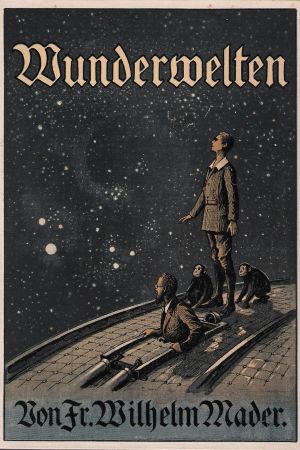 WONDERWORLDS (Wunderwelten) (1911) – Written by Friedrich W. Mader. This novel was published in its native German in 1911 but not translated into English until 1932 under the title Distant Worlds. Some sources mistakenly list 1932 as its original year of publication.
  Balladeer's Blog