
Balladeer’s Blog takes a look at the neglected Doberman Gang series of movies.
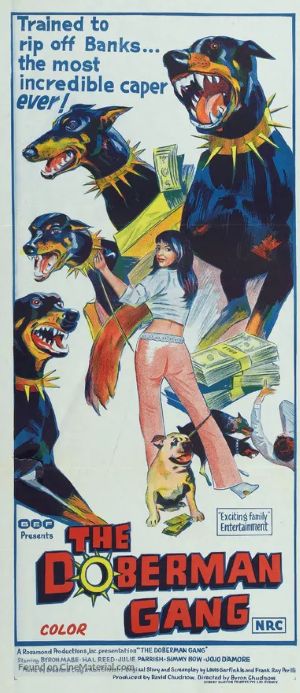 THE DOBERMAN GANG (1972) – I’m a lifelong dog lover, so let me point out that this was the very first film to carry the American Humane Association’s guarantee that “No animals were harmed in the making of this film.” Despite spawning a franchise, The Doberman Gang flies by the proverbial seat of its pants, and while it’s good to know that no dogs were harmed this flick features a few Doberman attacks on humans that seem too gritty.
This movie bounces erratically between Family Friendly and low-budget gimmick production. Eddie (Byron Mabe) leads his bank robber accomplices Sammy and JoJo (Simmy Bow and JoJo D’Amore) who idiotically screw up heists that seem like sure things.
Fed up with the way that human error keeps messing up his carefully planned capers, Eddie strikes upon the idea of using trained dogs to rob banks for him. That may sound like the premise of a light-hearted Disney movie from the 1970s but The Doberman Gang retains a low-life criminal air that’s too grimy at times. Continue reading
 ### 1. GRACE COLLEGE LANCERS ### 2. BETHEL (IN) PILOTS (Riverboat Pilots) ### 3. FREED-HARDEMAN UNIVERSITY LIONS ### 4. AVE MARIA UNIVERSITY GYRENES ### 5. OKLAHOMA WESLEYAN UNIVERSITY EAGLES ###
  6. ARIZONA CHRISTIAN UNIVERSITY FIRESTORM ### 7. UNIVERSITY OF THE CUMBERLANDS PATRIOTS ### 8. HOPE INTERNATIONAL UNIVERSITY ROYALS ### 9. MONTANA TECH OREDIGGERS ### 10. OREGON TECH HUSTLIN’ OWLS ###
  ### 1. NORTH AMERICAN UNIVERSITY STALLIONS ### 2. BRYANT & STRATTON COLLEGE (Buffalo) BOBCATS ### 3. NEWPORT NEWS APPRENTICE SCHOOL BUILDERS (Shipbuilders) ### 4. BLOOMFIELD COLLEGE BEARS ### 5. SOUTHEASTERN ILLINOIS COLLEGE FALCONS ###
 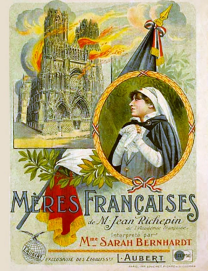 MERES FRANCAISES (1917) – This silent film was made and set during World War One. It starred the legendary stage actress Sarah Bernhardt, whose career spanned from 1862 to 1923. She was practically royalty when she deigned to appear in a few silent films.
 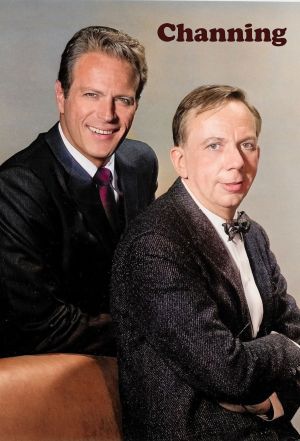 CHANNING (1963) – Also known as The Young and the Bold this hour-long drama series was a college version of Mr. Novak, against which it went head-to-head. B-Movie titan Jason Evers starred as Professor Joseph Howe, a Korean War veteran now teaching at fictional Channing College. Henry Jones portrayed Fred Baker, his former professor and now Channing Dean.
 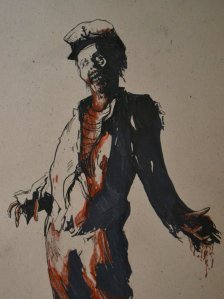 THE SHIP OF SILENT MEN (1920) – Written by Philip M Fisher. The crew of a ship called the Lanoa set out from Hawaii. A few days later an abnormally powerful electrical storm strikes, leaving the area unusually cold in its wake.
 KNOCKING OFF NUMBER TWO – The 11th ranked INDIANA WESLEYAN UNIVERSITY WILDCATS visited the number 2 team in the nation – the BETHEL (IN) PILOTS (Riverboat Pilots). The Wildcats put Bethel U. on Upset Alert with their 47-37 Halftime lead, then consummated the Upset 96-86. Caedmon Bontrager led Indiana Wesleyan with 29 points.
  CENTURY CLUB – Teams scoring at least 100 points in Regulation: The (5) OHIO CHRISTIAN UNIVERSITY TRAILBLAZERS edged the visiting UNIVERSITY OF CINCINNATI AT CLERMONT COUGARS 103-102 ### Meanwhile, the (4) NELSON UNIVERSITY LIONS defeated the UNIVERSITY OF SCIENCE & ARTS OF OKLAHOMA DROVERS 106-96 ### And the (6) MALONE UNIVERSITY PIONEERS won 107-80 over the KENT STATE AT TUSCARAWAS GOLDEN EAGLES.
 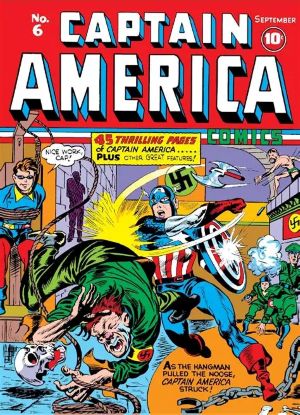 CAPTAIN AMERICA COMICS Vol 1 #6 (Sep 1941)
 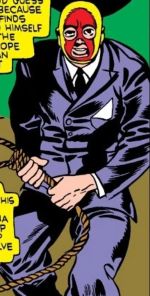 Story 3: Captain America Meets the Hangman
 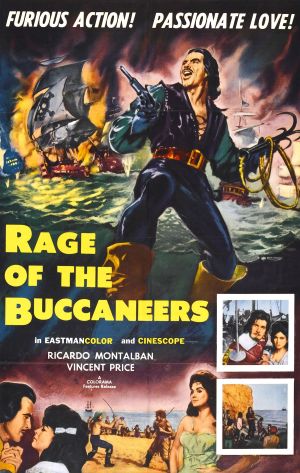 RAGE OF THE BUCCANEERS (1961) – Montalban stars as 1600s buccaneer Captain Gordon aka the Black Pirate (no relation to
  Romero’s most dangerous ally is Captain Tortuga (Jose Jaspe), a ruthless slaver who has clashed with Captain Gordon over the years. Montalban shines as the hero viewers can’t help but cheer for, especially when he thwarts the efforts of slavers to dump their chained human “cargo” overboard to drown rather than have our pirate captain liberate them.
  My recent blog post about the short-lived General Mills cereal mascots
  BRIDE OF FRANKENBERRY
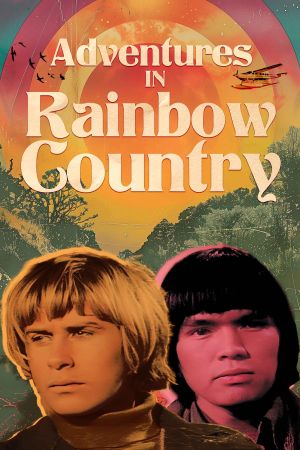
 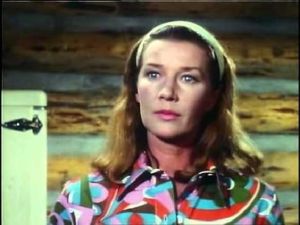 ADVENTURES IN RAINBOW COUNTRY (1970-1971) – This forgotten Canadian series starred LOIS MAXWELL herself as Nancy Williams, a widowed single mother raising her teenage son and daughter in a home on Lake Huron in the late 1960s.
  STANDOUT EPISODES:
