
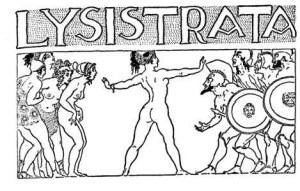
Lysistrata
LYSISTRATA (c 411 B.C.) – When I first started examining ancient Greek comedies here at Balladeer’s Blog I jokingly stated that surely readers would want me to start with Aristophanes’ most notorious and bawdiest satire.
Lysistrata was written by the Big A himself, Aristophanes, and this comedy always makes a perfect introductory play for newcomers to Ancient Greek Comedy. Part of its accessibility to modern audiences obviously comes from the risqué premise of the play, of course. For me the notion that we can understand and laugh at the same simplistic but brilliant story that Athenian audiences from over 2,400 years ago laughed at and appreciated embodies the value of these ancient works.
THE PREMISE
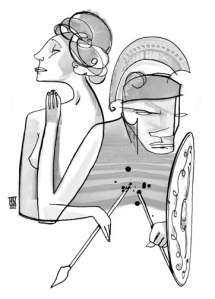 By 411 BC the Peloponnesian War between Athens (and its allied city-states) and Sparta (and its allied city-states) had been raging for roughly 20 years. The war provides the backdrop for many of Aristophanes’ surviving comedies and is especially relevant where Lysistrata is concerned. Weary of the long, drawn-out conflict the women of Athens, led by the title character Lysistrata (supposedly based on Lysimache, the Priestess of Athena in Athens at the time), join forces with the women of Sparta and decide to withhold sex from the men until they agree to bring an end to the war.
THE PLAY Continue reading
 THE KNIGHTS – In The Knights Aristophanes pioneered a new sub-genre of Attic Old Comedy: the Demagogue Comedy. The villain of this masterpiece of political satire was a figure called the Paphlagonian, who was patterned on Cleon, a notorious Athenian politician of the time period.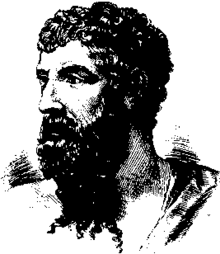
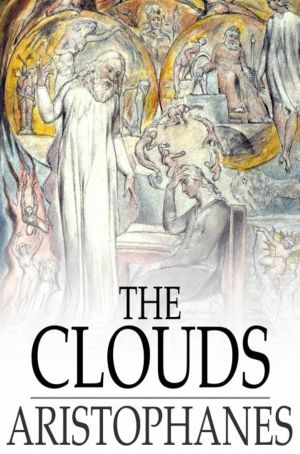
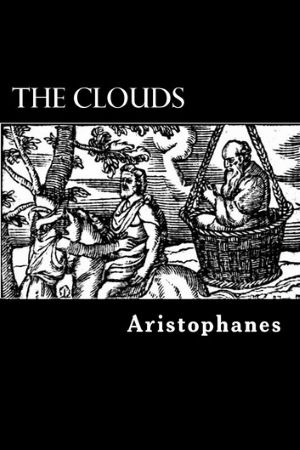 The Clouds was written by Aristophanes around 423 BC and next to Lysistrata is the Big A’s most- discussed satire, mostly because of its lampooning of the philosopher Socrates, a contemporary of Aristophanes.
  In the ancient Greek democracy Athenian citizens were expected to represent themselves in court in both criminal and civil proceedings.
 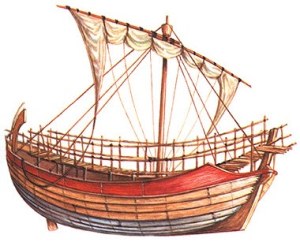 Merchant Ships was written and publicly staged in approximately 424 B.C. to 421 B.C. according to the available data. It was another of Aristophanes’ comedies protesting the pointlessness of the Greek city-states warring among themselves instead of uniting against the encroachments of the Persian Empire.
 What Meet the Beatles was to the British Invasion, The Banqueters was to Attic Old Comedy. (Yes, I love silly comparisons) This play was the first comedy written by Aristophanes, the leading light of ancient Greek comedy, and was performed at the Lenaea festival of 427 BC when Aristophanes was nineteen years old. The Banqueters won second prize, making it a very auspicious debut for the man often considered the greatest political satirist of the ancient world.
  THE BANQUETERS – By Aristophanes. This was the very first comedy from the Athenian whose name is synonymous with ancient Greek comedies, especially political satires. The nineteen-year-old presented a landowner from Athens whose two sons were being introduced to his phratry brothers at a banquet dedicated to Herakles.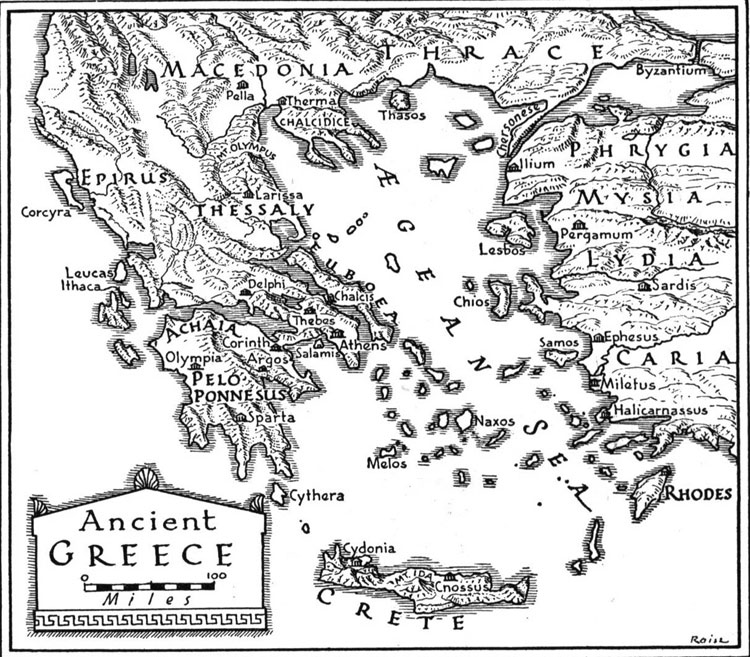
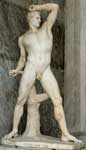 WEALTH GODS (PLUTOI) – By Cratinus. In this satirical comedy the Titans are depicted overthrowing Zeus in a metaphor for the fall of the political leader Pericles. This was a reference either to his actual death or to the loss of his position as Strategos (Commander in Chief) depending on which year you go with for the comedy.
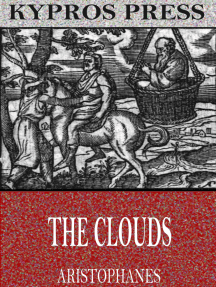 The Clouds was written by Aristophanes around 423 BCE and next to Lysistrata, which I examined last week, is the Big A’s most- discussed satire, mostly because of its lampooning of the philosopher Socrates, a contemporary of Aristophanes. Many modern readers, who have been programmed to sneeringly “deconstruct” old works of art rather than understand them, love to regard this comedy with hostility. They accuse Aristophanes of being “anti – intellectual” for subjecting Socrates in particular and the Sophist philosophers in general to the same satirical criticism that every other aspect of Athenian society was subjected to in comic plays.
  In the ancient Greek democracy Athenian citizens were expected to represent themselves in court in both criminal and civil proceedings.
  Balladeer’s Blog presents another examination of an ancient Greek political satire. This comedy by Aristophanes was one that I was planning on covering very soon when I started posting my reviews of Attic Old Comedy years ago. For various reasons it kept falling by the wayside.
  More than 2,300 years before George Orwell’s Animal Farm and 1984, Aristophanes was dealing with some of the same political themes.
  Balladeer's Blog