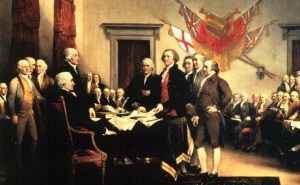
 For the most part the silly conspiracy theories about the establishment of the United States are good only for laughs. One of my favorites, however, features a speech from a mysterious figure usually associated with Freemasons, Rosicrucians and/or the Bavarian Illuminati of Adam Weishaupt.
I don’t believe for one minute that such an enigmatic man showed up and tipped the balance toward ratifying the Declaration of Independence with a fiery, impassioned speech. However, I DO believe that the wording of that fictional tirade is pretty moving and nicely captures the feel of Independence Day.
Here is the relevant part. I’m omitting the ridiculous section where this mystery man supposedly made Nostradamus-style predictions about America’s future.
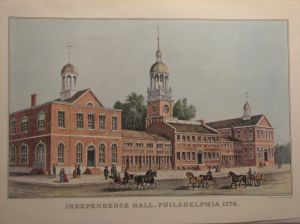 “They (the British) may stretch our necks on all the gibbets in the land. They may turn every rock into a scaffold, every tree into a gallows, every home into a grave and yet the words of that parchment can never die!”
“They may pour our blood on a thousand scaffolds and yet from every drop that dyes the axe a new champion of freedom will spring into birth. The British king may blot out the stars of God from the sky but he cannot blot out His words written on that parchment there. The works of God may perish … His words, never!”
“The words of this Declaration will live in the world long after our bones are dust. To the mechanic in his workshop they will speak hope. To the slave in the mines, freedom. But to the coward kings these words will speak in tones of warning they cannot choose but hear.” Continue reading →

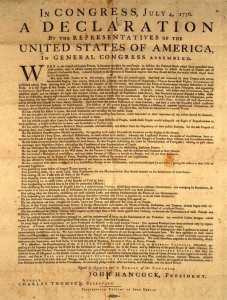 Another look at an individual state’s representatives who signed the Declaration of Independence:
  SECOND BATTLE OF MACHIAS – Previously I covered the First Battle of Machias from June of 1775. After that action Machias became a busy base for Privateering vessels. This second battle was fought August 13th-14th, 1777.
 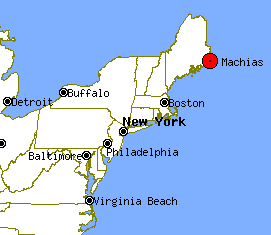 FIRST BATTLE OF MACHIAS – This battle took place June 11th and 12th of 1775, less than two full months after the Battles of Lexington & Concord kicked off our Revolutionary War. At this point in the 1700s Maine was still technically a Department of Massachusetts, which is why Maine is not listed as one of the original 13 colonies despite all the action that took place there.
  Two thousand fishermen from Cape Cod had gone off to enlist in the Continental Army, and in their absence the British had repeatedly landed raiding parties to harass the citizens.
 It may be my fondness for mythology that makes me love to watch particular movies around particular holidays. I say that because many of the well- known myths were recited on ancient holidays when their subject matter was relevant to those holidays. The stories helped accentuate the meaning of the special events and that’s the way I use various movies.
  FORT GRISWOLD – Fort Griswold was an American fortess on Groton Heights in Connecticut overlooking the Thames River. On September 6th, 1781 the American traitor General Benedict Arnold and his British troops raided Groton and burned New London while battling the massively outnumbered Rebel troops in the fort.
 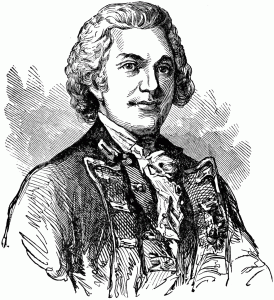 CAPTAIN SILAS TALBOT – Even if he had never gone on to a career in Privateering, Talbot would still have been a fascinating figure from Revolutionary War history. On June 28th, 1775 Silas was commissioned as a Captain in a Rhode Island regiment and served in the military operations which ended with the British surrender of Boston in March of 1776.
 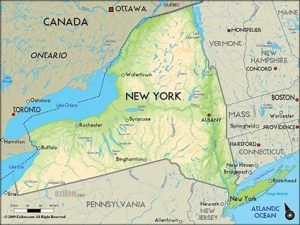 NEW YORK – 1. William Floyd – Prior to being sent to the 2nd Continental Congress in 1776 Floyd was a Militia General who, earlier in the year, had led New York troops in successfully driving off British forces in the Battle of Gardiner’s Bay on Long Island.
  Balladeer's Blog