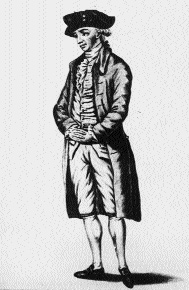
 The 4th of July is fast approaching, so Balladeer’s Blog will be squeezing in a few more holiday-themed posts up til then. In the past I’ve examined Revolutionary War privateers like John Haraden and Silas Talbot. This time around I’ll take a look at the controversial Luke Ryan.
Ryan was born in 1750 in Rush, Ireland and by the late 1770s he was an established smuggler. Captaining his ship the Friendship, Luke got commissioned in February of 1778 as a privateer for the British but would later switch to the American side.
The Friendship, with its 14 cannon and 60-man crew, sailed as a privateer vessel for King George III until April of 1779. Captain Ryan couldn’t resist pulling a side hustle against his ostensible employer England by smuggling some goods from Dunkirk, France to Rush, Ireland.
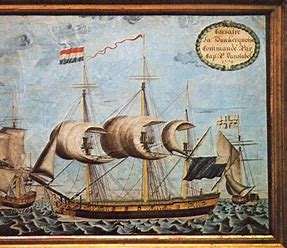 Some of Ryan’s crew didn’t like the way the spoils were divided from this extracurricular activity and informed the authorities about Luke’s smuggling offense. The Friendship was seized and hauled to Poolbeg and all crew members on board were arrested, then thrown into Black Dog Gaol. This happened on the night of April 11th into 12th.
Luke was not among those men on board at the time, so he organized a raid to bust his men free from Black Dog. The raid succeeded, following which the freed men and their liberators went to Poolbeg where they stole aboard the impounded Friendship and overpowered the guards.
The recovered vessel sailed to Rush before daybreak and with 18 additional men signing on, it was on to Dunkirk. Captain Ryan and his crew had committed a hanging offense by taking back the Friendship, so they decided to switch sides and become privateers for England’s enemies. Continue reading →

 FEBRUARY 1st – At Drake’s Farm near Metuchen, New Jersey. In reaction to British losses throughout January as part of what some have called the Forage War, British General William Erskine sought to lure American forces into a trap.
 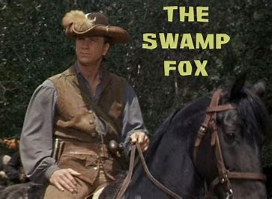 THE SWAMP FOX (1959-1961) – With the 4th of July fast approaching, it’s past time for a seasonal post. The Swamp Fox is a piece of Forgotten Television that ran sporadically on Walt Disney’s programs. Eight episodes were produced over two years with Leslie Nielsen in the lead role and each one filled a 1-hour time slot.
 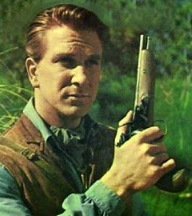 Marion and his men knew the South Carolina swamplands like the proverbial backs of their hands and could strike the British then disappear deep into the swamps, foiling any pursuit. Obviously, as a television production The Swamp Fox featured a very romanticized version of Marion and his escapades.
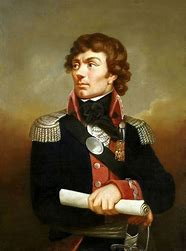 THADDEUS KOSCIUSZKO (1746-1817) – As my last name makes clear, I’m of Polish American descent. Last 4th of July I made a blog post about
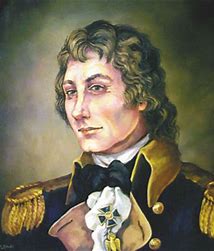 After receiving his education and military training in Europe, Kosciuszko sailed for America in June 1776. Unlike his fellow Pole Casimir Pulaski, he had missed out on serving in the Bar Uprising in Poland and was enthusiastic about fighting in the Revolutionary War. Poland’s long history of religious tolerance made Thaddeus feel a certain kinship with those who held similar sentiments in our emerging nation.
 ABRAHAM CLARK – Abraham’s two sons Aaron and Thomas were captured during the war and may have perished while captives of the British. Accounts vary and some sources even claim he had three sons die in the war.
 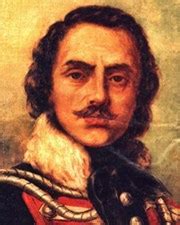 CASIMIR PULASKI (1747-1779) -Obviously from my last name I’m Polish-American and therefore grew up immersed in the role played by Casimir Pulaski and Tadeusz Kosciuszko in America’s War of Independence. I’m often surprised by how comparatively unknown they are to the public at large, so in keeping with Balladeer’s Blog’s theme here’s a look at Pulaski. I’ll cover Kosciuszko separately.
 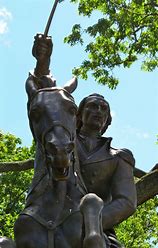 The war never became as romanticized as the later Greek War of Independence from the Ottoman Turks, but the conflict drew attention to Russian totalitarianism and to the abilities of Polish officers like Casimir Pulaski. In fact, it took an invasion by Russian-allied Austria and Prussia to help Russia put down the rebellion in 1772.
 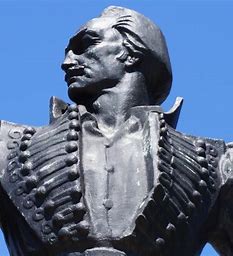 Franklin was impressed with what he could learn about Pulaski and sent him on to America with a letter of introduction to George Washington. Franklin described the Pole as “an officer famous throughout Europe for his bravery and conduct in defence of the liberties of his country against the three great invading powers of Russia, Austria and Prussia … may be highly useful to our service.”
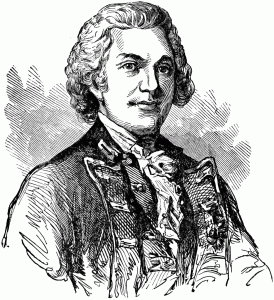 CAPTAIN SILAS TALBOT – Even if he had never gone on to a career in Privateering, Talbot would still have been a fascinating figure from Revolutionary War history. On June 28th, 1775 Silas was commissioned as a Captain in a Rhode Island regiment and served in the military operations which ended with the British surrender of Boston in March of 1776.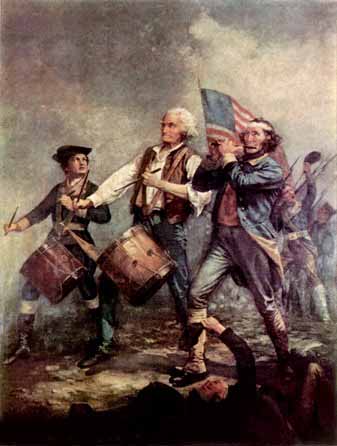
 Ethan Allen and his Green Mountain Boys and Daniel Morgan’s Kentucky Rifles, a unit that will see impressive action throughout the entire war, from Canada to the Deep South.
