Category Archives: Mythology

MERINA MYTHOLOGY: TOMPONDRANO

Tompondrano

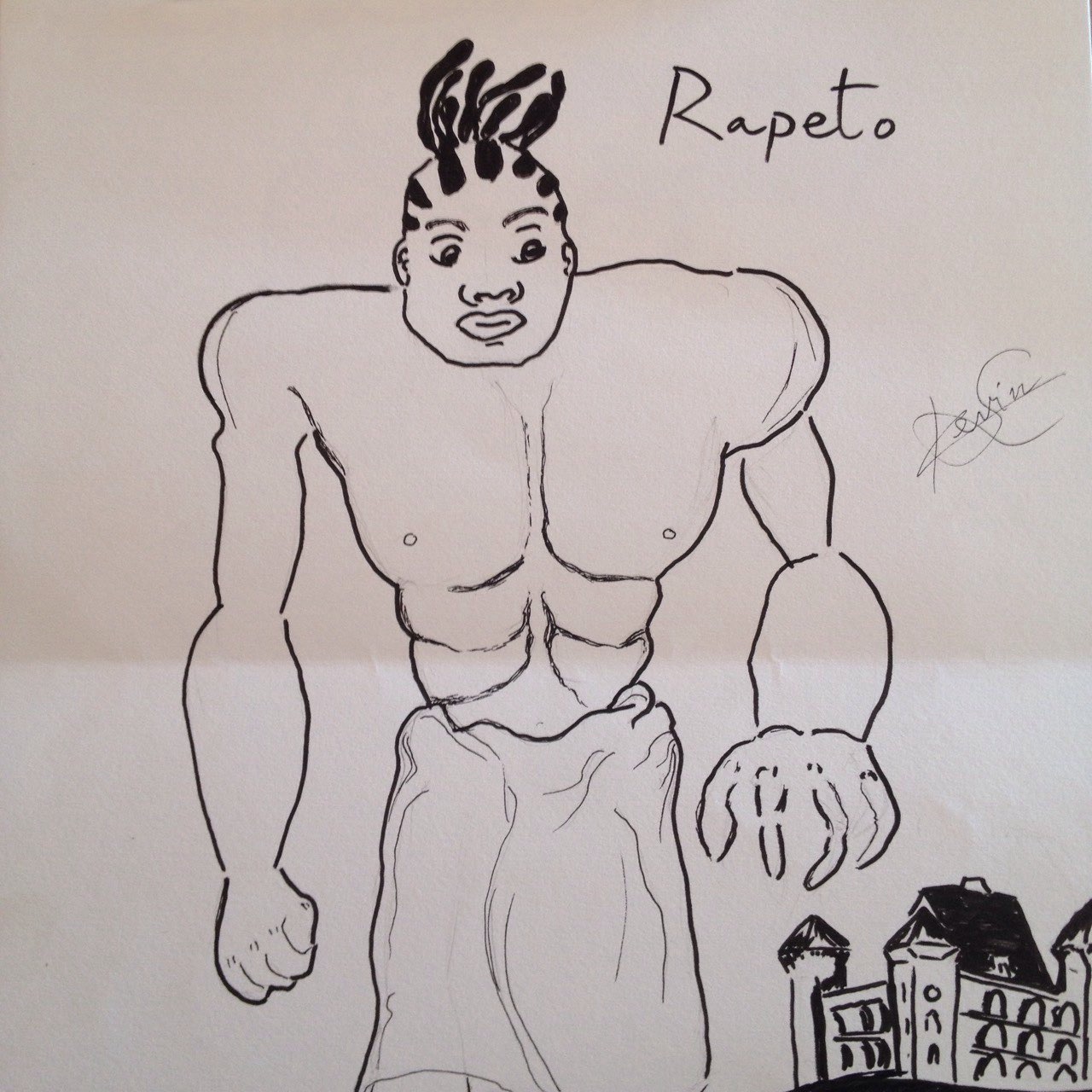
The French who first came into contact with the people of Madagascar mistook Tompondrano for Leviathan from Christian mythology.

TOMPONDRANO – “Lord of the waters.” The supreme snake deity in Merina mythology. Not only were all other serpents subordinate to Tompondrano but he often acted as an ambassador between snakes and human beings, negotiating the end to conflicts between the two groups. 

A major myth about this deity includes its role in advising the Vazimba how to use sacrifices to appease gods and demons. The Vazimba were little people who were previously the dominant race of Madagascar. They are similar to the Menehune in Hawaiian myths and to “little people” who figure into mythology and folklore from around the world.   Continue reading

10 Comments

Filed under Mythology

AINU GODS: THE THREE BROTHERS

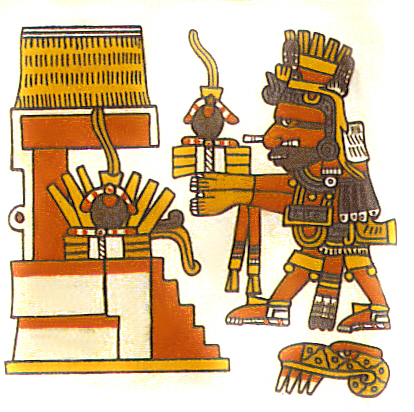
AinuMy recent item about Ainu deities has proven so successful here’s a quick take on three of the lesser deities from the Ainu pantheon, the three brothers named Seremak, Urespa and Usapki.

SEREMAK – The patron god of vigor, vitality and general physical fitness. He had a flattened belly (“Six-Pack abs of the Gods!”), nine pairs of wings and wielded a sword and a spear made of mugwort. Continue reading

2 Comments

Filed under Mythology

EVEN MORE ALTERNATE EASTERS

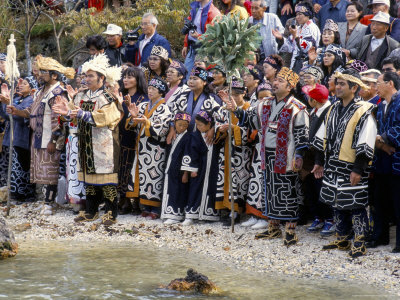
Jesus ResurrectedTry imagining how different modern-day Easter celebrations might be if any of the following Gospels had been deemed “authentic” (lol) instead of just the traditional four. This continues Balladeer’s Blog’s annual examination of the Apocryphal Gospels that provide the best opportunities for comparative mythology. 

THE GOSPEL OF PETER – This Gospel was in wide use in the Middle East until at least the 2nd Century A.D. Its contents would still be completely unknown if not for a fragment of the Gospel being discovered in the tomb of a Christian monk in Egypt late in the 1800’s.

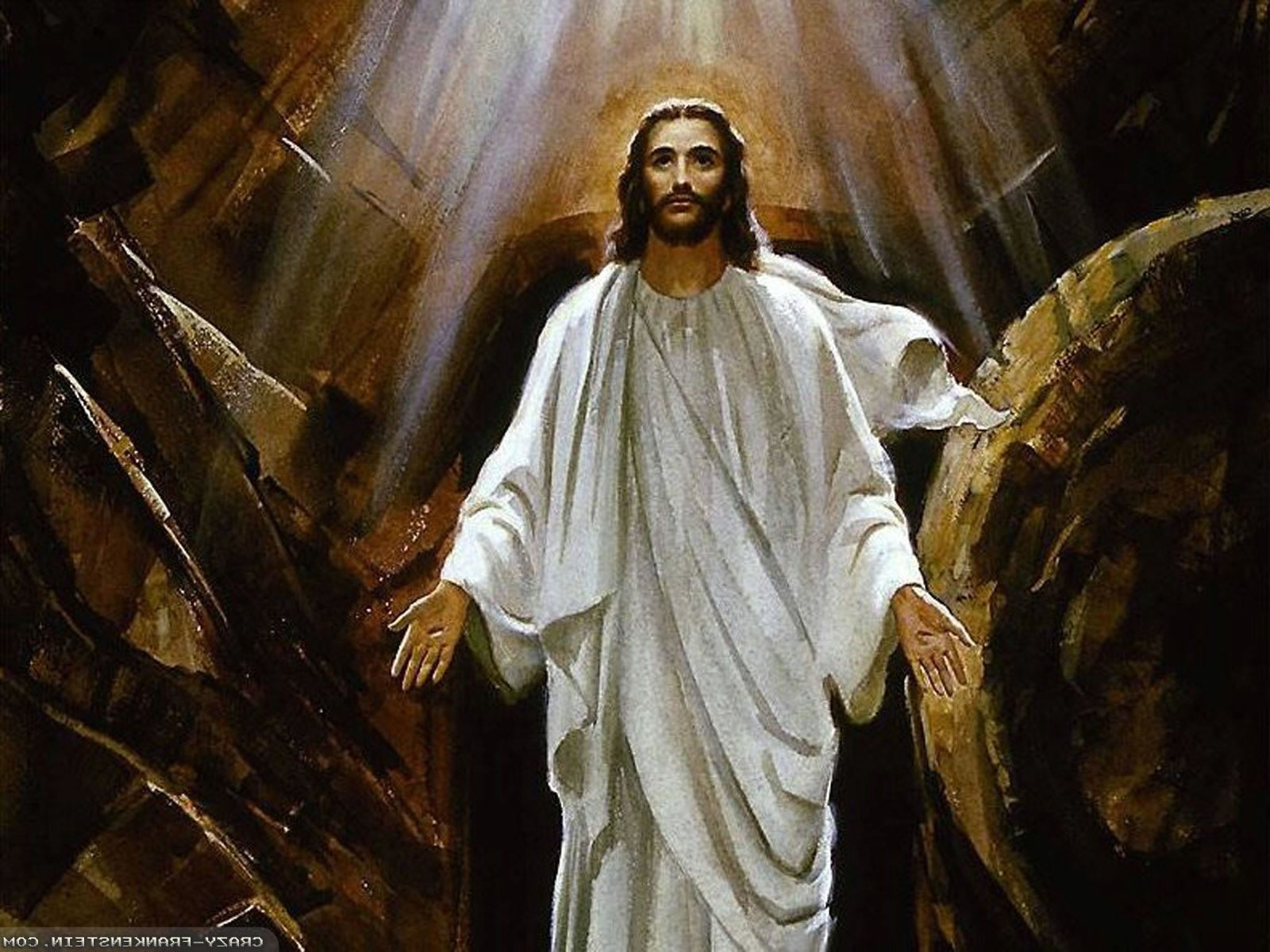
In The Gospel of Peter when Jesus emerges from his tomb upon being resurrected he is the size of a giant “whose head reaches above the Heavens” and is being helped from the tomb by a pair of equally giant-sized angels. Next the Cross itself emerges from the tomb for some reason and a voice from the Heavens asks “Have you preached to those who are sleeping?” The cross speaks and replies “Yes.”   Continue reading

6 Comments

Filed under Mythology

ALTERNATE EASTERS

If you're fine with this picture but crawl on your belly when Muslim savages are offended you're a gutless hypocrite.

If you’re fine with this picture but crawl on your belly when Muslim savages are offended you’re a gutless hypocrite.

It’s always fun pondering how different today’s Easter celebrations might be if any of the fascinating    apocryphal gospels (meaning the rejected and obscure gospels outside of the four accepted by mainstream Christianity as “authentic”) had been deemed canonical. 

This continues Balladeer’s Blog’s annual examination of the Apocryphal Gospels that provide the best opportunities for comparative mythology. These particular three depict:

a) a Jesus who transports himself and his Apostles from the Garden of Gethsemane directly to God the Father’s throne-room in Heaven,

b) Hell as a living entity unto itself that converses with Satan,

and c) a Jesus who has mastered the esoteric traditions of many other faiths before facing his ultimate destiny on the Cross     

If you don't believe me about what it says read it for yourself.

If you don’t believe me about what it says read it for yourself.

THE GOSPEL OF THE SAVIOR – The narrative of this gospel centers around dialogues between Jesus and his apostles in the last few days before his arrest and crucifixion. Some of the material is similar to the Gospels of John and Matthew, but  some is Gnostic, with references to discarding the useless garment of the body so the soul can return to the empyrean realm. 

The most striking departure in this gospel comes in the Garden of Gethsemane segment, when Jesus, as God the Son, traditionally prays to God the Father to spare him the ordeals that lay ahead. In The Gospel of the Savior Jesus transports himself and his apostles to the throneroom of God the Father  where he makes his appeal in person. The apostles, who stay awake for once in this version, look on as Jesus and God the Father converse in this scene, which serves as this gospel’s substitute for the traditional transfiguration episode of other gospels.  Continue reading

6 Comments

Filed under Mythology

CLOUDS WITHOUT WATER (1909) – A LITERARY HOAX FROM ALEISTER CROWLEY

Clouds Without WaterWhat better way to mark April Fool’s Day than by commemorating one of the wittiest and most daring of practical jokes, one perpetrated by Aleister Crowley in those brilliant years before drugs and/or self-delusion fogged his mind. Decades before the pathetic “Peekaboo Crowley” of much renown Aleister was still churning out some very enjoyable poetry – some of it brilliant. The Sword of Song and Konx Om Pax are my favorite volumes of verse by “the Laird of Boleskine” … AFTER Clouds Without Water, that is.  

Clouds Without Water was not Crowley’s only literary practical joke, of course, but the humor of it resonates to this very day, thanks mainly to the never-changing air of pious self-righteousness that afflicts most of the world’s clergy-members. And not just pious self-righteousness but a habit of condemning in the strongest language works of art which their self-limited minds clearly don’t understand.

aleister crowley

*** *** *** *** *** Crowley’s autobiography explained this photo in the poignant chapter titled “I Go Completely Nuts and Start Believing Anything and Everything”

THE JOKE: Clouds Without Water was published under one of Crowley’s pseudonyms – Reverend Charles Verey. It was circulated to various ministries and teaching colleges allegedly as a condemnation of “the type of atheism and socialism” that the young and the bohemian were embracing. Crowley – writing as Reverend Verey – wrote a foreward and a closing prayer for the volume of poetry as well as (when you know the full story) HILARIOUS footnotes expressing the kind of simplistic moral outrage that only the most narrow-minded of holy-rollers can spout. 

Under another assumed identity Crowley ALSO wrote the sonnets being condemned by his Reverend Verey alter ego. On the surface the poems were written by a college professor scandalously celebrating an extramarital affair with one of his female students, a young woman named Lola. The sonnets reflect the supposed couple’s flouting of social and sexual conventions until the affair ends in tragedy for all concerned. Crowley’s fictional persona Reverend Verey was denouncing the poems and the lifestyle reflected in those poems in the strongest possible terms. Continue reading

4 Comments

Filed under Mythology

AIWEL LONGAR: THE EPIC MYTH

Aiwel Longar

Aiwel Longar

Once again Balladeer’s Blog examines a neglected epic myth from around the world. Previously I have dealt with epics from the Navajo, Vietnamese, Iroquois, Aztec, Hawaiian, Chinese and other belief systems.

The mythic tale of Aiwel Longar comes from the Dinka pantheon. Nhialic is the supreme deity to the Dinka and the first man and woman he created were Garang and Abuk. The Dinka people live in the Upper Nile in Sudan, as they have for centuries.

AIWEL LONGAR

I often cover the way in which cultures which come into contact borrow mythic material from each other to embellish their own respective belief systems. The story of Aiwel Longar clearly influenced (and vice versa) Egyptian, Jewish, Christian and Muslim myths. It also bears striking similarities to the Gnostic Hymn of the Pearl.

PART ONE – Born as simply Aiwel, this figure was a gift from the god of the Nile River to Aiwel’s widowed and childless mother. The infant already had a full set of teeth when his mother picked him up out of the Nile River, where the river god had set him adrift.

Like many mythic figures Aiwel could Continue reading

4 Comments

Filed under Mythology

DEAD AND RESURRECTED DEITIES OF THE DISTANT PAST

Persephone and pomegranateSpring keeps trying to arrive but this bitter winter refuses to give up just yet. Our nationwide longing to be liberated from the tyrannical grip of winter made this a good time to examine some of the ancient myths about winter and the coming of spring. The celebration of those myths at this time of year plus the fact that many of those myths centered around dead and resurrected deities necessitated Christianity’s attempt to superimpose its OWN dead and resurrected deity over top of those older stories. Hence the celebration of Easter in springtime. (And it’s not just Christianity that behaved that way – other religions also would superimpose their own celebrations over top of those held in honor of the previously dominant gods in their region. I’ll cover the behavior of those other belief systems – especially Islam and the Incan faith – another time.)

Not all seasonal myths conformed to the following pattern. I’m limiting this list to the ones that did.

PERSEPHONE

Pantheon: Greek (The Romans called her Proserpine)

The Tale: Persephone was the beautiful daughter of the goddess Demeter (Ceres to the Romans). Persephone caught the eye of Hades, the god who ruled over the realm of the dead. Overcome with lust Hades (Pluto to the Romans) emerged from his subterranean domain and stole Persephone away to his realm to become his Queen.

The Savior: Demeter went searching for her daughter throughout the world, often assuming the form of a mortal woman. Her search wore on and on with no results, causing Demeter to fall more and more deeply into despair. Because she was the goddess of nature that despair manifested itself in colder weather, in the leaves falling off the trees, other vegetation dying and some animals hibernating or migrating to flee the cold.  Continue reading

17 Comments

Filed under Mythology

MERINA MYTHS: THE LEMUR GOD

Can anyone tell me why no college sports teams are called the Lemurs?

Can anyone tell us why no college sports teams are called the Lemurs?

BABAKOTO – The Merina lemur god. Babakoto was at first an ordinary man. Through a series of misfortunes he wound up being accused and condemned to death for a crime he did not commit. Nobody would believe his innocence, however, and so he began plotting to escape before his execution could be carried out.
Continue reading

6 Comments

Filed under Mythology

MERINA MYTHS: THE DEMIGOD RARAKY

map.gif (294×286)

RARAKY – The Merina demigod of tobacco. Raraky (sometimes called Paraky) was the only son of the blessed Merina man Andriamitandrina and his wife. Raraky grew ill and neither medicine nor prayers to the gods could save him. After he died his family debated what to do with the corpse. Some counciled eating him like food in order to feel that he was still with them. Others advocated hanging the body in their home in order to feel that he was still with them. Continue reading

2 Comments

Filed under Mythology

TOP FIGURES IN MERINA MYTHOLOGY

mgnewzz.gif (320×350) Covering the myths and deities of the various peoples of Madagascar is a pretty sizeable job to undertake. I decided to use the same approach I’m using with the Americas and take things on a tribe-by-tribe basis.

First off I’ll be tackling the Merina people. Let me emphasize that for my fellow mythology geeks – this list will be JUST about Merina gods and myths. There are a variety of cultural groups from Madagascar, each with their own pantheon of deities, but plenty of mythological reference books do them the disservice of lumping everything into one big category labeled “Madagascar” or “Malagassy Mythology”.

This causes confusion because it would be like lumping gods from Celtic, Norse, Greco-Roman, Slavic, Etruscan and Hittite mythology in one big puddle called “European Gods” with no attempt to break them into their separate pantheons. So if the following gods either are not in whatever reference books you personally use or if your books list a different figure as “Madagascar’s” patron deity of a certain concept there is no need to jump in with objections. I will eventually hit all the cultural groups. 

ITRIMOBE – The primordial sea-beast who lived on the Earth when it was nothing but endless ocean. For untold years Itrimobe enjoyed its solitary subaquatic existence. Eventually it grew bored and set out to examine the parameters of the world it lived in. It swam down all the way to the bottom of the sea, then swam upward as far as it could go and at last poked its head out into the air and sunlight.

Itrimobe swam east, north, west and south but found no land and no way out of the endless ocean. Curious, the entity dug three holes in the center of the Earth and one hole at each end, allowing much of the water to drain. This drainage caused the formation of the continents, which the now-amphibious Itrimobe explored. Unfortunately the blazing sun overhead eventually dried Itrimobe out to a dangerous degree and blinded it.  The remaining ocean water was nowhere near deep enough for the gigantic creature to submerge itself ever again, causing its body to die. Continue reading

13 Comments

Filed under Mythology