
 THE WRECK OF A WORLD (1889) – Written by W. Grove. (No other name available) This novel is the sequel to Grove’s A Mexican Mystery, an ahead-of-its-time work about a train engine devised to have artificial intelligence. The machine – called only The Engine in that story – rebelled and took to preying on human beings in horrific fashion. For Balladeer’s Blog’s review of that novel click HERE
The Wreck of a World is not a direct sequel to A Mexican Mystery but does use one of that novel’s elements as its springboard: the deliciously frightening notion that the Engine’s artificial intelligence might have included the capacity to design and build others of its kind. Though A Mexican Mystery never explored that concept, Grove deals with it in much more detail in this second novel.
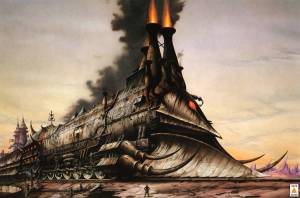 Our story begins in what was to Grove “the far future” of 1949. After a fairly superficial depiction of the world’s political and scientific situation in this imaginary future the meat of the tale begins. All in all the author did not present 1940s technology as being much more advanced than what was available in the 1880s. Grove might have done better to set his tale in 1899 or just into the 1900s to detract from his lack of vision on this particular element.
The revolt of the machines begins with train engines, presumably as a nod to the memorably malevolent Engine from Grove’s previous novel. The engines begin constructing others of their kind with the same robotic arms and with each new edition flaunting deadlier and deadlier weaponry to boot.
The engines soon modify themselves beyond the need for train tracks and become more like tanks, so kudos to this neglected author for nicely predicting the advent of such mobile death-machines. Continue reading
 NORDENHOLT’S MILLION (1923) – Written by J.J. Connington (Pen name for Alfred Walter Stewart). This is a riveting but downbeat Future History novel with many story elements which were ahead of their time.
 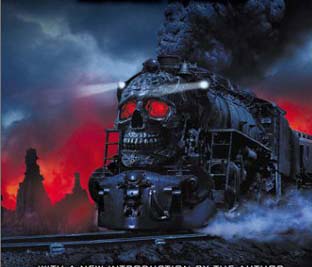 A MEXICAN MYSTERY (1888) – Written by W. Grove. (No other name available) This is the first of two novels by Grove. This one features a sentient and evil train referred to only as The Engine.
  The furious Emperor disqualifies Pedro’s Engine and awards the prize to another designer. Da Luz rants and raves to such a bloodthirsty degree that his fiancee Inez dumps him, adding to his anger. Meanwhile, the Mexican people begin regarding the Engine with superstitious awe and claim it is possessed by the Devil.
 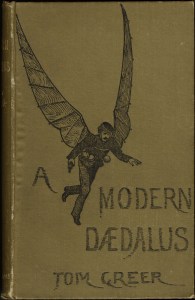 A MODERN DAEDALUS (1887) – By Tom Greer. No, the title’s not referring to James Joyce’s character Stephen Dedalus (sic) but this tale IS about Ireland. The main character is a young man named Jack O’Halloran, a recent college graduate who returns to his native Ireland.
 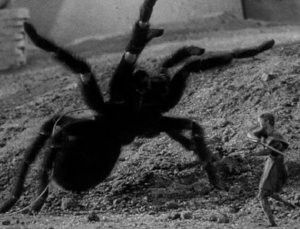 THE ULTIMATE INHERITORS (1914) – Written by Berg Bellair. This is a very entertaining work of vintage or “ancient” science fiction and is especially noteworthy for the way it anticipates the many “big bug” movies of the 1950s and later.
  IN SEARCH OF THE UNKNOWN (1904) by Robert W Chambers. Previously Balladeer’s Blog examined Chambers’ underrated horror classic The King in Yellow. The work we’re looking at this time around is a collection of short stories about Francis Gilland the Zoologist. Gilland was a forerunner of the real-life Frank “Bring ’em Back Alive” Buck and the fictional Indiana Jones.
  I. THE HARBOR MASTER – Gilland is sent north to Hudson Bay where a Harbor Master has reported capturing a pair of Great Auks, flightless birds which went extinct in the mid-1800s. The two-fisted scholar finds the Great Auks are for real but the Harbor Master harbors (see what I did there) a sinister secret.
  II. IN QUEST OF THE DINGUE – The Graham Glacier melts, unleashing a number of animals from species that were long thought extinct. Among the crowd of academics converging on the unexplored area are Gilland and Professor Smawl. The Professor is a sexy, strong-willed female scholar that our hero has been forced to accompany into the region.
  THE AURORAPHONE (1890) – Written by Cyrus Cole. This fun piece of vintage or “ancient” science fiction features the character Gaston Lesage, an eccentric genius who moves to the mountains of Colorado to continue his pet experiments. Lesage is obsessed with perfecting transmission and reception of radio signals, especially regarding potential contact with other planets.
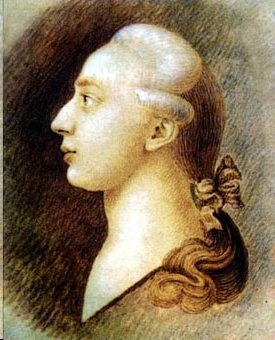
 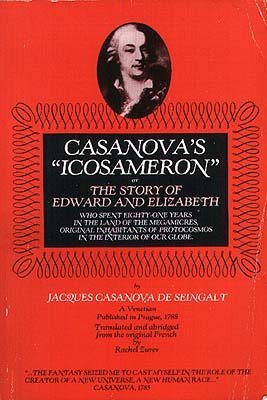 CASANOVA’S ICOSAMERON OR THE STORY OF EDWARD AND ELIZABETH WHO SPENT EIGHTY-ONE YEARS IN THE LAND OF THE MEGA-MICRES, ORIGINAL INHABITANTS OF PROTOCOSMOS IN THE INTERIOR OF OUR GLOBE (1788) – Yes, that IS the actual, complete title of this obscure item and yes, it was written by THE Giovanni Giacomo Casanova, the legendary ladies’ man and adventurer.
  The pair of twenty-somethings prove their identity through that beloved fictional trope of birthmarks and scars, then proceed to tell their tale. When the ship that Elizabeth and Edward were aboard sank at sea the then-children climbed into an empty, water-tight coffin in the cargo hold.
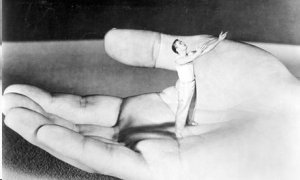 THE ADVENTURES OF A MICRO-MAN (1902) – This work of vintage or “ancient” science fiction was authored by Lancelot Bayly under the pen name Edwin Pallender. The central character of the story was Doctor Geoffrey Hassler, a wealthy eccentric scientist who has discovered “microgen” a gas which shrinks objects down to a very small size.
  Balladeer's Blog